
What should you know about mens jowls?
Short answer
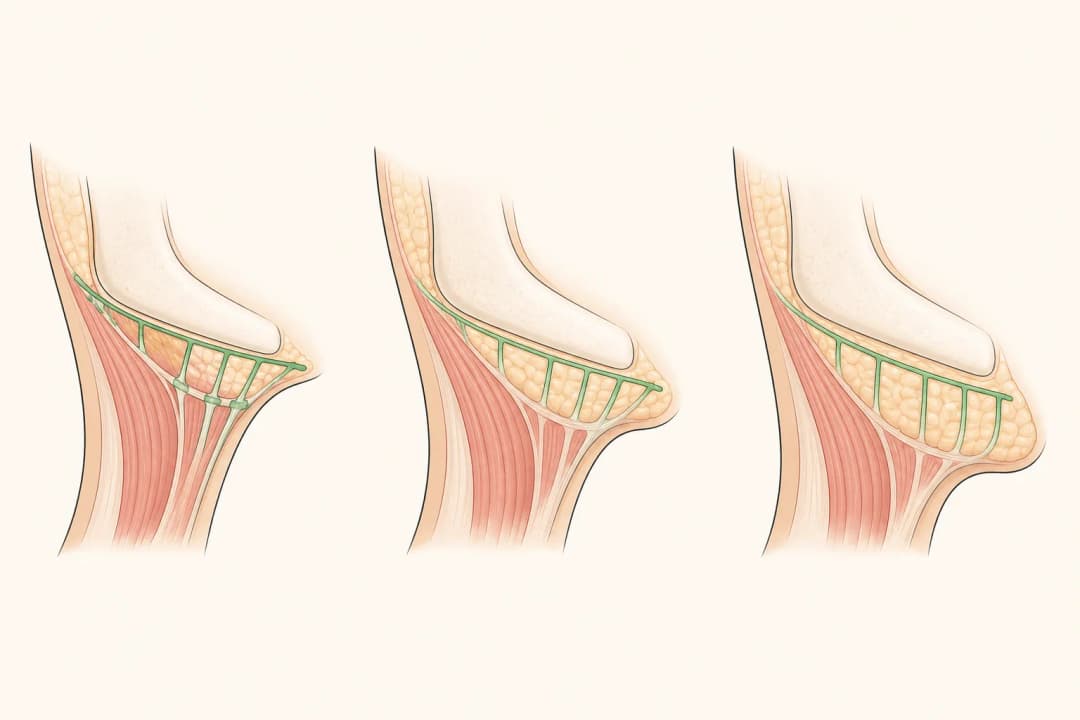
Mens jowls are loose or displaced tissue along the lower cheeks and jawline, shaped by ageing, skin laxity, facial structure, and changes in underlying volume.
This answers one question. It is not a diagnosis and does not replace an assessment by a licensed doctor.
At a glance
- What can contribute
- Skin laxity, tissue position, facial structure, and volume change
- Treatment categories
- Contour support, skin tightening, or surgery
How jowls develop
Jowls can make the jawline look less sharply defined as skin, fat compartments, connective tissue, and facial support change. Sagging skin may be more noticeable after weight change or with sun exposure, but the visible contour is influenced by your individual anatomy. A clinician should examine the face rather than judge treatment from a photograph alone.
The aim of treatment may be to tighten skin, improve contour, restore selected support, or remove excess tissue. These approaches address different parts of the problem and can produce different kinds of change.
Choosing an approach
Start with an assessment that reviews skin quality, facial movement, dental or jaw considerations, previous procedures, and your preferred degree of change. Non-surgical options can include jawline filler, HIFU skin lifting, radiofrequency skin tightening, or a thread lift. A facelift is a surgical option that removes or repositions tissue and requires a different recovery discussion.
Ask how much improvement is realistic, whether more than one session may be suggested, and how the plan protects a natural facial expression. Follow specific aftercare instructions and avoid judging swelling before the advised review.
When to seek care
Jowls usually develop gradually, but seek medical assessment for a new one-sided lump, sudden swelling, marked pain, skin ulceration, or a rapidly changing contour. After a procedure, contact the clinic for worsening redness, heat, discharge, severe pain, or unusual weakness. Urgent help is needed for breathing difficulty, facial weakness, or vision symptoms.
Questions to ask
Ask which tissue changes are contributing, what treatment is being proposed, what alternatives exist, and how long recovery may take. Clarify who performs the procedure, possible complications, follow-up arrangements, and what result would be considered a good fit for your face.
Find care
General Clinics & Polyclinics in Abu Dhabi
That answer is general. If you want it applied to your own case, these are licensed general clinics & polyclinics listed in Abu Dhabi.
27 Ar Ruwwad St - Shakhbout City - MSH4 - Abu Dhabi - United Arab Emirates
Accepts: Daman, Thiqa, Cigna, MetLife +20 more
Al Ruwais, Al Dhafrah
Accepts: Daman, Thiqa, AXA, Cigna +16 more
Al Bahyah - Al Bahyah Old - Abu Dhabi - United Arab Emirates
Accepts: Daman, Thiqa, Cigna, Allianz Care +18 more
Abu Dhabi
Accepts: Daman, Thiqa, AXA, Cigna +27 more
Ordered by verification status and how complete each clinic's public record is, then alphabetically. This is a directory listing, not a ranking — Zavis does not rate or recommend providers.
A factual listing drawn from the DHA, DOH and MOHAP licence registers. It is not a referral, an endorsement, or advice that any of these providers is right for you.
Questions people ask
Are jowls only caused by ageing?
No. Facial structure, skin exposure, weight change, and tissue volume can also affect jawline laxity.
Can non-surgical treatment remove jowls?
Non-surgical treatments may improve contour or skin tightness, while surgery addresses excess or repositioned tissue more directly.
Related
Related reading
Keep reading
Medical disclaimer. This page is general health information, not medical advice, and it cannot diagnose you. Always consult a licensed healthcare provider about your own symptoms and treatment. In an emergency in the UAE, call 998 for an ambulance.