
Infant fever with cold hands and feet: what to know
Short answer
An infant with fever and cold hands or feet needs a calm temperature check, close observation, and urgent assessment if they look seriously unwell.
This answers one question. It is not a diagnosis and does not replace an assessment by a licensed doctor.
At a glance
- Check first
- Temperature, breathing, alertness, feeding, and wet nappies
- Avoid
- Ice, cold baths, excess wrapping, and unconfirmed medicine doses
What cold hands and feet can mean
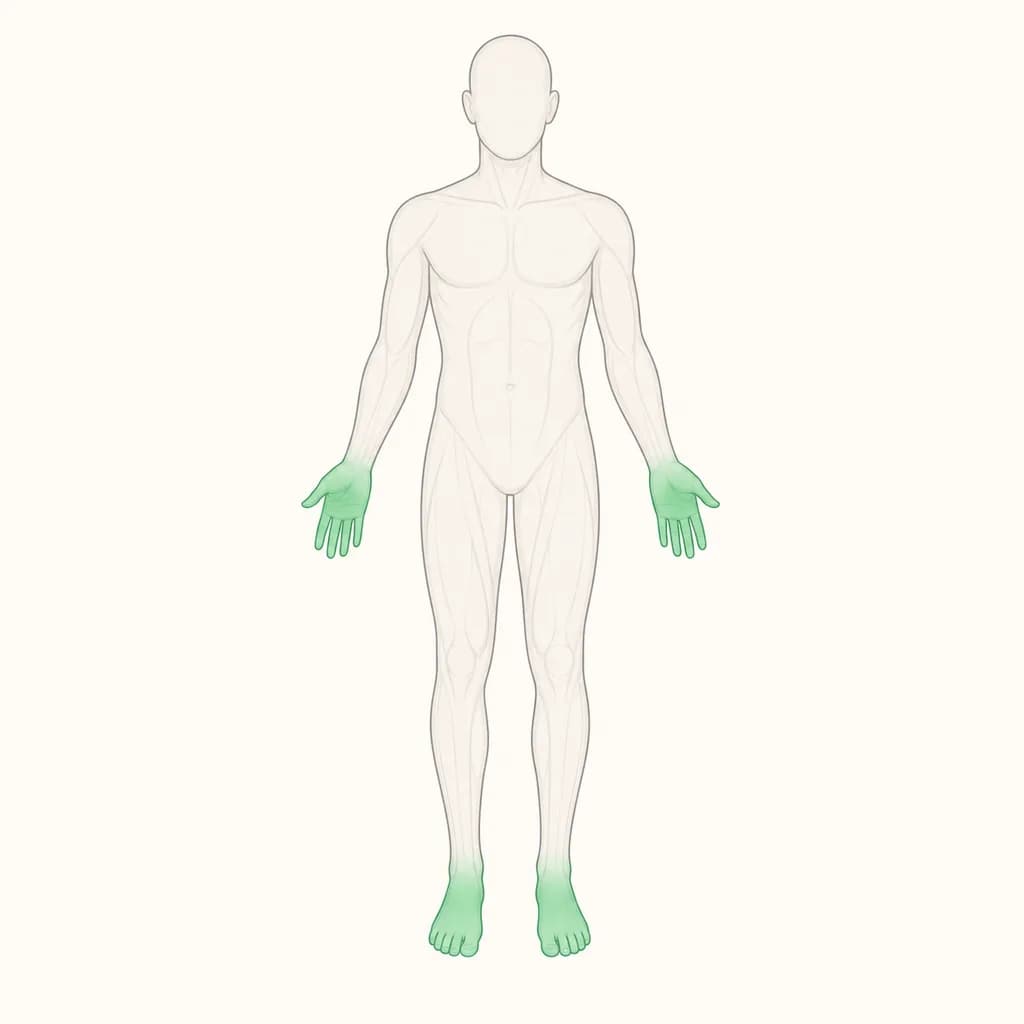
Fever can change blood flow and make the hands and feet feel cooler than the chest or back. The room, clothing, recent bathing, and the way temperature was measured can also affect how the skin feels. Touch alone cannot show how high the fever is, so use a reliable thermometer and note the reading and time.
Look at your infant’s overall state: alertness, breathing, skin colour, feeding, wet nappies, and ability to be comforted matter more than cool fingers by themselves. Cold hands and feet can occur with an ordinary infection, but a baby who is unusually pale, mottled, floppy, difficult to wake, or breathing abnormally needs prompt medical assessment. The symptom itself does not identify a particular condition; a clinician may consider causes such as anaemia or hypothyroidism when the pattern continues outside an illness.
What to do now
Measure the temperature as directed for your thermometer, remove excess layers, and offer breast milk or formula frequently. Keep the room comfortable and use light clothing; avoid cold baths, ice, or vigorous rubbing of the skin. Do not give medicine intended for another child, and check the correct product and dose with a healthcare professional, especially for a very young infant.
Recheck your baby regularly rather than relying on whether the hands feel warm. Write down feeds, wet nappies, temperature readings, and any new symptoms. If cool extremities keep returning after the fever settles, arrange a routine review; do not start iron supplementation without advice.
When to seek care
Seek emergency help if your infant is hard to wake, has pauses or difficulty breathing, turns blue or grey, has a seizure, develops a rapidly spreading rash, or feels unusually cold with marked weakness. Get urgent medical advice for a very young baby with fever, poor feeding, repeated vomiting, far fewer wet nappies, persistent inconsolability, or a temperature that concerns you. If the fever continues or your baby is worsening, contact a clinician promptly.
Questions for your doctor
Ask which thermometer method is suitable, what temperature threshold matters for your infant’s age, how often to offer feeds, and which warning signs should prompt emergency care. Bring your temperature and nappy record. If the hands and feet remain cold when your child is otherwise well, ask whether a review for circulation, anaemia, or thyroid problems is appropriate.
Find care
General Clinics & Polyclinics in Abu Dhabi
That answer is general. If you want it applied to your own case, these are licensed general clinics & polyclinics listed in Abu Dhabi.
27 Ar Ruwwad St - Shakhbout City - MSH4 - Abu Dhabi - United Arab Emirates
Accepts: Daman, Thiqa, Cigna, MetLife +20 more
Al Ruwais, Al Dhafrah
Accepts: Daman, Thiqa, AXA, Cigna +16 more
Al Bahyah - Al Bahyah Old - Abu Dhabi - United Arab Emirates
Accepts: Daman, Thiqa, Cigna, Allianz Care +18 more
Abu Dhabi
Accepts: Daman, Thiqa, AXA, Cigna +27 more
Ordered by verification status and how complete each clinic's public record is, then alphabetically. This is a directory listing, not a ranking — Zavis does not rate or recommend providers.
A factual listing drawn from the DHA, DOH and MOHAP licence registers. It is not a referral, an endorsement, or advice that any of these providers is right for you.
Questions people ask
Can fever make an infant’s hands and feet cold?
Yes. Changes in blood flow during fever can make the extremities feel cool, but the infant’s overall condition and thermometer reading are more useful than touch alone.
When are cold hands and feet an emergency?
Treat them as an emergency when they occur with difficult breathing, unusual sleepiness, blue or grey colour, a seizure, severe weakness, or an infant who is hard to wake.
Related
Related reading
Keep reading
Medical disclaimer. This page is general health information, not medical advice, and it cannot diagnose you. Always consult a licensed healthcare provider about your own symptoms and treatment. In an emergency in the UAE, call 998 for an ambulance.