
Hyperthyroidism and thyrotoxicosis
Short answer
Thyrotoxicosis means too much thyroid hormone activity in the body, while hyperthyroidism is one cause of that state.
This answers one question. It is not a diagnosis and does not replace an assessment by a licensed doctor.
At a glance
- Meaning
- Thyrotoxicosis describes excess thyroid hormone activity; hyperthyroidism is one possible cause.
- Key information
- Medicines and supplements can affect thyroid hormone levels.
The terms explained
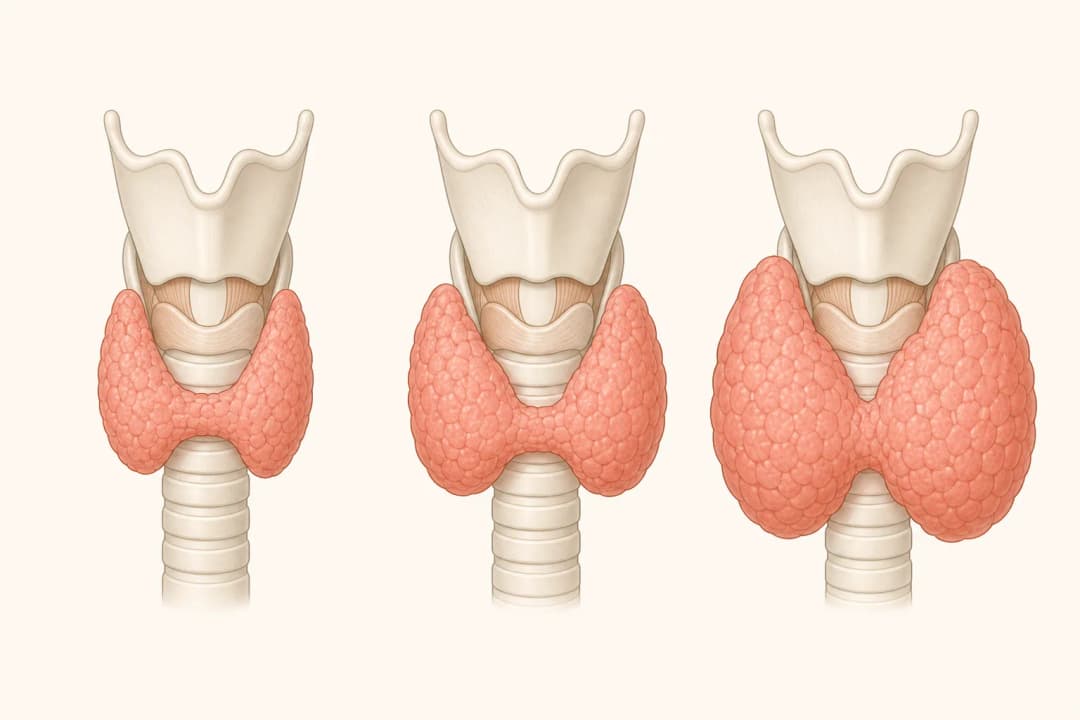
Hyperthyroidism describes an overactive thyroid gland making excess hormone. Thyrotoxicosis is the broader effect of having too much thyroid hormone activity, which can also happen when thyroid tissue releases stored hormone or when thyroid medicine is too strong. The terms are related but are not interchangeable in every situation.
Symptoms may include palpitations, sweating, heat intolerance, anxiety, sleep difficulty, diarrhoea, tremor and weight change. A clinician uses your history, examination and thyroid blood tests to look for the source rather than relying on symptoms alone.
Steps after a possible diagnosis
Arrange a medical review if symptoms persist or several appear together. Bring every medicine and supplement, including thyroid products, and note when symptoms started. Do not increase, stop or share thyroid medicine; the appropriate action depends on the cause.
Follow the testing plan and ask how to monitor your pulse and symptoms. Treatment may involve managing thyroid production, adjusting prescribed hormone, or observing a temporary thyroid inflammation pattern. The plan should be tailored after the test results are reviewed.
When to seek urgent care
Seek emergency help for chest pain, fainting, severe breathlessness, confusion, or a very fast or irregular heartbeat. Urgent assessment is also needed for a high temperature with severe agitation, shaking or sudden deterioration, or for vomiting and diarrhoea that prevent fluids.
Questions for your doctor
Ask whether the findings show hyperthyroidism or another cause of thyrotoxicosis, which tests identify the source, how medicines should be taken, and which symptoms require same-day help.
Find care
General Clinics & Polyclinics in Abu Dhabi
That answer is general. If you want it applied to your own case, these are licensed general clinics & polyclinics listed in Abu Dhabi.
27 Ar Ruwwad St - Shakhbout City - MSH4 - Abu Dhabi - United Arab Emirates
Accepts: Daman, Thiqa, Cigna, MetLife +20 more
Al Ruwais, Al Dhafrah
Accepts: Daman, Thiqa, AXA, Cigna +16 more
Al Bahyah - Al Bahyah Old - Abu Dhabi - United Arab Emirates
Accepts: Daman, Thiqa, Cigna, Allianz Care +18 more
Abu Dhabi
Accepts: Daman, Thiqa, AXA, Cigna +27 more
Ordered by verification status and how complete each clinic's public record is, then alphabetically. This is a directory listing, not a ranking — Zavis does not rate or recommend providers.
A factual listing drawn from the DHA, DOH and MOHAP licence registers. It is not a referral, an endorsement, or advice that any of these providers is right for you.
Questions people ask
Are hyperthyroidism and thyrotoxicosis the same?
No. Hyperthyroidism is an overactive thyroid gland, while thyrotoxicosis describes the wider state of excess thyroid hormone activity.
Can thyroid medicine cause thyrotoxicosis?
Too much prescribed thyroid hormone can contribute, which is why doses should only be changed with medical guidance.
Related
Related reading
Keep reading
Medical disclaimer. This page is general health information, not medical advice, and it cannot diagnose you. Always consult a licensed healthcare provider about your own symptoms and treatment. In an emergency in the UAE, call 998 for an ambulance.