
How long does physiotherapy take to work for patellar tendinitis?
Short answer
Patellar tendinitis often needs several weeks of carefully progressed physiotherapy before daily pain settles, with tendon capacity taking longer to rebuild.
This answers one question. It is not a diagnosis and does not replace an assessment by a licensed doctor.
At a glance
- Treatment principle
- Progressive tendon loading matched to symptoms and capacity
- Common progress marker
- Better tolerance of stairs, squats, and planned activity
What the timeline means
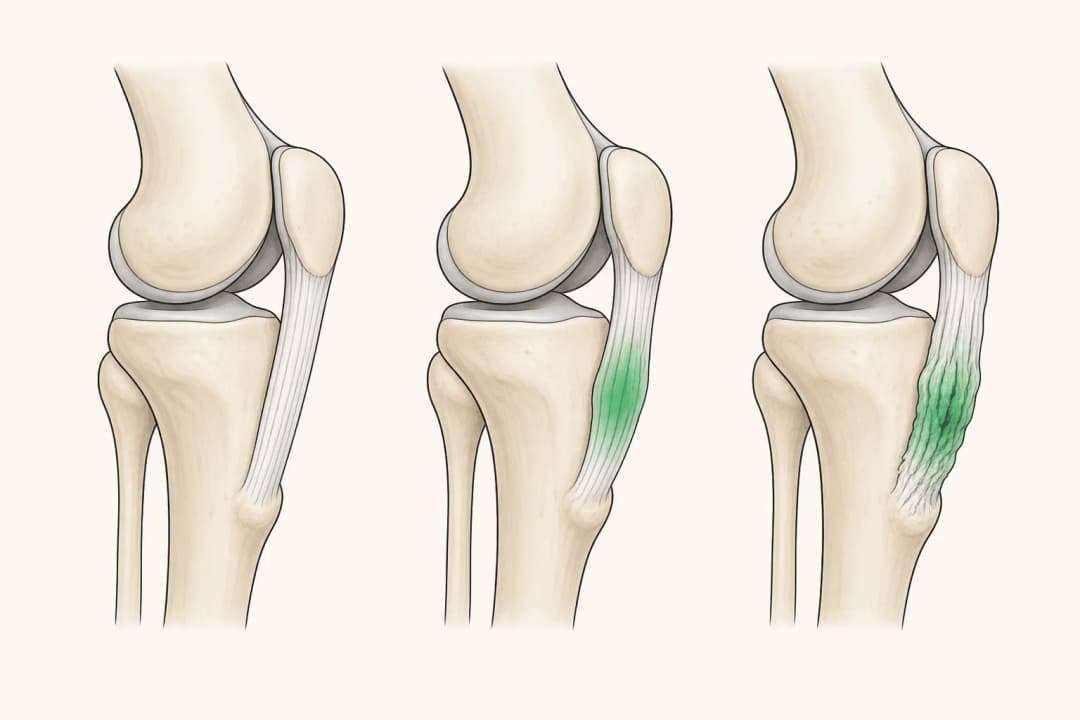
This condition involves an irritated or overloaded tendon below the kneecap. Physiotherapy usually changes the load on the tendon rather than simply resting it. Your programme may begin with isometric thigh exercises and manageable daily activity, then progress to slow strengthening and finally faster or more demanding movements. Pain can fluctuate when the exercise load changes, so improvement is judged by the overall response across days rather than one session.
The pace is affected by how long symptoms have been present, work or sport demands, leg strength, sleep, and whether the tendon is repeatedly exposed to jumps, deep squats, or sudden training increases. A slower progression is not necessarily treatment failure.
How to make therapy more effective
Follow the agreed loading plan and record how the knee responds during activity and afterward. Reduce aggravating jumping or running temporarily, but avoid complete inactivity unless instructed. Use warm-up and technique advice from your physiotherapist, and increase one training demand at a time. Do not add extra strengthening sessions simply because the tendon feels quiet during one appointment.
When to seek care
Arrange prompt assessment for a sudden pop, immediate loss of strength, a visible change in the tendon area, or inability to straighten the knee or bear weight. Contact your clinician if swelling, redness, warmth, or pain is worsening rather than settling. Persistent symptoms despite a consistent programme may call for a reassessment of the diagnosis, exercise dose, technique, or contributing hip and ankle factors.
Questions for your doctor or physiotherapist
Ask what level of discomfort is acceptable during exercises, how to space loading days, and which jumps or running drills should wait. Ask how progress will be measured and when your tendon is ready for work or sport-specific demands.
Find care
General Clinics & Polyclinics in Abu Dhabi
That answer is general. If you want it applied to your own case, these are licensed general clinics & polyclinics listed in Abu Dhabi.
27 Ar Ruwwad St - Shakhbout City - MSH4 - Abu Dhabi - United Arab Emirates
Accepts: Daman, Thiqa, Cigna, MetLife +20 more
Al Ruwais, Al Dhafrah
Accepts: Daman, Thiqa, AXA, Cigna +16 more
Al Bahyah - Al Bahyah Old - Abu Dhabi - United Arab Emirates
Accepts: Daman, Thiqa, Cigna, Allianz Care +18 more
Abu Dhabi
Accepts: Daman, Thiqa, AXA, Cigna +27 more
Ordered by verification status and how complete each clinic's public record is, then alphabetically. This is a directory listing, not a ranking — Zavis does not rate or recommend providers.
A factual listing drawn from the DHA, DOH and MOHAP licence registers. It is not a referral, an endorsement, or advice that any of these providers is right for you.
Questions people ask
Should I stop all exercise with patellar tendinitis?
Usually the aim is to modify aggravating activity while maintaining suitable strength work, rather than stopping every form of movement.
Why does pain return after I increase training?
The tendon may have been exposed to a larger load than it can currently tolerate; your physiotherapist can adjust volume, speed, or recovery time.
Related
Related reading
Keep reading
Medical disclaimer. This page is general health information, not medical advice, and it cannot diagnose you. Always consult a licensed healthcare provider about your own symptoms and treatment. In an emergency in the UAE, call 998 for an ambulance.