
Patellar Tendinitis (Jumper's Knee)
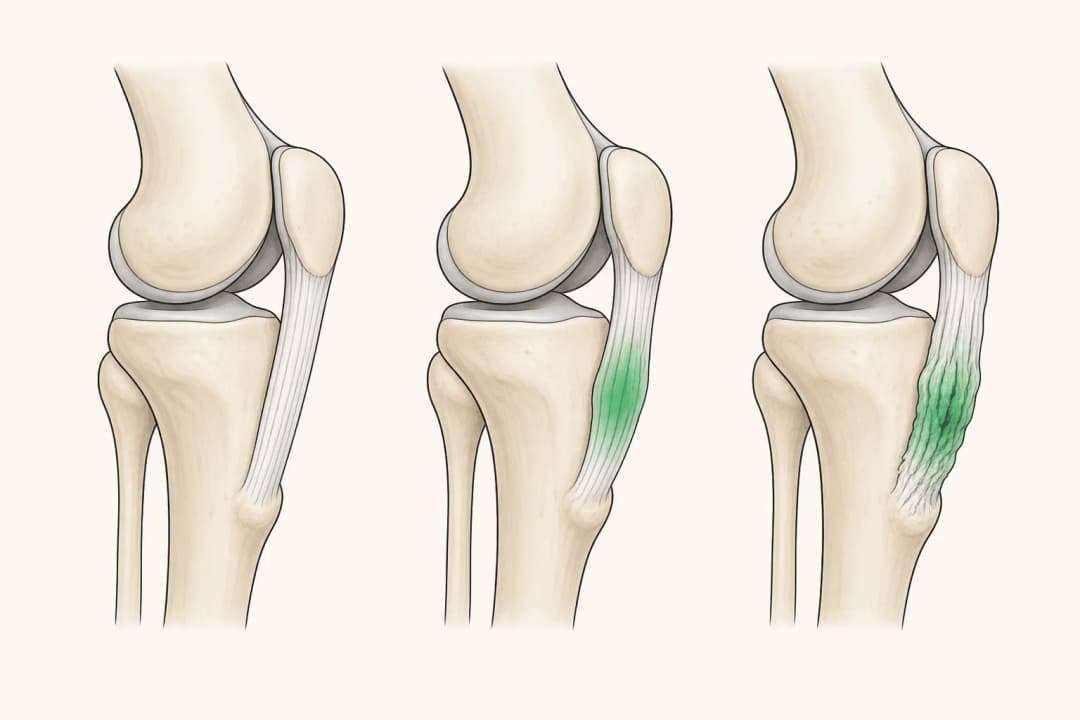
At a glance
- Also called
- Jumper's knee
- Main location
- Tendon below the kneecap
- Typical trigger
- Repeated jumping or running
What is patellar tendinitis?
Patellar tendinitis, also called jumper's knee or patellar tendinopathy, affects the strong band connecting the kneecap to the shinbone. Repeated loading can irritate and weaken this tendon. Patellar tendinitis causes pain and tenderness in the tendon below the kneecap, especially during jumping, running or stairs.
Symptoms
Knee Pain is a common presentation of patellar tendinitis. Pain is often felt at the lower edge of the kneecap and may begin after activity before becoming noticeable during exercise. Kneecap Pain is another common presentation, with tenderness when the tendon is pressed.
The knee may feel stiff at the start of movement. Squatting, landing, climbing stairs or rising from a chair can increase discomfort. Swelling is not always present; marked swelling, locking or inability to bear weight needs prompt assessment.
Causes
The tendon is repeatedly loaded when the quadriceps muscle pulls the kneecap during jumping, sprinting, squatting or changes of direction. A sudden increase in training, frequent hard landings or limited recovery can exceed the tendon's ability to adapt.
Course and progression
Symptoms may settle with sensible load reduction, but tendons often need gradual rehabilitation rather than complete rest. Continuing painful high-impact activity can make everyday movements uncomfortable. Improvement is usually tracked by easier stairs, better strength and less next-day soreness.
Risk factors
Risk increases with jumping sports, repeated running hills, hard surfaces, poor training progression, reduced leg strength and tight thigh muscles. Previous tendon pain and a rapid return after a break can also increase strain.
Diagnosis
A clinician asks where the pain occurs, what activities trigger it and how training has changed. They examine tenderness, knee movement, quadriceps strength and the way you squat or land. Ultrasound or MRI may be considered when the diagnosis is uncertain or another injury needs checking.
Treatment options
Treatment usually combines activity modification with a progressive strengthening plan. Physiotherapy can assess movement and prescribe exercises that load the tendon in stages. Strength Training Rehabilitation may progress from controlled holds to slow resistance and sport-specific jumping.
Shockwave Therapy or a PRP Injection may be discussed for persistent symptoms after assessment. These options do not replace load management, and suitability depends on the tendon findings and your health history.
Living with patellar tendinitis
Choose activities that keep pain manageable and avoid repeated painful jumping for a period. Ice may briefly ease symptoms after activity, while a gradual return plan helps test tolerance. Record exercise load and next-day response so progression is based on how the knee behaves.
Possible complications
Ignoring persistent tendon pain may lead to reduced strength, altered landing mechanics and difficulty returning to sport. A sudden force can also injure a weakened tendon. Seek urgent care for a pop followed by inability to straighten the knee or bear weight.
Prevention
Increase running and jumping gradually, include recovery days and strengthen the quadriceps, hips and calves. Warm up before high-impact work, vary surfaces when possible and address landing technique with a physiotherapist if pain keeps returning.
Finding a specialist
An orthopedics clinician or physiotherapist can distinguish tendon pain from other causes of pain around the kneecap and build a staged return plan. Bring details of recent training changes, pain triggers and any previous knee injury.
Questions people ask
Is patellar tendinitis the same as jumper's knee?
Yes. Jumper's knee is a common name for patellar tendinitis or patellar tendinopathy.
Should I stop all exercise?
Usually, the aim is to reduce painful high-impact loading while maintaining suitable movement and progressing strength under guidance.
Related
Related reading
Keep reading
Find care
Physiotherapy & Rehabilitation in Dubai
Where patellar tendinitis (jumper's knee) is assessed depends on what is causing it. These are licensed physiotherapy & rehabilitation listed in Dubai.
Office 1510, SIT Tower, Dubai Silicon Oasis, Dubai, United Arab Emirates
Accepts: Daman, Thiqa, AXA, Cigna +23 more
- Physio Expert DubaiVerified
Renew and Revive Polyclinic, Al Wasl Rd, opposite J3 Mall, Umm Suqeim 2, Dubai, United Arab Emirates
Accepts: Insurance accepted
Kent Healthcare LLC, Nashwan Building - 208C Al Mankhool Rd, Al Raffa, Dubai, United Arab Emirates
Accepts: Thiqa, AXA, Cigna, MetLife +23 more
Index Building, Nad Al Hamar Road, Dubai Festival City, Dubai
Accepts: Thiqa, AXA, Cigna, MetLife +30 more
Ordered by verification status and how complete each clinic's public record is, then alphabetically. This is a directory listing, not a ranking — Zavis does not rate or recommend providers.
A factual listing drawn from the DHA, DOH and MOHAP licence registers. It is not a referral, an endorsement, or advice that any of these providers is right for you.
Medical disclaimer. This page is general health information, not medical advice, and it cannot diagnose you. Always consult a licensed healthcare provider about your own symptoms and treatment. In an emergency in the UAE, call 998 for an ambulance.