
How Is Rotator Cuff Tendinitis Treated?
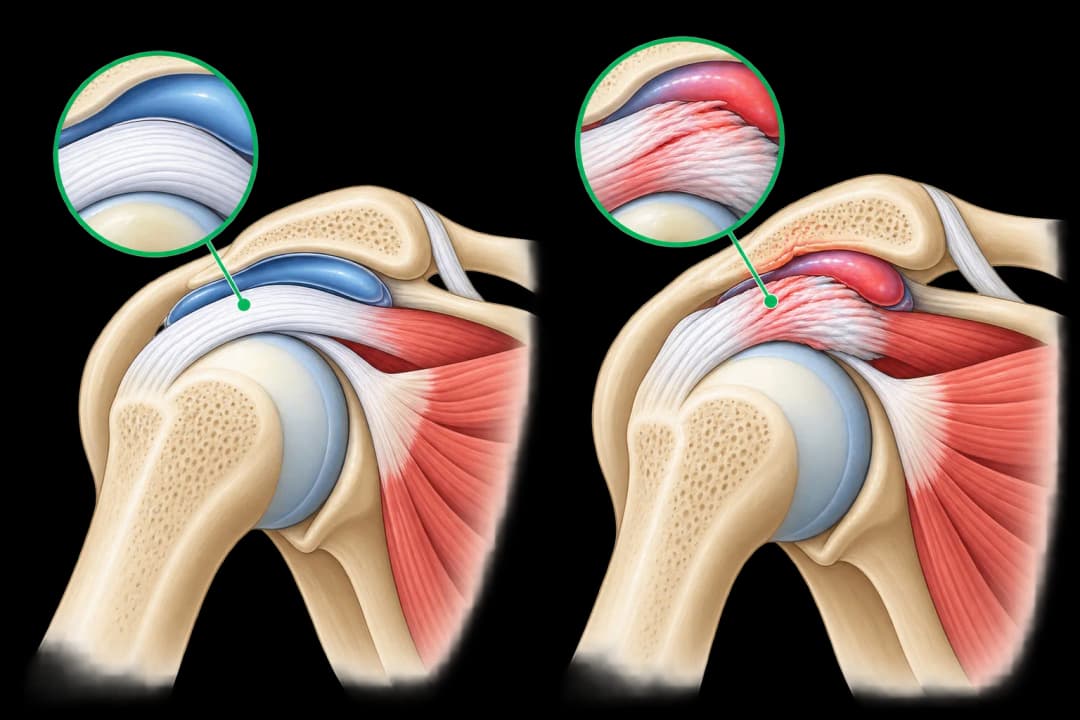
Short answer
Rotator cuff tendinitis is treated by reducing aggravating activities, managing pain, and progressively restoring shoulder movement and strength with rehabilitation.
This answers one question. It is not a diagnosis and does not replace an assessment by a licensed doctor.
At a glance
- First focus
- Adjust the load that provokes pain while preserving comfortable movement
- Core treatment
- Progressive rehabilitation for motion, control, and strength
- Additional options
- Injections or shockwave therapy may suit selected cases
Understanding the problem
Tendinitis affects the tendons that help the shoulder lift and rotate. Repeated overhead work, sport, or a sudden increase in activity can irritate these tissues. Pain when lifting the arm and shoulder pain do not by themselves show whether the tendon is irritated or torn, so an examination helps guide care. The aim is to calm symptoms while keeping the shoulder from becoming weak or stiff.
Steps that may help
Temporarily reduce the movement or load that provokes pain rather than stopping all shoulder use. A physiotherapist may begin with comfortable mobility work, then add exercise therapy for the rotator cuff and shoulder-blade muscles as symptoms settle. Ice or heat may feel helpful for some people, and a clinician can advise on suitable medication. A cortisone injection may be discussed when pain is limiting rehabilitation; it is not a substitute for rebuilding strength. Shockwave therapy may be considered in selected persistent cases.
When to seek care
Get assessed if pain began with a fall, a forceful lift, or a sudden loss of shoulder strength. Seek urgent help for a deformed shoulder, severe injury pain, fever with redness or swelling, or persistent numbness. Arrange review when symptoms continue despite sensible load reduction, disturb sleep, or prevent work and daily tasks. A rotator cuff tear can present with similar pain, so worsening weakness should not be ignored.
Questions for your doctor
Ask which activity is irritating the tendon, what exercises are safe now, and how quickly to increase resistance. Ask whether imaging is needed, what benefit and limits an injection may have, and what change would suggest a tear rather than tendinitis.
Find care
General Clinics & Polyclinics in Abu Dhabi
That answer is general. If you want it applied to your own case, these are licensed general clinics & polyclinics listed in Abu Dhabi.
27 Ar Ruwwad St - Shakhbout City - MSH4 - Abu Dhabi - United Arab Emirates
Accepts: Daman, Thiqa, Cigna, MetLife +20 more
Al Ruwais, Al Dhafrah
Accepts: Daman, Thiqa, AXA, Cigna +16 more
Al Bahyah - Al Bahyah Old - Abu Dhabi - United Arab Emirates
Accepts: Daman, Thiqa, Cigna, Allianz Care +18 more
Abu Dhabi
Accepts: Daman, Thiqa, AXA, Cigna +27 more
Ordered by verification status and how complete each clinic's public record is, then alphabetically. This is a directory listing, not a ranking — Zavis does not rate or recommend providers.
A factual listing drawn from the DHA, DOH and MOHAP licence registers. It is not a referral, an endorsement, or advice that any of these providers is right for you.
Questions people ask
How long should I rest my shoulder?
Avoid the aggravating load until movement is more comfortable, but prolonged complete rest can lead to stiffness; a clinician can set a graded return plan.
Can tendinitis turn into a tear?
Persistent or worsening weakness needs assessment because tendinitis and a tear can cause overlapping symptoms and require different decisions.
Related
Related reading
Keep reading
Medical disclaimer. This page is general health information, not medical advice, and it cannot diagnose you. Always consult a licensed healthcare provider about your own symptoms and treatment. In an emergency in the UAE, call 998 for an ambulance.