
How effective is spirometry for chronic cough?
Short answer
Spirometry is a useful part of a chronic cough assessment when an airflow disorder is possible, but it cannot identify every cause of persistent cough.
This answers one question. It is not a diagnosis and does not replace an assessment by a licensed doctor.
At a glance
- Useful for
- Checking airflow problems linked with cough
- Not covered directly
- Reflux, nasal drainage and cough-reflex irritation
- Helpful preparation
- A record of triggers, timing and associated symptoms
What the test can and cannot explain
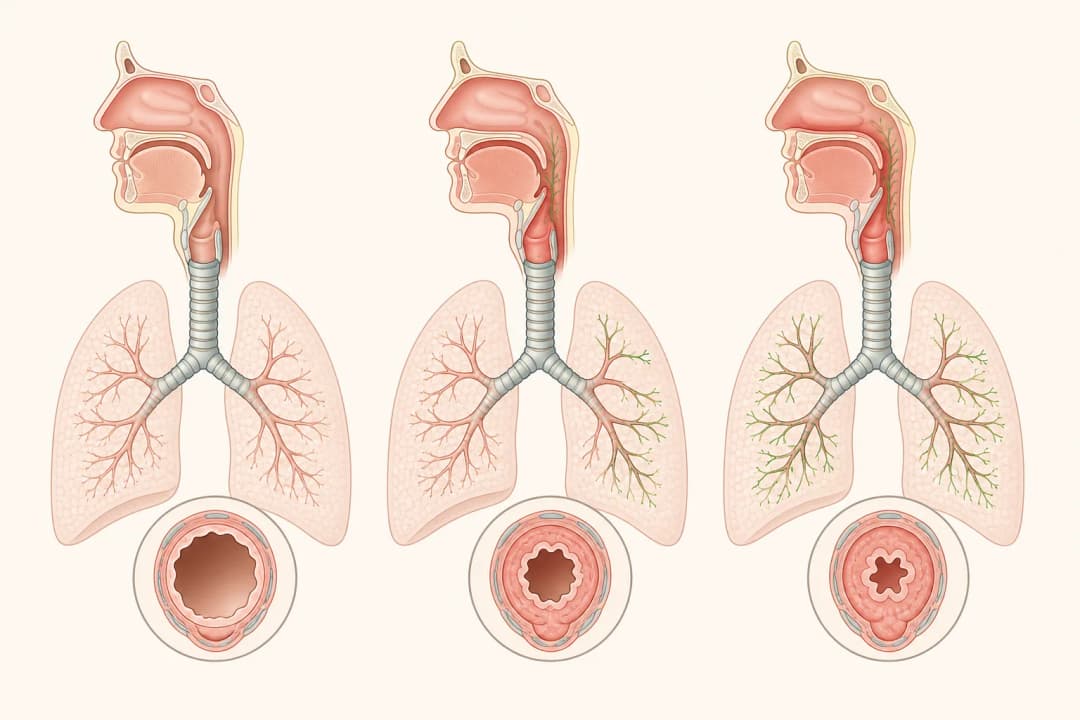
A persistent cough can occur with asthma, chronic obstructive lung disease, reflux, nasal problems, medicines and other conditions. Spirometry checks whether air is moving out of the lungs in a pattern that suggests obstruction or variable narrowing. This can guide the next step when cough occurs with wheeze or breathlessness.
The test does not directly measure reflux, nasal drainage or irritation of the cough reflex. A normal result may make some airflow problems less likely, but it does not explain every cough. Your clinician may ask about smoking, medicines, allergies, heartburn, voice change, sleep and environmental exposures.
Making the assessment clearer
Before testing, note when the cough began, whether it produces sputum, what triggers it and whether it is worse at night, after meals or with exercise. Mention blood in sputum, fever, weight change, breathlessness and any new medicine.
During spirometry, careful technique matters because coughing or stopping early can alter the reading. Follow instructions about inhalers and bring previous results if available. Further assessment may include a chest examination, imaging, allergy review or a targeted treatment trial, depending on the findings.
When to seek care
Book a review for a cough that persists, disrupts sleep or comes with wheeze or breathlessness. Seek urgent care for coughing blood, severe breathing difficulty, chest pain, blue lips, confusion, fainting or a rapidly worsening illness. A cough with high fever or marked weakness also needs prompt medical advice.
Questions for your doctor
Ask whether the spirometry pattern suggests asthma or another airflow problem, what other causes fit your history, whether any medicine could be contributing, and which symptom changes should prompt reassessment.
Find care
General Clinics & Polyclinics in Abu Dhabi
That answer is general. If you want it applied to your own case, these are licensed general clinics & polyclinics listed in Abu Dhabi.
27 Ar Ruwwad St - Shakhbout City - MSH4 - Abu Dhabi - United Arab Emirates
Accepts: Daman, Thiqa, Cigna, MetLife +20 more
Al Ruwais, Al Dhafrah
Accepts: Daman, Thiqa, AXA, Cigna +16 more
Al Bahyah - Al Bahyah Old - Abu Dhabi - United Arab Emirates
Accepts: Daman, Thiqa, Cigna, Allianz Care +18 more
Abu Dhabi
Accepts: Daman, Thiqa, AXA, Cigna +27 more
Ordered by verification status and how complete each clinic's public record is, then alphabetically. This is a directory listing, not a ranking — Zavis does not rate or recommend providers.
A factual listing drawn from the DHA, DOH and MOHAP licence registers. It is not a referral, an endorsement, or advice that any of these providers is right for you.
Questions people ask
Will spirometry find the cause of every chronic cough?
No. It can identify some airflow disorders, while other causes need history, examination or additional tests.
Can chronic cough occur with normal spirometry?
Yes. A normal result can occur when the cough has a cause outside the airflow disorders measured by the test.
Related
Related reading
Keep reading
Medical disclaimer. This page is general health information, not medical advice, and it cannot diagnose you. Always consult a licensed healthcare provider about your own symptoms and treatment. In an emergency in the UAE, call 998 for an ambulance.