
How effective is exercise therapy for rotator cuff tendinitis?
Short answer
Exercise therapy can reduce shoulder discomfort and improve movement and strength for rotator cuff tendinitis when exercises are tailored and progressed gradually.
This answers one question. It is not a diagnosis and does not replace an assessment by a licensed doctor.
At a glance
- Main goal
- Improve shoulder movement, strength and daily function
- Typical approach
- Gradual, tailored loading with movement control
What this means for your shoulder
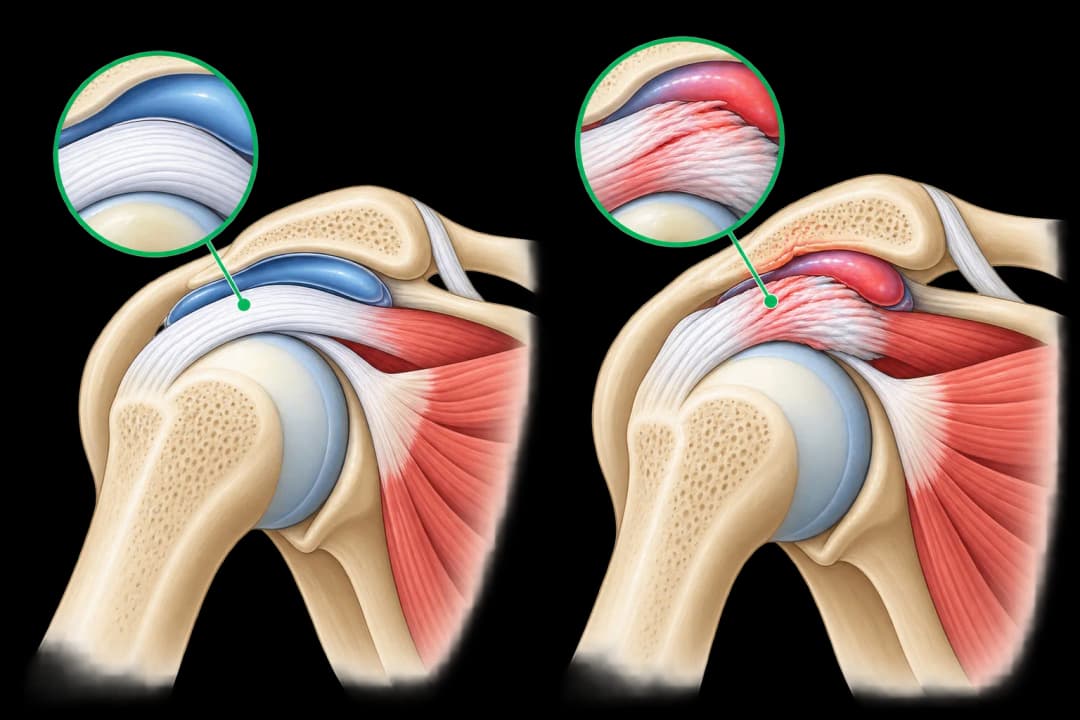
Rotator cuff tendinitis affects the tendons that help centre and move the shoulder. A programme may begin with comfortable range-of-motion work and gentle isometric contractions, then add resistance as control improves. The aim is not to force through sharp pain. Better shoulder-blade positioning and upper-arm control can make reaching, dressing and lifting easier.
Progress is usually judged by function: how far you can reach, whether sleep is less disturbed, and whether daily tasks cause fewer symptoms. Improvement can be gradual, and the right pace depends on irritability, strength and the demands placed on your arm.
How to use exercise therapy
A physiotherapist can check shoulder motion, strength and movement habits before selecting exercises. Follow the prescribed repetitions and rest periods, keep the movement controlled, and avoid suddenly adding heavy overhead work. A mild exercise response may settle, but worsening pain that lingers should prompt a review of the programme.
Useful home practice may include assisted shoulder movement, external-rotation strengthening and rowing or shoulder-blade control drills, if these suit your examination. Do not copy an exercise that causes catching, marked weakness or escalating pain.
When to seek care
Arrange an assessment if shoulder pain limits sleep, work or arm use, or if it is not settling with sensible activity changes. Seek prompt medical care after a significant injury, sudden loss of strength, a visibly deformed shoulder, fever, or a hot and swollen joint. New chest pain or breathing difficulty needs emergency attention.
Questions to ask
Ask which movements should be limited, how to recognise an acceptable exercise response, and when resistance can increase. You can also ask whether your symptoms fit rotator cuff tendinitis or another shoulder problem, and how progress will be measured.
Find care
General Clinics & Polyclinics in Abu Dhabi
That answer is general. If you want it applied to your own case, these are licensed general clinics & polyclinics listed in Abu Dhabi.
27 Ar Ruwwad St - Shakhbout City - MSH4 - Abu Dhabi - United Arab Emirates
Accepts: Daman, Thiqa, Cigna, MetLife +20 more
Al Ruwais, Al Dhafrah
Accepts: Daman, Thiqa, AXA, Cigna +16 more
Al Bahyah - Al Bahyah Old - Abu Dhabi - United Arab Emirates
Accepts: Daman, Thiqa, Cigna, Allianz Care +18 more
Abu Dhabi
Accepts: Daman, Thiqa, AXA, Cigna +27 more
Ordered by verification status and how complete each clinic's public record is, then alphabetically. This is a directory listing, not a ranking — Zavis does not rate or recommend providers.
A factual listing drawn from the DHA, DOH and MOHAP licence registers. It is not a referral, an endorsement, or advice that any of these providers is right for you.
Questions people ask
Can exercise therapy make shoulder pain worse?
Temporary soreness can occur, but sharp or lingering worsening pain suggests that the load, technique or diagnosis needs review.
Can I exercise while the shoulder is painful?
Often yes, with a modified range and load chosen for your symptoms; avoid forcing painful overhead movements.
Related
Related reading
Keep reading
Medical disclaimer. This page is general health information, not medical advice, and it cannot diagnose you. Always consult a licensed healthcare provider about your own symptoms and treatment. In an emergency in the UAE, call 998 for an ambulance.