
How does meniscus repair work?
Short answer
Meniscus repair uses keyhole surgery to stitch suitable torn cartilage back together so the knee can heal while its cushioning tissue is preserved.
This answers one question. It is not a diagnosis and does not replace an assessment by a licensed doctor.
At a glance
- Surgical approach
- Keyhole inspection and repair through small openings.
- Recovery focus
- Protect the repair, then rebuild movement and strength.
What the operation involves
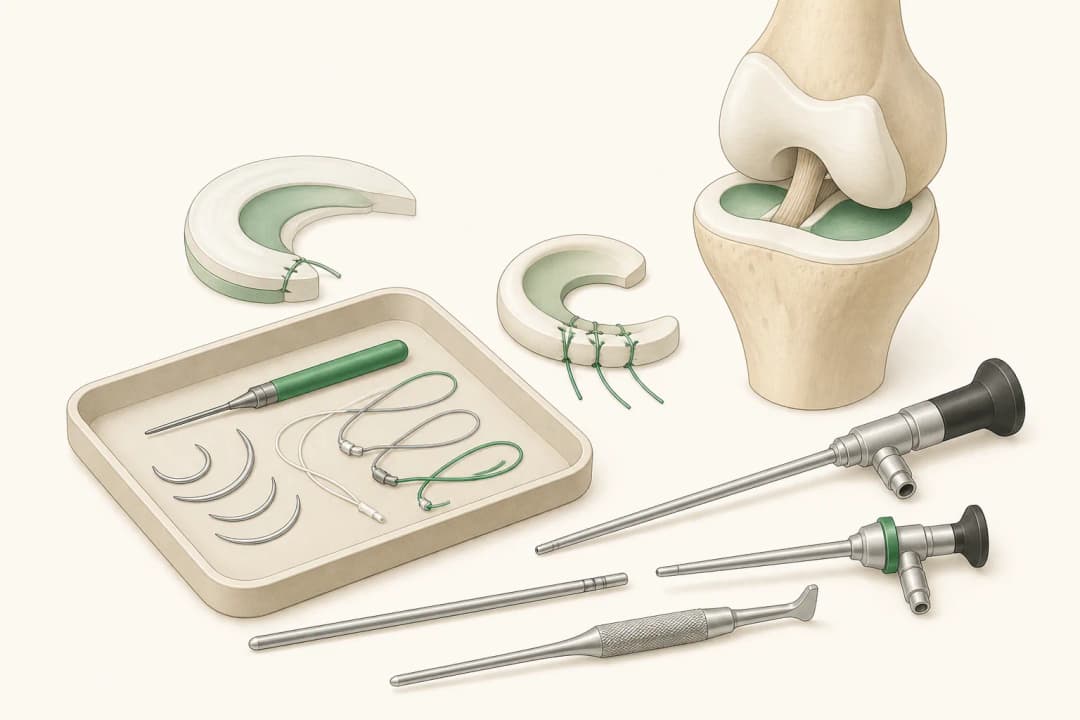
The surgeon examines the tear through an Arthroscope, a small camera placed through a keyhole opening. The torn area is trimmed only as needed and prepared so its edges can heal. Stitches or a Suture Anchor hold the meniscus in position. Repair is more suitable when the tear pattern and blood supply offer a realistic path to healing; some damaged tissue cannot be repaired and may need a different procedure. Preserving meniscus tissue can help maintain its role in distributing load across the knee.
What recovery usually requires
Your surgeon may limit bending, weight bearing, or both for an early period while the repair settles. Crutches, a brace, and a staged exercise plan may be recommended. Physiotherapy then progresses from swelling control and safe movement to strength, balance, and activity-specific drills. Do not test deep squats, twisting, or sport before the rehabilitation plan allows it. A Return-to-Sport Programme can structure the later stages. Partial Meniscectomy is a different option when repair is not suitable.
When to seek care
Seek prompt advice for worsening swelling, fever, increasing wound redness or drainage, calf pain or swelling, new foot numbness, or pain that is not controlled by the agreed plan. Urgent help is needed for chest pain or sudden breathlessness. A Meniscus Tear review can help match symptoms and imaging with the appropriate treatment.
Questions for your doctor
Ask where the tear is, why repair is preferable or unsuitable, how long restrictions may last, when driving is reasonable, and which signs should bring you back sooner.
Find care
General Clinics & Polyclinics in Abu Dhabi
That answer is general. If you want it applied to your own case, these are licensed general clinics & polyclinics listed in Abu Dhabi.
27 Ar Ruwwad St - Shakhbout City - MSH4 - Abu Dhabi - United Arab Emirates
Accepts: Daman, Thiqa, Cigna, MetLife +20 more
Al Ruwais, Al Dhafrah
Accepts: Daman, Thiqa, AXA, Cigna +16 more
Al Bahyah - Al Bahyah Old - Abu Dhabi - United Arab Emirates
Accepts: Daman, Thiqa, Cigna, Allianz Care +18 more
Abu Dhabi
Accepts: Daman, Thiqa, AXA, Cigna +27 more
Ordered by verification status and how complete each clinic's public record is, then alphabetically. This is a directory listing, not a ranking — Zavis does not rate or recommend providers.
A factual listing drawn from the DHA, DOH and MOHAP licence registers. It is not a referral, an endorsement, or advice that any of these providers is right for you.
Questions people ask
Why repair the meniscus instead of removing tissue?
Repair aims to preserve cushioning tissue when the tear has features that may allow healing.
Can I return to sport immediately?
No. Sport is reintroduced in stages after healing, strength, movement, and control have been assessed.
Related
Related reading
Keep reading
Medical disclaimer. This page is general health information, not medical advice, and it cannot diagnose you. Always consult a licensed healthcare provider about your own symptoms and treatment. In an emergency in the UAE, call 998 for an ambulance.