
How Does Frozen Embryo Transfer Work?
Short answer
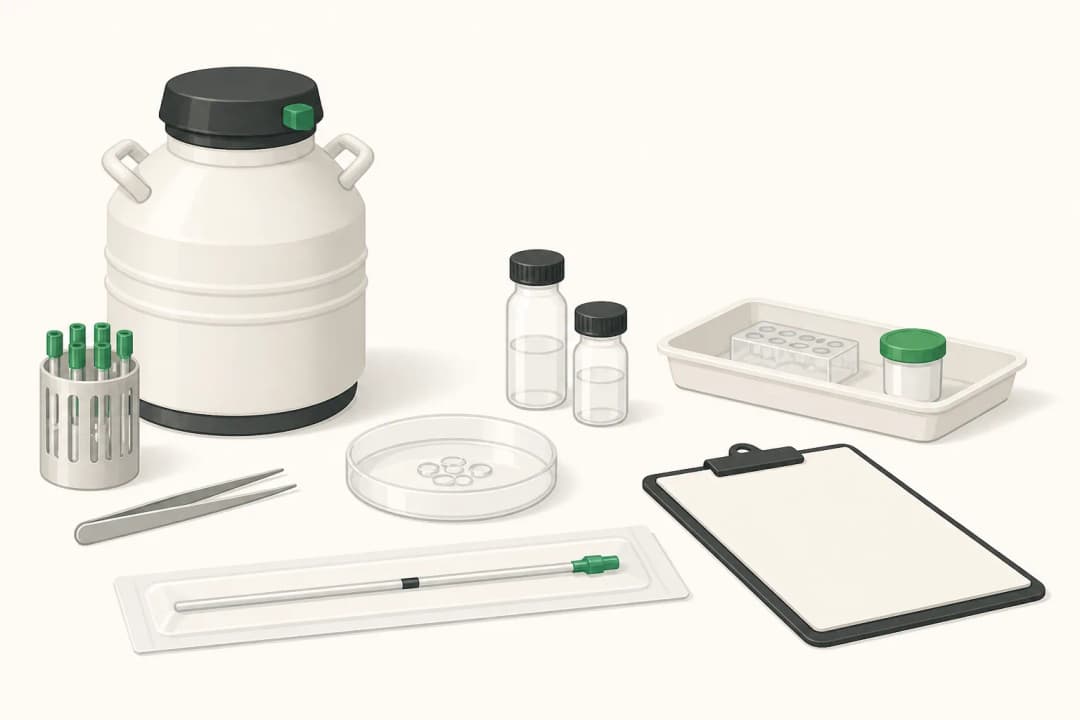
Frozen embryo transfer prepares the womb lining with a natural or medicated cycle, thaws a stored embryo, and places it into the womb through a thin catheter.
This answers one question. It is not a diagnosis and does not replace an assessment by a licensed doctor.
At a glance
- Stored material
- A previously frozen embryo
- Transfer route
- Through the cervix into the womb
- Timing support
- Progesterone may support the womb lining
The treatment stages
Your clinic may track ovulation in a natural cycle or use oestrogen to prepare the lining. Once the timing is suitable, progesterone supports the lining and establishes the transfer window. The stored embryo is thawed in the laboratory; the team checks it before proceeding.
During transfer, a soft catheter passes through the cervix into the womb. The embryo is released and the catheter is removed. The procedure is usually brief, but implantation does not happen immediately and transfer does not guarantee pregnancy. A pregnancy test is arranged for the date given by your clinic.
How to prepare
Take oestrogen, progesterone or other prescribed medicines exactly as directed and attend monitoring scans or blood tests. Tell the clinic about missed doses, new medicines, bleeding or illness. After transfer, continue prescribed support until the clinic tells you otherwise; ordinary gentle activity is generally compatible with care, but follow your team's instructions.
When to contact the clinic
Seek urgent medical advice for severe abdominal pain, heavy bleeding, faintness, breathing difficulty, chest pain or marked abdominal swelling. Contact the fertility team about persistent vomiting or significant symptoms, particularly if you recently had ovarian stimulation, because ovarian hyperstimulation syndrome can require assessment.
Questions for your doctor
Ask why a natural or medicated cycle is recommended, how the lining and ovulation will be monitored, when progesterone starts, what to do after a missed dose and when to test for pregnancy.
Find care
General Clinics & Polyclinics in Abu Dhabi
That answer is general. If you want it applied to your own case, these are licensed general clinics & polyclinics listed in Abu Dhabi.
27 Ar Ruwwad St - Shakhbout City - MSH4 - Abu Dhabi - United Arab Emirates
Accepts: Daman, Thiqa, Cigna, MetLife +20 more
Al Ruwais, Al Dhafrah
Accepts: Daman, Thiqa, AXA, Cigna +16 more
Al Bahyah - Al Bahyah Old - Abu Dhabi - United Arab Emirates
Accepts: Daman, Thiqa, Cigna, Allianz Care +18 more
Abu Dhabi
Accepts: Daman, Thiqa, AXA, Cigna +27 more
Ordered by verification status and how complete each clinic's public record is, then alphabetically. This is a directory listing, not a ranking — Zavis does not rate or recommend providers.
A factual listing drawn from the DHA, DOH and MOHAP licence registers. It is not a referral, an endorsement, or advice that any of these providers is right for you.
Questions people ask
Is frozen embryo transfer painful?
Many people experience pressure or cramping, though comfort varies. Tell the team if you are worried so they can discuss support.
When is the pregnancy test done?
Your clinic will set the testing date based on embryo development and the transfer schedule; testing too early can be misleading.
Related
Related reading
Keep reading
Medical disclaimer. This page is general health information, not medical advice, and it cannot diagnose you. Always consult a licensed healthcare provider about your own symptoms and treatment. In an emergency in the UAE, call 998 for an ambulance.