
How does exercise therapy work?
Short answer
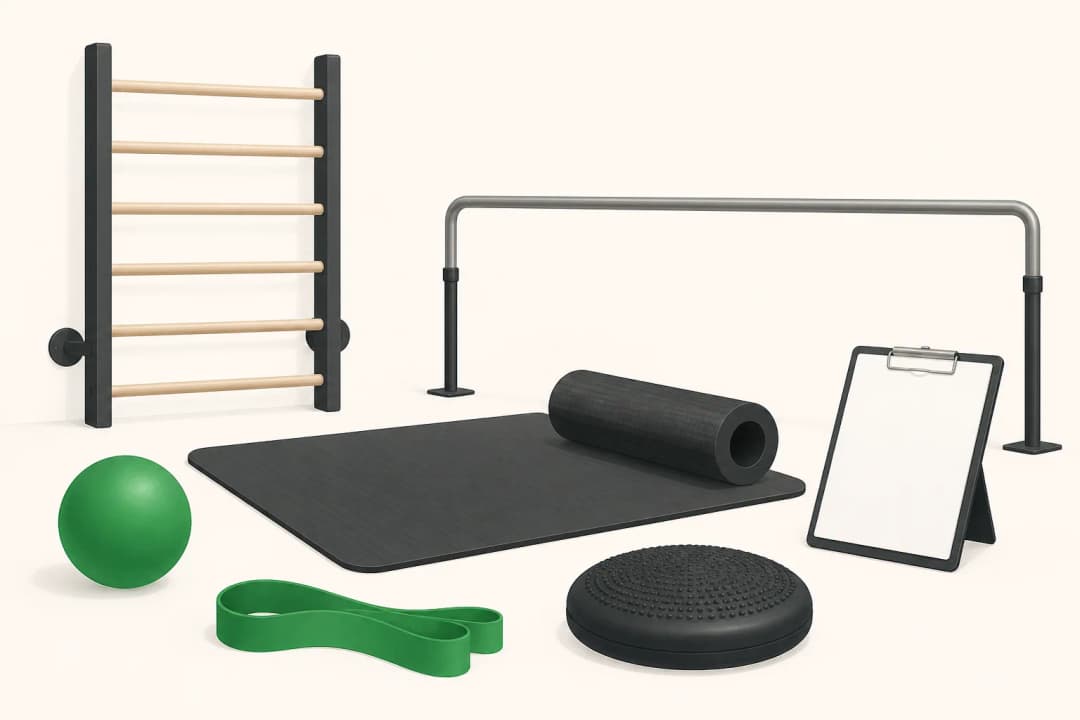
Exercise therapy uses carefully selected and progressed movements to improve strength, flexibility, coordination, balance, and tolerance for daily activity.
This answers one question. It is not a diagnosis and does not replace an assessment by a licensed doctor.
At a glance
- Focus
- Strength, movement, control, balance, and activity tolerance
- Progression
- Load and difficulty increase according to response
- Personalisation
- Exercises are matched to symptoms and goals
What changes with practice
A physiotherapist chooses exercises around your symptoms, examination findings, work, sport, and goals. Some movements build muscle capacity; others improve joint movement, trunk control, balance, or the timing of muscle activity. The load is adjusted gradually so tissues and the nervous system can adapt without a large flare-up.
A programme may support recovery in conditions such as tennis elbow, patellofemoral pain syndrome, repetitive strain injury, spondylolysis, or spondylolisthesis. Progress is judged by useful changes such as easier stairs, steadier lifting, longer walking, or better sport control, not by completing a fixed routine.
How to use your programme
Learn the purpose and technique of each exercise, including breathing and the intended effort. Practise the prescribed amount consistently and record symptoms, function, and recovery between sessions. Mild working effort can be expected, but tell your physiotherapist if pain becomes sharp, spreads, causes new weakness, or stays substantially worse after activity. EMG Biofeedback may be used when seeing or sensing muscle activation is difficult.
When to seek care
Stop the exercise and seek prompt advice for new loss of strength, marked swelling, a joint that becomes locked or unstable, chest pain, fainting, or pain after a significant injury. Urgent assessment is needed for sudden limb weakness, new loss of bladder or bowel control, or numbness in the saddle area.
Questions for your doctor
Ask which activity you are trying to restore, how to distinguish helpful effort from overload, and how the programme will be progressed. Clarify which exercises to pause during a flare, how often you should review technique, and when you can return to work, training, or heavier tasks.
Find care
General Clinics & Polyclinics in Abu Dhabi
That answer is general. If you want it applied to your own case, these are licensed general clinics & polyclinics listed in Abu Dhabi.
27 Ar Ruwwad St - Shakhbout City - MSH4 - Abu Dhabi - United Arab Emirates
Accepts: Daman, Thiqa, Cigna, MetLife +20 more
Al Ruwais, Al Dhafrah
Accepts: Daman, Thiqa, AXA, Cigna +16 more
Al Bahyah - Al Bahyah Old - Abu Dhabi - United Arab Emirates
Accepts: Daman, Thiqa, Cigna, Allianz Care +18 more
Abu Dhabi
Accepts: Daman, Thiqa, AXA, Cigna +27 more
Ordered by verification status and how complete each clinic's public record is, then alphabetically. This is a directory listing, not a ranking — Zavis does not rate or recommend providers.
A factual listing drawn from the DHA, DOH and MOHAP licence registers. It is not a referral, an endorsement, or advice that any of these providers is right for you.
Questions people ask
Should exercise therapy hurt?
Some effort or mild temporary soreness may occur, but sharp, spreading, or progressively worsening pain should be discussed with your therapist.
How soon does exercise therapy work?
Change depends on the problem, starting capacity, consistency, and progression; function may improve before symptoms fully settle.
Related
Related reading
Keep reading
Medical disclaimer. This page is general health information, not medical advice, and it cannot diagnose you. Always consult a licensed healthcare provider about your own symptoms and treatment. In an emergency in the UAE, call 998 for an ambulance.