
How does diabetes medication management work?
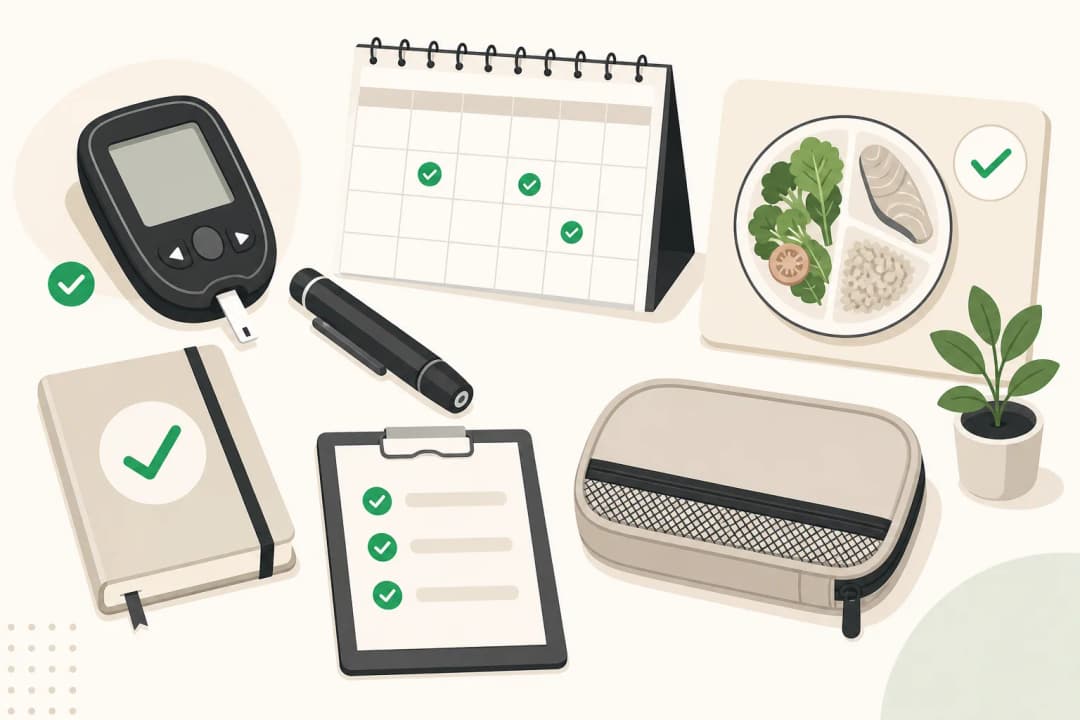
Short answer
Diabetes medication management works by matching medicines to your glucose pattern, health needs and daily routine, then adjusting the plan as those needs change.
This answers one question. It is not a diagnosis and does not replace an assessment by a licensed doctor.
At a glance
- Main aim
- Keep glucose within the range agreed with your clinician.
- Monitoring
- Readings help reveal patterns and guide safe adjustments.
- Do not change alone
- Dose changes should follow an agreed plan.
What the plan may include
Your clinician may use tablets, non-insulin injections, insulin, or a combination. The choice depends on whether you have Type 1 Diabetes or Type 2 Diabetes, your glucose readings, other conditions, kidney function, meals, activity and your preferences. Medicines can lower glucose by helping the body use insulin, prompting insulin release, slowing glucose entry from food, or replacing insulin the body cannot make.
Monitoring shows whether the plan is working and whether it is causing low glucose. A finger-prick meter or Continuous Glucose Monitor can reveal patterns around meals, exercise, sleep and illness. A review may lead to a dose change, a different medicine, or advice about timing.
Using medicines safely
Take each medicine at the prescribed time and learn what to do if you miss a dose. Keep a record of readings, symptoms and changes in meals or activity. Do not stop insulin or change doses on your own. Ask how to recognise low glucose, how to treat it promptly, and how illness may alter your plan.
Bring your medicines and glucose record to reviews. Mention excessive thirst, fatigue or frequent urination, as these may show that glucose is not well controlled, although they can have other causes. Regular screening and review help identify complications before they affect everyday life.
When to seek medical help
Seek urgent help for confusion, fainting, a seizure, severe weakness, trouble breathing, persistent vomiting, or inability to keep fluids down. Contact your diabetes team promptly for repeated low readings, repeated high readings, ketones if you have been advised to check them, or symptoms that are worsening. A sick-day plan should specify who to call and which medicines require special instructions.
Useful questions for your doctor
Ask which result the medicine targets, when to take it, what side effects need attention, and how you should respond to a missed dose or illness. You can also ask whether a Continuous Glucose Monitor would clarify your pattern and when your next medication review is due.
Find care
General Clinics & Polyclinics in Abu Dhabi
That answer is general. If you want it applied to your own case, these are licensed general clinics & polyclinics listed in Abu Dhabi.
27 Ar Ruwwad St - Shakhbout City - MSH4 - Abu Dhabi - United Arab Emirates
Accepts: Daman, Thiqa, Cigna, MetLife +20 more
Al Ruwais, Al Dhafrah
Accepts: Daman, Thiqa, AXA, Cigna +16 more
Al Bahyah - Al Bahyah Old - Abu Dhabi - United Arab Emirates
Accepts: Daman, Thiqa, Cigna, Allianz Care +18 more
Abu Dhabi
Accepts: Daman, Thiqa, AXA, Cigna +27 more
Ordered by verification status and how complete each clinic's public record is, then alphabetically. This is a directory listing, not a ranking — Zavis does not rate or recommend providers.
A factual listing drawn from the DHA, DOH and MOHAP licence registers. It is not a referral, an endorsement, or advice that any of these providers is right for you.
Questions people ask
Will I always need the same diabetes medicine?
Not necessarily. Glucose patterns, health changes, side effects, pregnancy, illness and daily routines can all prompt a review.
What should I do if I miss a dose?
Follow the missed-dose instructions for that medicine or contact your clinician; do not double a dose unless specifically told to do so.
Related
Related reading
Keep reading
Medical disclaimer. This page is general health information, not medical advice, and it cannot diagnose you. Always consult a licensed healthcare provider about your own symptoms and treatment. In an emergency in the UAE, call 998 for an ambulance.