
Type 2 Diabetes: symptoms, diagnosis and management
At a glance
- Also called
- Adult-onset diabetes
- Key issue
- Insulin resistance with raised blood glucose
- Usual care
- Lifestyle support, monitoring and medicines when needed
What type 2 diabetes is
Type 2 diabetes develops when the body does not use insulin effectively and blood glucose stays too high.
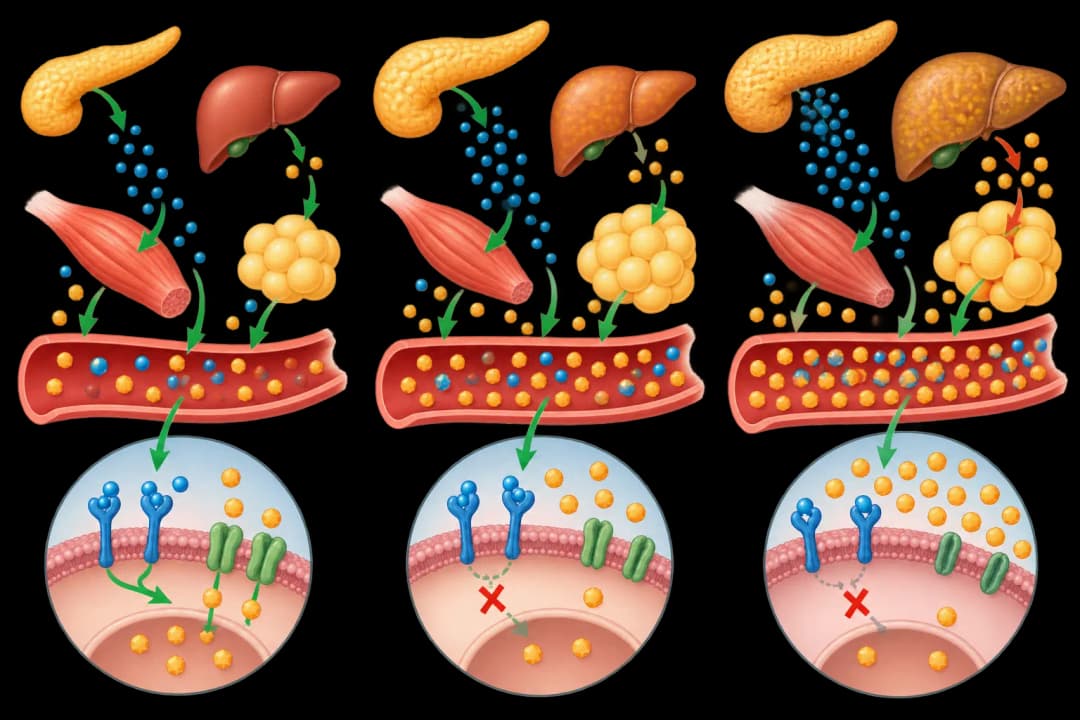
Insulin helps move glucose from the blood into cells for energy. When cells respond less well to insulin, the pancreas may struggle to make enough insulin to keep glucose within the intended range. The condition can develop gradually, and some people have no noticeable symptoms until a blood test identifies it.
Symptoms to notice
Type 2 diabetes can present with thirst, passing urine more often, tiredness, blurred vision, repeated infections, tingling or numbness, and slower healing. Unintentional weight loss can also occur. Symptoms may be mild or develop over time, so their absence does not rule it out.
Seek prompt medical advice for vomiting, confusion, marked drowsiness, severe dehydration, or a rapidly worsening infection. These symptoms need assessment because high glucose can become medically urgent.
Why it develops
Type 2 diabetes has more than one cause. Insulin resistance is central: muscle, liver and fat cells do not respond to insulin as effectively as they should. Over time, insulin-producing cells may not meet the body’s needs. Genetics, body weight, activity, sleep, some medicines and other health conditions can all influence this process.
Course and progression
Glucose levels may rise slowly before diagnosis. With ongoing monitoring and a plan that fits the person, many people can improve glucose management and reduce strain on blood vessels, nerves and organs. Treatment needs can change with illness, weight changes, pregnancy planning, new medicines or life circumstances.
Factors linked with risk
Risk is higher with a family history of type 2 diabetes, previous diabetes in pregnancy, a history of polycystic ovary syndrome, low physical activity, excess body fat around the abdomen, raised blood pressure or abnormal blood fats. These factors guide when a clinician may suggest a blood glucose assessment; they do not diagnose diabetes on their own.
How diagnosis is made
A clinician diagnoses diabetes using blood tests that measure current glucose or average glucose exposure over recent months. They may repeat a test to confirm a result when there are no clear symptoms. The appointment also looks at blood pressure, weight, medicines, foot sensation, kidney health and cardiovascular risk.
Treatment options
Care is individual. Food choices, regular movement, sleep, smoking cessation and weight support can all be part of management. Some people use tablets, injectable medicines or insulin. A prescriber selects treatment according to glucose levels, kidney function, other conditions, side effects and personal priorities. Do not stop a prescribed diabetes medicine without discussing it with the prescribing clinician.
Living with type 2 diabetes
A practical routine can include taking medicines as prescribed, keeping appointments, checking feet for cuts or colour changes, and making a sick-day plan with the care team. Bring a medicine list and any glucose readings to reviews. Nutrition support can focus on sustainable meals rather than restrictive rules.
Possible complications
Persistently raised glucose can damage small blood vessels and nerves and can contribute to kidney disease, eye problems, foot ulcers and cardiovascular disease. Loss of sensation can make foot injuries easier to miss. New redness, warmth, swelling, discharge or broken skin on a foot warrants timely clinical attention.
Reducing future risk
For people at risk, regular activity, nourishing eating patterns, weight support where appropriate and screening can help identify glucose changes early. For people already diagnosed, the same habits work alongside medical treatment rather than replacing it.
Getting the right support
A GP or primary-care clinician can arrange testing, begin management and coordinate reviews. Diabetes educators, dietitians, pharmacists, podiatrists and specialist teams may be involved when goals are difficult to reach or complications need focused care.
Prescribing reference
Medications used for type 2 diabetes
- DapagliflozinSGLT2 inhibitor for diabetes, heart failure, and kidney protection · Prescription only
- DulaglutideOnce-weekly GLP-1 agonist for type 2 diabetes (Trulicity) · Prescription only
- EmpagliflozinSGLT2 inhibitor that lowers blood sugar and protects the heart and kidneys · Prescription only
- ExenatideGLP-1 agonist available as twice-daily or once-weekly injection · Prescription only
- GliclazideSulfonylurea that stimulates insulin release from the pancreas · Prescription only
- GlimepirideSulfonylurea that stimulates insulin secretion · Prescription only
- Insulin AspartRapid-acting mealtime insulin (NovoRapid) for post-meal glucose control · Prescription only
- Insulin DegludecUltra-long-acting basal insulin (Tresiba) with flexible dosing · Prescription only
- Insulin GlargineLong-acting basal insulin (Lantus, Toujeo) for once-daily blood sugar control · Prescription only
- Insulin LisproRapid-acting mealtime insulin (Humalog) taken before meals · Prescription only
- LiraglutideGLP-1 receptor agonist for diabetes (Victoza) and weight loss (Saxenda) · Prescription only
- MetforminFirst-line oral medication for type 2 diabetes that improves insulin sensitivity · Prescription only
- All 17 medicationsRx status, monitoring and specialties for type 2 diabetes.
Questions people ask
Can type 2 diabetes cause weight loss?
Type 2 diabetes can present with unintentional weight loss when the body cannot use glucose effectively. It is worth arranging a clinical assessment, particularly if weight loss is unexplained.
Why are foot checks part of diabetes care?
Diabetes can affect sensation, circulation and skin healing. Regular checks help identify sores, pressure areas or infection early.
Related
Related reading
Keep reading
Find care
General Clinics & Polyclinics in Abu Dhabi
Where type 2 diabetes: symptoms, diagnosis and management is assessed depends on what is causing it. These are licensed general clinics & polyclinics listed in Abu Dhabi.
27 Ar Ruwwad St - Shakhbout City - MSH4 - Abu Dhabi - United Arab Emirates
Accepts: Daman, Thiqa, Cigna, MetLife +20 more
Al Ruwais, Al Dhafrah
Accepts: Daman, Thiqa, AXA, Cigna +16 more
Al Bahyah - Al Bahyah Old - Abu Dhabi - United Arab Emirates
Accepts: Daman, Thiqa, Cigna, Allianz Care +18 more
Abu Dhabi
Accepts: Daman, Thiqa, AXA, Cigna +27 more
Ordered by verification status and how complete each clinic's public record is, then alphabetically. This is a directory listing, not a ranking — Zavis does not rate or recommend providers.
A factual listing drawn from the DHA, DOH and MOHAP licence registers. It is not a referral, an endorsement, or advice that any of these providers is right for you.
Medical disclaimer. This page is general health information, not medical advice, and it cannot diagnose you. Always consult a licensed healthcare provider about your own symptoms and treatment. In an emergency in the UAE, call 998 for an ambulance.