
What should you know about HHS in type 2 diabetes?
Short answer
HHS in type 2 diabetes is a medical emergency involving very high blood glucose, severe dehydration, and altered thinking.
This answers one question. It is not a diagnosis and does not replace an assessment by a licensed doctor.
At a glance
- Full name
- Hyperosmolar hyperglycaemic state
- Core problem
- Very high glucose with severe dehydration
- Response
- Emergency medical assessment and hospital treatment
How HHS develops
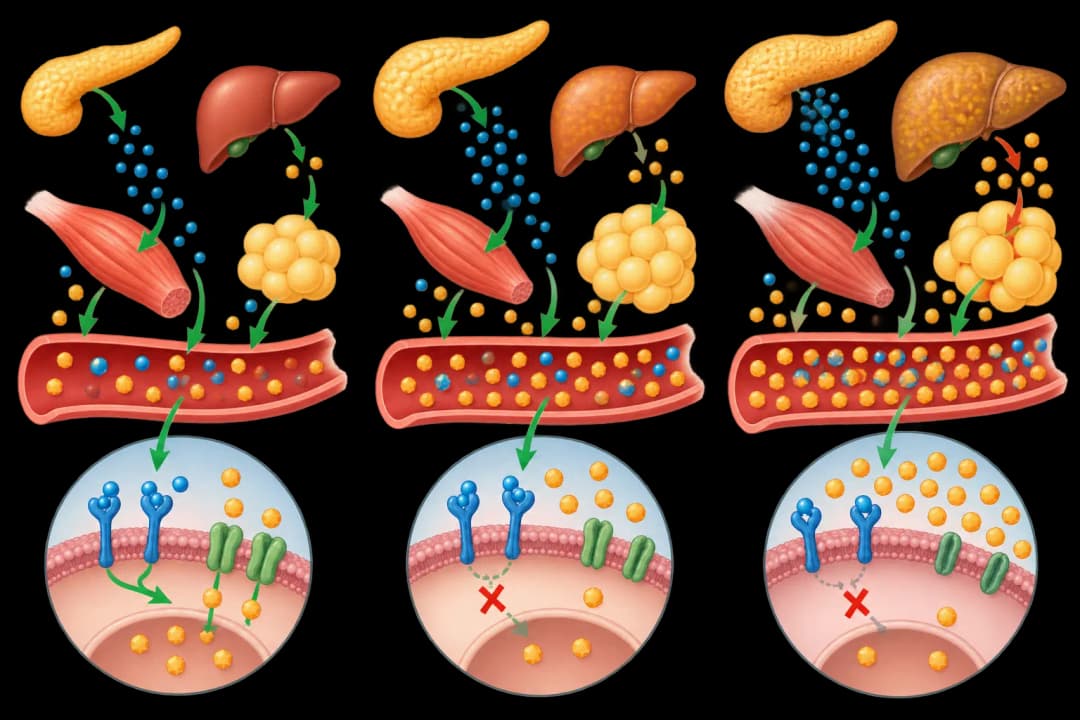
Hyperosmolar hyperglycaemic state, or HHS, happens when blood glucose becomes extremely high and the body loses substantial fluid through increased urination. The blood becomes more concentrated, and dehydration can affect the brain. Confusion, drowsiness, weakness, intense thirst, dry mouth, and frequent urination may develop over hours or days.
Infection, missed diabetes treatment, a new illness, reduced fluid intake, heart problems, kidney disease, or medicines such as steroids can contribute. HHS is different from ordinary day-to-day high glucose and can occur without the typical ketone pattern of diabetic ketoacidosis. A diagnosis requires urgent clinical assessment and blood testing.
What to do if HHS is suspected
Treat suspected HHS as an emergency. Call emergency services or go to the nearest emergency department, especially if the person is confused, very sleepy, unable to drink, vomiting, or becoming weaker. Do not leave them alone or ask them to drive. Bring their diabetes medicines and glucose readings if this does not delay help.
Hospital treatment usually replaces fluid and corrects glucose and mineral disturbances while clinicians look for a trigger such as infection. Do not take extra diabetes medicine unless a healthcare professional gives specific instructions.
Warning signs needing urgent care
Seek emergency help for confusion, reduced alertness, fainting, seizures, severe weakness, breathing difficulty, repeated vomiting, or inability to keep fluids down. High glucose with signs of dehydration, fever, a new infection, or rapidly worsening illness also needs urgent assessment. A glucose reading alone cannot safely rule HHS in or out.
Questions for your doctor
Ask how to manage diabetes during fever, vomiting, poor appetite, or reduced drinking; when to check glucose and ketones; and which medicines need special sick-day instructions. Ask for a written emergency plan and advice on preventing dehydration.
Find care
General Clinics & Polyclinics in Abu Dhabi
That answer is general. If you want it applied to your own case, these are licensed general clinics & polyclinics listed in Abu Dhabi.
27 Ar Ruwwad St - Shakhbout City - MSH4 - Abu Dhabi - United Arab Emirates
Accepts: Daman, Thiqa, Cigna, MetLife +20 more
Al Ruwais, Al Dhafrah
Accepts: Daman, Thiqa, AXA, Cigna +16 more
Al Bahyah - Al Bahyah Old - Abu Dhabi - United Arab Emirates
Accepts: Daman, Thiqa, Cigna, Allianz Care +18 more
Abu Dhabi
Accepts: Daman, Thiqa, AXA, Cigna +27 more
Ordered by verification status and how complete each clinic's public record is, then alphabetically. This is a directory listing, not a ranking — Zavis does not rate or recommend providers.
A factual listing drawn from the DHA, DOH and MOHAP licence registers. It is not a referral, an endorsement, or advice that any of these providers is right for you.
Questions people ask
Can HHS be treated at home?
No. Suspected HHS needs urgent medical assessment because fluid, glucose, and mineral changes require careful monitoring and treatment.
What commonly triggers HHS?
Infection and another acute illness are common triggers, while missed treatment, poor fluid intake, and some medicines may also contribute.
Related
Related reading
Keep reading
Medical disclaimer. This page is general health information, not medical advice, and it cannot diagnose you. Always consult a licensed healthcare provider about your own symptoms and treatment. In an emergency in the UAE, call 998 for an ambulance.