
Hepatectomy procedure steps explained
Short answer
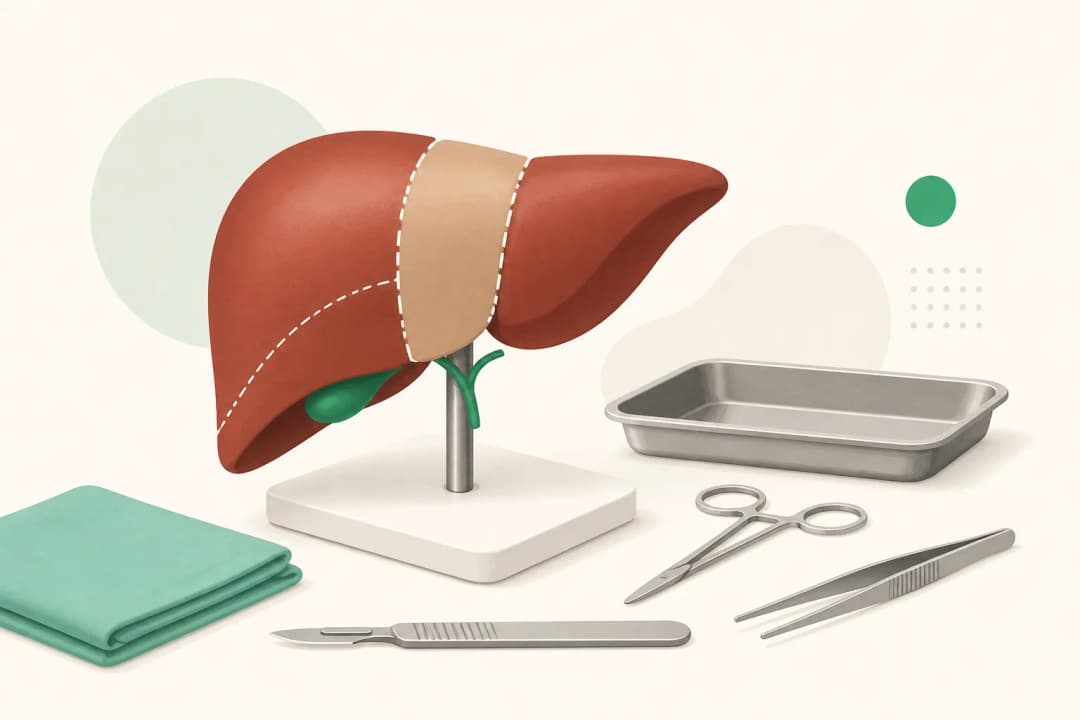
Hepatectomy usually involves imaging and preparation, general anaesthesia, controlled removal of liver tissue, and monitored recovery.
This answers one question. It is not a diagnosis and does not replace an assessment by a licensed doctor.
At a glance
- Anaesthesia
- General anaesthesia is used
- Core step
- The tumour-bearing liver section is removed
- Afterward
- The wound and liver function are monitored
What happens during the operation
Before surgery, scans map the tumour, blood vessels and bile ducts. In the operating room, an anaesthetic team gives general anaesthesia and monitors breathing, circulation and temperature. The surgeon reaches the liver through an open incision or keyhole approach when appropriate.
The liver tissue is divided with techniques that control blood vessels and bile ducts. The tumour and a planned margin of tissue are removed, then the cut surface is checked for bleeding or bile leakage. A specimen goes to the laboratory, and drains may be placed before the incision is closed.
How to prepare
Follow the hospital’s instructions about food, drink and regular medicines. Tell the team about blood thinners, diabetes, allergies, breathing problems and prior abdominal surgery. Ask whether you need support with transport, meals, stairs or childcare after discharge.
The operation may be used for liver cancer, bowel cancer affecting the liver or liver metastases. In selected situations, tumour ablation is another local treatment. The liver resection page gives more background on the operation and its aims.
Warning signs after discharge
Call the surgical team promptly for fever, worsening pain, repeated vomiting, fresh bleeding, increasing redness or fluid at the wound, yellow skin or eyes, dark urine, confusion, chest pain or difficulty breathing. A drain that suddenly stops working or fills with unusual fluid also warrants advice.
Questions to take along
Ask which approach is planned and why, what tissue may be removed, whether a drain is likely, how pain will be controlled, and when the pathology report should be available. Find out which medicines to pause and what movement is encouraged after discharge.
Questions people ask
Will every hepatectomy use the same steps?
No. The route and extent depend on tumour position, liver health and the surgical plan.
Why might a drain be used?
A drain can help the team monitor or remove fluid near the liver while healing begins.
Related
Related reading
Keep reading
Cancer care in the UAE
Hospitals & Medical Centers in Abu Dhabi
Most UAE cancer care is delivered inside hospital services rather than by standalone oncology clinics, so these are licensed hospitals & medical centers listed in Abu Dhabi. Confirm the specific cancer service exists before you travel, and know that asking for a second opinion is routine.
Ahalia Hospital Musaffah Building - Musaffah - Musaffah Industrial - Abu Dhabi - United Arab Emirates
Accepts: Daman, Thiqa, AXA, Cigna +26 more
Al Ruwais Industrial City - Abu Dhabi - United Arab Emirates
Accepts: Daman, Thiqa, AXA, Cigna +30 more
Abu Dhabi, Abu Dhabi
Accepts: Daman, Thiqa, AXA, Cigna +30 more
Second opinions are routine in cancer care and asking for one does not affect your treatment. How to arrange a second opinion in the UAE.
Ordered by verification status and how complete each clinic's public record is, then alphabetically. This is a directory listing, not a ranking — Zavis does not rate or recommend providers.
A factual listing drawn from the DHA, DOH and MOHAP licence registers. It is not a referral, an endorsement, or advice that any of these providers is right for you.
Medical disclaimer. This page is general health information, not medical advice, and it cannot diagnose you. Always consult a licensed healthcare provider about your own symptoms and treatment. In an emergency in the UAE, call 998 for an ambulance.