
Heavy period at age 53: what to know
Short answer
Heavy bleeding at age 53 should be assessed rather than assumed to be a normal menopause change, especially after a gap in periods.
This answers one question. It is not a diagnosis and does not replace an assessment by a licensed doctor.
At a glance
- At this age
- New heavy bleeding should be clinically reviewed
- Mention
- Any gap in periods, medicines, pain, or bleeding after sex
- Urgency
- Rapid blood loss, faintness, or severe weakness needs prompt care
What may be happening
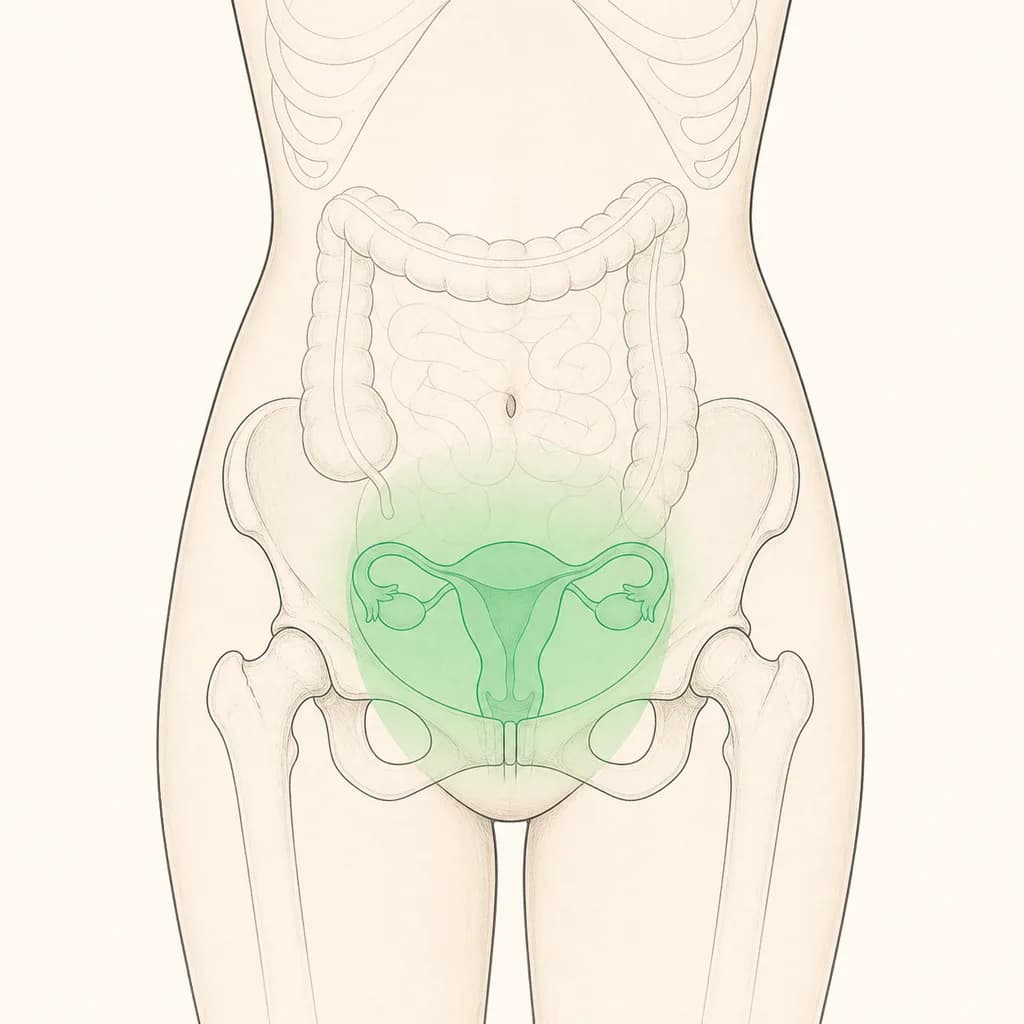
Perimenopause can make ovulation and bleeding irregular, but new heavy flow still needs a clear explanation. Fibroids, polyps, adenomyosis, endometrial hyperplasia, and medicines can affect bleeding at this stage of life. Bleeding after menopause, meaning bleeding after a full year without periods, should be reported promptly. A clinician may discuss a pelvic examination, blood tests, imaging, or sampling of the uterine lining depending on your history.
Pay attention to fatigue, breathlessness, paleness, pelvic pressure, pain, bleeding between periods, or bleeding after sex. Repeated heavy loss can contribute to Iron Deficiency Anaemia.
Practical next steps
Book an appointment for a new or unusually heavy pattern and bring a list of medicines, contraception, and relevant medical history. Record dates, flow, clots, pain, and any time without periods. Keep hydrated and rest if tired; do not assume supplements or hormone treatment are appropriate without advice.
For background, read about Perimenopause, Heavy Periods, and Endometrial Hyperplasia.
When to seek urgent care
Seek urgent help if bleeding is rapidly soaking protection, you feel faint or severely weak, have shortness of breath or chest discomfort, severe pelvic pain, or bleeding after menopause with concerning symptoms. Arrange help with transport if dizziness makes driving unsafe.
Questions for your doctor
Could this be perimenopause, or do I need assessment of the uterine lining? Do I need blood tests or imaging? If I have gone a year without periods, what evaluation is recommended? How should I manage another heavy episode?
Find care
General Clinics & Polyclinics in Abu Dhabi
That answer is general. If you want it applied to your own case, these are licensed general clinics & polyclinics listed in Abu Dhabi.
27 Ar Ruwwad St - Shakhbout City - MSH4 - Abu Dhabi - United Arab Emirates
Accepts: Daman, Thiqa, Cigna, MetLife +20 more
Al Ruwais, Al Dhafrah
Accepts: Daman, Thiqa, AXA, Cigna +16 more
Al Bahyah - Al Bahyah Old - Abu Dhabi - United Arab Emirates
Accepts: Daman, Thiqa, Cigna, Allianz Care +18 more
Abu Dhabi
Accepts: Daman, Thiqa, AXA, Cigna +27 more
Ordered by verification status and how complete each clinic's public record is, then alphabetically. This is a directory listing, not a ranking — Zavis does not rate or recommend providers.
A factual listing drawn from the DHA, DOH and MOHAP licence registers. It is not a referral, an endorsement, or advice that any of these providers is right for you.
Questions people ask
Can perimenopause cause heavy bleeding?
Perimenopause can change ovulation and bleeding patterns, but heavy bleeding should still be assessed for other causes.
What if bleeding starts after menopause?
Bleeding after a full year without periods should be reported promptly, even if it happens only once.
Related
Related reading
Keep reading
Medical disclaimer. This page is general health information, not medical advice, and it cannot diagnose you. Always consult a licensed healthcare provider about your own symptoms and treatment. In an emergency in the UAE, call 998 for an ambulance.