
Heavy Period After IUD Insertion: What to Know
Short answer
Heavier bleeding after IUD insertion can be part of the adjustment period, especially with a copper IUD, but very heavy, persistent, or suddenly worsening bleeding needs medical assessment.
This answers one question. It is not a diagnosis and does not replace an assessment by a licensed doctor.
At a glance
- IUD type matters
- Copper IUDs may make periods heavier; hormonal IUDs commonly cause early irregular spotting.
- Track changes
- Note flow, clots, pain, fever, discharge, dizziness, and any change in the IUD threads.
- Get urgent help
- Rapidly heavy bleeding, faintness, severe pain, fever, or foul-smelling discharge needs prompt care.
The short answer
Heavier bleeding after IUD insertion can be part of the adjustment period, especially with a copper IUD, but very heavy, persistent, or suddenly worsening bleeding needs medical assessment. A hormonal IUD may cause irregular spotting at first, while a copper IUD can make periods heavier or more crampy during the early months. Your own pattern, the type of IUD, and how recently it was inserted all matter.
What heavier bleeding may mean
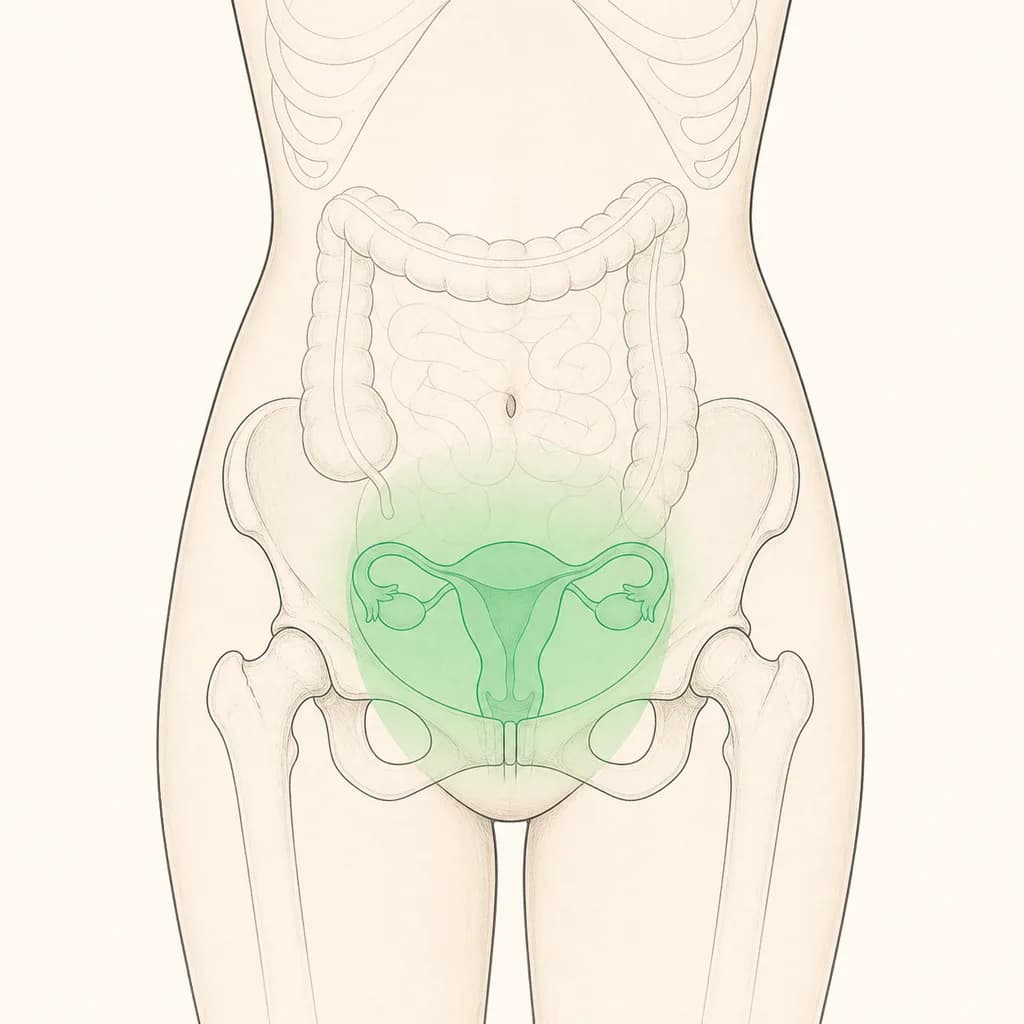
Bleeding can be heavier because the uterus is responding to the device, or because the IUD is not sitting in the intended position. Heavy bleeding can also have causes unrelated to the insertion, such as fibroids, adenomyosis, endometrial polyps, endometrial hyperplasia, perimenopause, or polycystic ovary syndrome. A heavy period is a symptom, not a diagnosis, so the bleeding alone cannot identify its cause.
Contact the clinician who inserted the IUD if bleeding remains difficult to manage, returns after settling, or comes with new pelvic pain. They may check the threads, examine you, and arrange an ultrasound if the position or another uterine cause needs checking.
What you can do now
Record when the bleeding starts, how long it lasts, how often you change pads or tampons, whether clots are present, and any pain, dizziness, fever, or unusual discharge. This gives your clinician a clearer picture than estimating from memory. Use the menstrual products that let you judge the flow safely, and take only pain relief that is suitable for you and used according to its label or a clinician’s advice.
Do not pull on the IUD threads or try to reposition the device. If you cannot feel the threads when you usually can, feel plastic at the cervix, or think the IUD has partly come out, arrange prompt medical advice and use a backup contraceptive method until you have been assessed. Ongoing blood loss can contribute to iron deficiency anaemia; ask about an assessment if you feel unusually tired, breathless, pale, or light-headed.
When to seek care
Seek urgent medical care for bleeding that rapidly soaks through protection, fainting or near-fainting, severe or one-sided pelvic pain, marked weakness, fever, or foul-smelling discharge. These symptoms can signal substantial blood loss, infection, or a pregnancy-related emergency and should not be watched at home.
Arrange a prompt review if heavy bleeding continues beyond the expected adjustment period, interrupts normal activities, occurs after sex, or is accompanied by increasing cramps. If pregnancy is possible and you have bleeding with pain, seek urgent advice because an IUD pregnancy needs prompt assessment.
Questions for your doctor
Ask which type of IUD you have and whether your bleeding pattern fits its expected adjustment effects. You can also ask whether the threads and position should be checked, whether a pregnancy test or ultrasound is appropriate, and whether your symptoms warrant a blood test for iron deficiency. If the bleeding is unacceptable, discuss options that protect your contraceptive needs, including whether another method would suit you better.
Find care
General Clinics & Polyclinics in Abu Dhabi
That answer is general. If you want it applied to your own case, these are licensed general clinics & polyclinics listed in Abu Dhabi.
27 Ar Ruwwad St - Shakhbout City - MSH4 - Abu Dhabi - United Arab Emirates
Accepts: Daman, Thiqa, Cigna, MetLife +20 more
Al Ruwais, Al Dhafrah
Accepts: Daman, Thiqa, AXA, Cigna +16 more
Al Bahyah - Al Bahyah Old - Abu Dhabi - United Arab Emirates
Accepts: Daman, Thiqa, Cigna, Allianz Care +18 more
Abu Dhabi
Accepts: Daman, Thiqa, AXA, Cigna +27 more
Ordered by verification status and how complete each clinic's public record is, then alphabetically. This is a directory listing, not a ranking — Zavis does not rate or recommend providers.
A factual listing drawn from the DHA, DOH and MOHAP licence registers. It is not a referral, an endorsement, or advice that any of these providers is right for you.
Questions people ask
How long can periods be heavier after a copper IUD is inserted?
Heavier or more crampy periods can occur during the early adjustment period. If the bleeding is severe, keeps worsening, or does not begin to settle, contact your clinician for a review.
Can a hormonal IUD cause a heavy period?
A hormonal IUD more often causes irregular spotting or unpredictable bleeding early on, but any bleeding that is difficult to manage or paired with pain should be assessed.
Could heavy bleeding after insertion mean the IUD moved?
It can be one possibility, particularly when bleeding comes with new pain or a change in the threads, but bleeding alone cannot confirm a position problem. A clinician can check.
Related
Related reading
Keep reading
Medical disclaimer. This page is general health information, not medical advice, and it cannot diagnose you. Always consult a licensed healthcare provider about your own symptoms and treatment. In an emergency in the UAE, call 998 for an ambulance.