
Heart electrocardiogram: what should you know?
Short answer
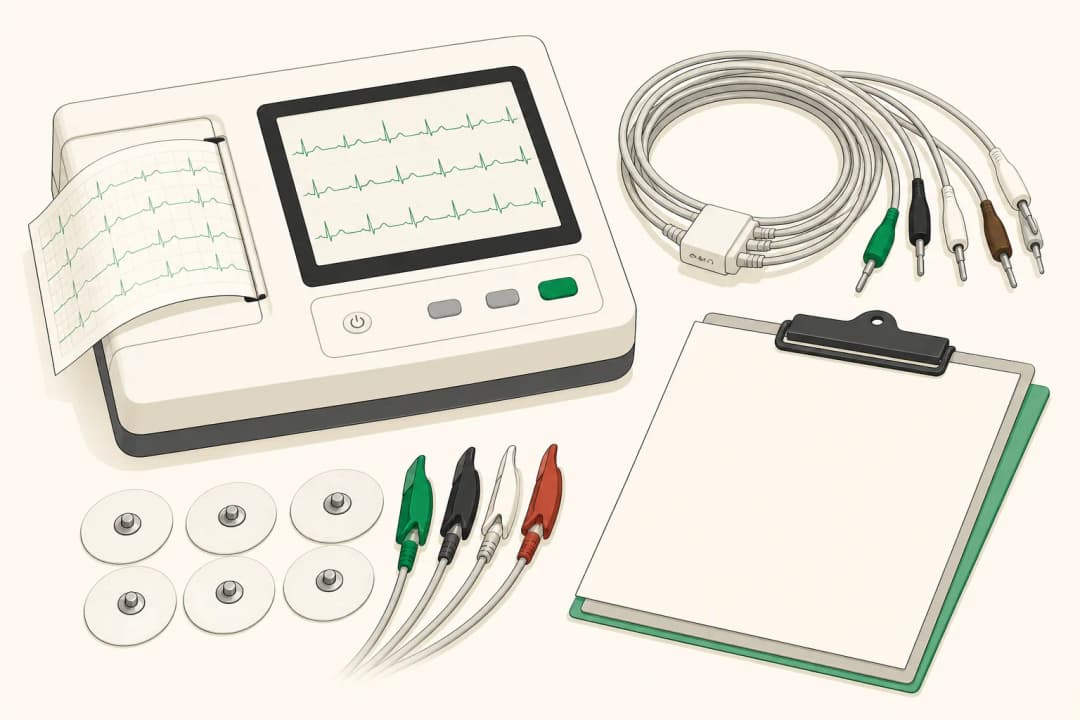
A heart electrocardiogram, also called an ECG or EKG, records electrical activity to help assess heart rate and rhythm.
This answers one question. It is not a diagnosis and does not replace an assessment by a licensed doctor.
At a glance
- Also called
- ECG or EKG.
- During a resting test
- Skin electrodes record signals while you remain still.
- If symptoms are intermittent
- Longer rhythm monitoring may capture more information.
What an ECG can show
An ECG creates a tracing from electrodes placed on the skin. A clinician reviews the timing and shape of the signals, looking for clues about rhythm disturbances, changes in how the heart is activated, or patterns that may fit reduced blood flow. The tracing is one part of an assessment, not a stand-alone explanation for every symptom. Angina, atrial fibrillation, and heart failure can require different combinations of history, examination, and testing.
A resting ECG is recorded while you lie still. If symptoms are occasional, a longer monitor may be considered because a short appointment can capture only one moment.
Before and during the test
Wear practical clothing and tell the clinician about medicines, implanted devices, skin irritation, or symptoms such as palpitations and dizziness. Avoid moving or talking during the recording so the tracing is easier to interpret. Keep a note of what you felt, when it happened, and whether activity or rest changed it. Your GP consultation can help determine whether an ECG is the right first test and what should happen next.
When to seek urgent care
Call emergency services for new chest pressure, severe breathing difficulty, collapse, sudden weakness, or a fast or irregular heartbeat with faintness. Do not delay urgent care while arranging an ECG or waiting to discuss an old result. A normal-looking tracing cannot explain away serious or worsening symptoms.
Questions for your doctor
What question is this ECG intended to answer? Does my tracing need comparison with an earlier one? If symptoms were absent during the test, would longer monitoring be useful?
Find care
General Clinics & Polyclinics in Abu Dhabi
That answer is general. If you want it applied to your own case, these are licensed general clinics & polyclinics listed in Abu Dhabi.
27 Ar Ruwwad St - Shakhbout City - MSH4 - Abu Dhabi - United Arab Emirates
Accepts: Daman, Thiqa, Cigna, MetLife +20 more
Al Ruwais, Al Dhafrah
Accepts: Daman, Thiqa, AXA, Cigna +16 more
Al Bahyah - Al Bahyah Old - Abu Dhabi - United Arab Emirates
Accepts: Daman, Thiqa, Cigna, Allianz Care +18 more
Abu Dhabi
Accepts: Daman, Thiqa, AXA, Cigna +27 more
Ordered by verification status and how complete each clinic's public record is, then alphabetically. This is a directory listing, not a ranking — Zavis does not rate or recommend providers.
A factual listing drawn from the DHA, DOH and MOHAP licence registers. It is not a referral, an endorsement, or advice that any of these providers is right for you.
Questions people ask
Is an ECG the same as an electrocardiogram?
Yes. ECG and EKG are common abbreviations for an electrocardiogram.
Can I talk during an ECG?
The recording is easier to interpret if you stay still and quiet; tell the clinician if you feel unwell during it.
Related
Related reading
Keep reading
Medical disclaimer. This page is general health information, not medical advice, and it cannot diagnose you. Always consult a licensed healthcare provider about your own symptoms and treatment. In an emergency in the UAE, call 998 for an ambulance.