
How to Heal Cracked Skin
Short answer
Cracked skin heals best when the barrier is protected with gentle cleansing, frequent emollient use, and treatment of its underlying cause.
This answers one question. It is not a diagnosis and does not replace an assessment by a licensed doctor.
At a glance
- First measure
- Apply a thick emollient after washing
- Protect
- Cover fissures and reduce irritants
- Review for
- Recurrent, infected, or non-healing cracks
Why skin develops cracks
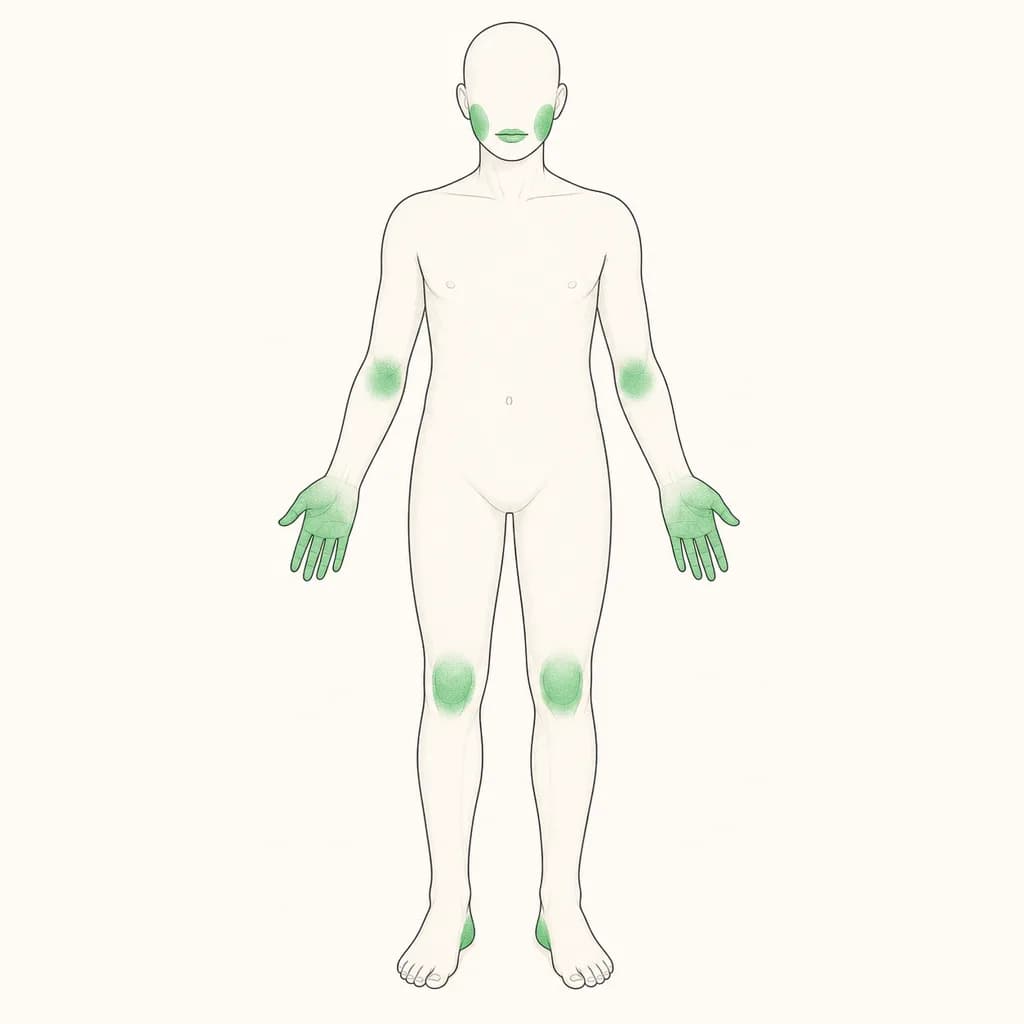
Fissures form when the skin barrier becomes dry, inflamed, thickened, or repeatedly stretched. Hands, feet, heels, lips, and skin folds are common sites, with stinging or bleeding when a crack opens. Frequent washing, cold or dry air, harsh cleansers, friction, and wet work can contribute. Persistent cracking may occur with [Atopic Dermatitis](/conditions/atopic-dermatitis/) or [Psoriasis](/conditions/psoriasis/), so appearance alone cannot identify the cause.
How to support healing
Wash with lukewarm water and a fragrance-free cleanser, then pat dry. Apply a thick emollient immediately and repeat after washing; ointments can seal moisture more effectively than light lotions. Cover painful fissures with a clean dressing and protect hands with suitable gloves during wet or irritating tasks. Avoid picking, hot water, fragranced products, and harsh exfoliation. Medical [Emollient Therapy](/treatments/medical-dermatology/emollient-therapy/) may be recommended when ordinary moisturising is not enough.
When to seek care
Arrange a review if cracks keep returning, bleed often, are widespread, disturb sleep, or do not improve with consistent barrier care. Seek prompt help for spreading redness, warmth, swelling, pus, increasing pain, or fever, which can indicate infection. A clinician can look for eczema, psoriasis, contact irritation, fungal infection, or another trigger and prescribe treatment suited to the site.
Questions for your doctor
What is most likely causing these fissures? Which emollient texture and dressing should I use? Could a cleanser, workplace exposure, eczema, psoriasis, or fungal problem be involved? What should I do if a crack becomes painful or starts draining?
Find care
General Clinics & Polyclinics in Abu Dhabi
That answer is general. If you want it applied to your own case, these are licensed general clinics & polyclinics listed in Abu Dhabi.
27 Ar Ruwwad St - Shakhbout City - MSH4 - Abu Dhabi - United Arab Emirates
Accepts: Daman, Thiqa, Cigna, MetLife +20 more
Al Ruwais, Al Dhafrah
Accepts: Daman, Thiqa, AXA, Cigna +16 more
Al Bahyah - Al Bahyah Old - Abu Dhabi - United Arab Emirates
Accepts: Daman, Thiqa, Cigna, Allianz Care +18 more
Abu Dhabi
Accepts: Daman, Thiqa, AXA, Cigna +27 more
Ordered by verification status and how complete each clinic's public record is, then alphabetically. This is a directory listing, not a ranking — Zavis does not rate or recommend providers.
A factual listing drawn from the DHA, DOH and MOHAP licence registers. It is not a referral, an endorsement, or advice that any of these providers is right for you.
Questions people ask
Is petroleum jelly useful for cracked skin?
A plain occlusive ointment can reduce water loss and protect a fissure. Apply it to clean, dry skin unless a clinician has advised a different product.
Why does cracked skin keep coming back?
Ongoing dryness, irritants, friction, eczema, psoriasis, or infection may prevent the barrier from recovering. Recurrent fissures deserve an assessment of the cause.
Related
Related reading
Keep reading
Medical disclaimer. This page is general health information, not medical advice, and it cannot diagnose you. Always consult a licensed healthcare provider about your own symptoms and treatment. In an emergency in the UAE, call 998 for an ambulance.