
What to do for a groin strain
Short answer
For a suspected groin strain, stop painful loading, keep comfortable movement, use short periods of cold for relief, and obtain assessment before returning to demanding sport.
This answers one question. It is not a diagnosis and does not replace an assessment by a licensed doctor.
At a glance
- Protect first
- Stop sharp-pain movements and demanding sport
- Keep moving
- Use comfortable walking if tolerated
- Progress later
- Build strength before running and cutting
What may be injured
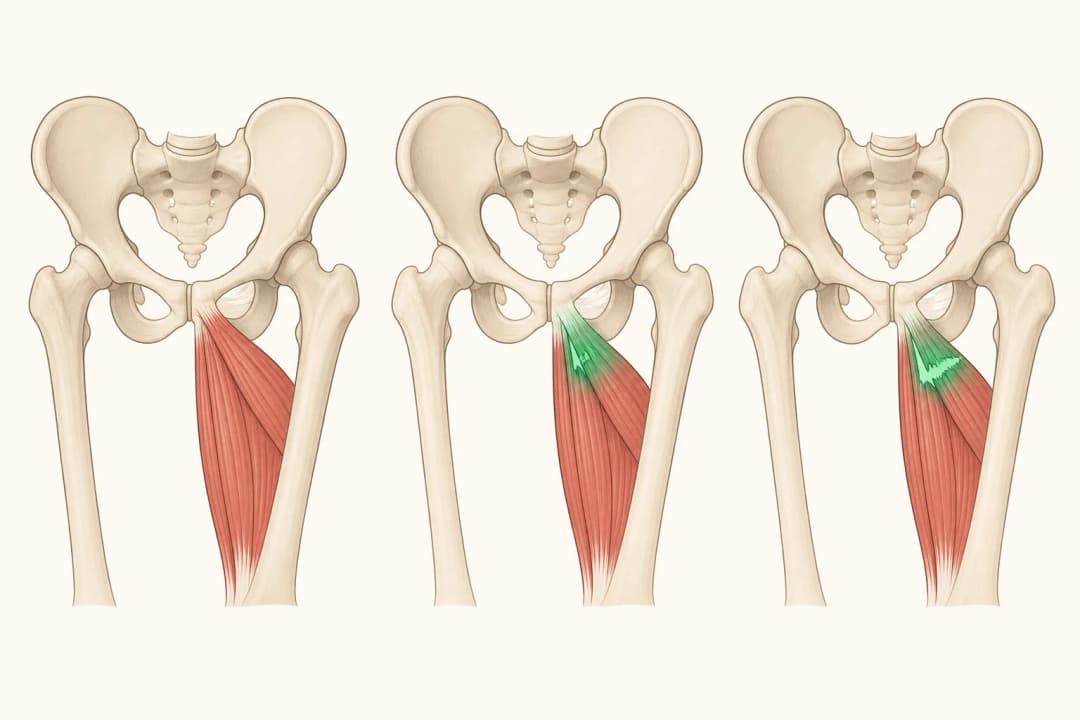
A groin strain usually affects an adductor muscle or its tendon on the inner thigh. It may start with a sudden pull during a sprint, kick, slide, or change of direction, followed by pain with walking or bringing the legs together. Tenderness, weakness, swelling, or bruising can accompany it. Similar pain can come from the hip, abdominal wall, hernia, or scrotal structures, so a diagnosis should be based on an examination rather than the activity alone.
Steps you can take
Stop sport and avoid movements that produce sharp pain. For the early phase, choose comfortable walking and change position regularly rather than staying completely still. A cold pack wrapped in cloth may ease discomfort briefly; remove it if the skin becomes numb or irritated. Do not force a stretch or repeatedly test strength. After assessment, Exercise Therapy can progress from gentle activation to strengthening. A Return-to-Sport Programme can then build running, cutting, and sport-specific confidence.
When to seek care
Arrange prompt care if you cannot walk normally, pain is severe, bruising or swelling is substantial, or a bulge appears in the groin. Seek urgent attention for sudden scrotal pain or swelling, fever, a cold or pale leg, or numbness that is new or worsening. If improvement stops or symptoms return whenever activity increases, book a review rather than repeatedly resting and restarting.
Questions for your doctor
Ask which activities are safe, whether the hip and abdominal wall need checking, when strengthening should start, how to judge readiness for sport, and what changes require urgent care.
Find care
General Clinics & Polyclinics in Abu Dhabi
That answer is general. If you want it applied to your own case, these are licensed general clinics & polyclinics listed in Abu Dhabi.
27 Ar Ruwwad St - Shakhbout City - MSH4 - Abu Dhabi - United Arab Emirates
Accepts: Daman, Thiqa, Cigna, MetLife +20 more
Al Ruwais, Al Dhafrah
Accepts: Daman, Thiqa, AXA, Cigna +16 more
Al Bahyah - Al Bahyah Old - Abu Dhabi - United Arab Emirates
Accepts: Daman, Thiqa, Cigna, Allianz Care +18 more
Abu Dhabi
Accepts: Daman, Thiqa, AXA, Cigna +27 more
Ordered by verification status and how complete each clinic's public record is, then alphabetically. This is a directory listing, not a ranking — Zavis does not rate or recommend providers.
A factual listing drawn from the DHA, DOH and MOHAP licence registers. It is not a referral, an endorsement, or advice that any of these providers is right for you.
Questions people ask
Should I rest completely after a groin strain?
Usually, comfortable gentle movement is preferable to complete stillness, while painful loading and sport are paused.
When can I return to sport?
Return when walking, strengthening, running, and sport-specific drills can be completed without a meaningful symptom flare, using a graded plan.
Related
Related reading
Keep reading
Medical disclaimer. This page is general health information, not medical advice, and it cannot diagnose you. Always consult a licensed healthcare provider about your own symptoms and treatment. In an emergency in the UAE, call 998 for an ambulance.