
Why a groin strain may take a long time to heal
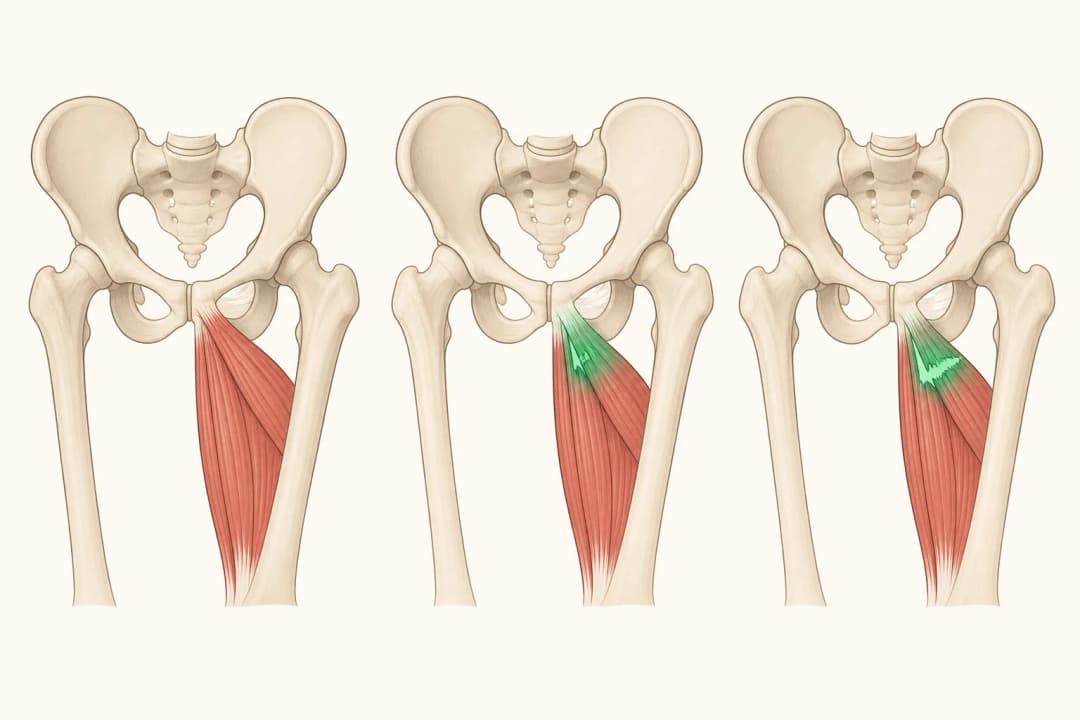
Short answer
A groin strain that seems to take forever to heal may be repeatedly overloaded, insufficiently rehabilitated, or misidentified, so persistent symptoms deserve a focused examination.
This answers one question. It is not a diagnosis and does not replace an assessment by a licensed doctor.
At a glance
- Common setback
- Resuming high-load activity before strength returns
- Useful review
- Hip, adductor, abdominal, and nerve examination
- Rehabilitation focus
- Gradual loading matched to symptoms
Why recovery can stall
The adductors work during walking, stairs, running, and changes of direction, so ordinary activity can keep irritating an incompletely healed injury. Returning to sport as soon as pain fades, skipping strength work, or stretching aggressively can also cause setbacks. Persistent groin pain may instead involve the hip joint, pubic area, abdominal wall, tendon, or a nerve. A clinician should review the original mechanism, current pain pattern, strength, hip movement, and any swelling or bruising.
How to move forward
Keep a simple record of which activities raise symptoms and how long the response lasts. Temporarily reduce the highest-load movements while maintaining comfortable general movement. A rehabilitation plan usually progresses from controlled range of motion to isometric work, strengthening, and sport-specific drills as tolerance improves. Exercise Therapy can provide that progression, while a Return-to-Sport Programme can test running, cutting, and kicking in stages. Avoid comparing recovery with another person’s timeline.
When to seek care
Book an assessment when pain has plateaued, keeps returning, limits sleep or walking, or has not improved despite sensible activity changes. Seek urgent care for a new painful bulge, fever, severe sudden pain, inability to bear weight, or scrotal pain or swelling. Reassessment is especially useful when the original injury was never examined.
Questions for your doctor
Ask what is delaying recovery, whether the tendon or hip is involved, what load is suitable today, how progress will be measured, and when imaging or specialist referral is appropriate.
Find care
General Clinics & Polyclinics in Abu Dhabi
That answer is general. If you want it applied to your own case, these are licensed general clinics & polyclinics listed in Abu Dhabi.
27 Ar Ruwwad St - Shakhbout City - MSH4 - Abu Dhabi - United Arab Emirates
Accepts: Daman, Thiqa, Cigna, MetLife +20 more
Al Ruwais, Al Dhafrah
Accepts: Daman, Thiqa, AXA, Cigna +16 more
Al Bahyah - Al Bahyah Old - Abu Dhabi - United Arab Emirates
Accepts: Daman, Thiqa, Cigna, Allianz Care +18 more
Abu Dhabi
Accepts: Daman, Thiqa, AXA, Cigna +27 more
Ordered by verification status and how complete each clinic's public record is, then alphabetically. This is a directory listing, not a ranking — Zavis does not rate or recommend providers.
A factual listing drawn from the DHA, DOH and MOHAP licence registers. It is not a referral, an endorsement, or advice that any of these providers is right for you.
Questions people ask
Does ongoing pain prove the strain is severe?
No. Ongoing pain can reflect repeated irritation or a different source, so examination is more useful than judging severity by duration alone.
Can physiotherapy help a persistent groin strain?
A tailored programme can address strength, movement, load management, and a gradual return to demanding activity.
Related
Related reading
Keep reading
Medical disclaimer. This page is general health information, not medical advice, and it cannot diagnose you. Always consult a licensed healthcare provider about your own symptoms and treatment. In an emergency in the UAE, call 998 for an ambulance.