
How to treat a groin strain
Short answer
Treat a groin strain with temporary load reduction, comfortable movement, and progressive strengthening guided by symptoms.
This answers one question. It is not a diagnosis and does not replace an assessment by a licensed doctor.
At a glance
- First adjustment
- Remove or modify the movement that sharply increases pain
- Rehabilitation
- Progress from comfortable activation to task-specific loading
- Professional input
- Useful when diagnosis, progress, or return to activity is unclear
What treatment is trying to achieve
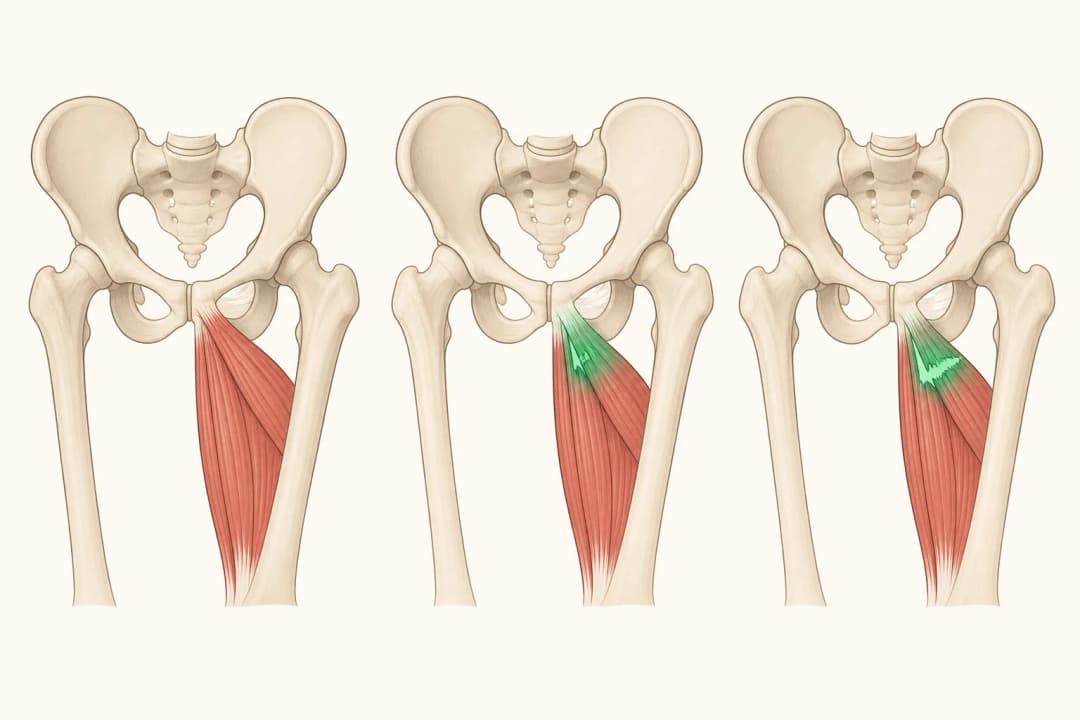
Treatment protects irritated muscle while preserving the movement and strength needed for daily life. Early pain often increases with sprinting, lunging, kicking, or squeezing the legs together. As sensitivity settles, the adductors and nearby hip muscles need gradual loading so they can control the pelvis and thigh again. Because groin pain can also come from the hip, abdomen, or other structures, an examination is helpful when the cause is uncertain.
A staged approach
Stop or modify activities that cause sharp pain, but keep gentle walking and comfortable range of motion when possible. Cold therapy wrapped in cloth may help early soreness. Progress to controlled muscle contractions, strengthening through useful ranges, balance, and then faster or sport-specific drills. Exercise Therapy can provide the progression; Sports Physiotherapy can tailor treatment for athletes, dancers, or physically demanding jobs.
When to get medical help
Seek an assessment for severe pain, a pop followed by weakness, substantial bruising, inability to bear weight, or symptoms that do not improve with sensible activity changes. Get urgent care for major trauma, a new painful groin bulge, fever, numbness, or a cold-looking leg. Do not let a short-lived reduction in pain replace a proper return-to-activity check.
Questions about treatment
Ask whether you need imaging, which activities are safe now, and how to progress resistance. Ask how the plan will address work or sport demands and what findings would prompt reassessment.
Find care
General Clinics & Polyclinics in Abu Dhabi
That answer is general. If you want it applied to your own case, these are licensed general clinics & polyclinics listed in Abu Dhabi.
27 Ar Ruwwad St - Shakhbout City - MSH4 - Abu Dhabi - United Arab Emirates
Accepts: Daman, Thiqa, Cigna, MetLife +20 more
Al Ruwais, Al Dhafrah
Accepts: Daman, Thiqa, AXA, Cigna +16 more
Al Bahyah - Al Bahyah Old - Abu Dhabi - United Arab Emirates
Accepts: Daman, Thiqa, Cigna, Allianz Care +18 more
Abu Dhabi
Accepts: Daman, Thiqa, AXA, Cigna +27 more
Ordered by verification status and how complete each clinic's public record is, then alphabetically. This is a directory listing, not a ranking — Zavis does not rate or recommend providers.
A factual listing drawn from the DHA, DOH and MOHAP licence registers. It is not a referral, an endorsement, or advice that any of these providers is right for you.
Questions people ask
Do I need complete rest for a groin strain?
Usually the aim is relative rest: reduce painful loads while keeping comfortable movement and gradually rebuilding capacity.
Can physiotherapy treat a groin strain?
Physiotherapy can assess the likely source of pain and guide staged mobility, strength, and return-to-activity work.
Related
Related reading
Keep reading
Medical disclaimer. This page is general health information, not medical advice, and it cannot diagnose you. Always consult a licensed healthcare provider about your own symptoms and treatment. In an emergency in the UAE, call 998 for an ambulance.