
How long does a groin strain take to heal?
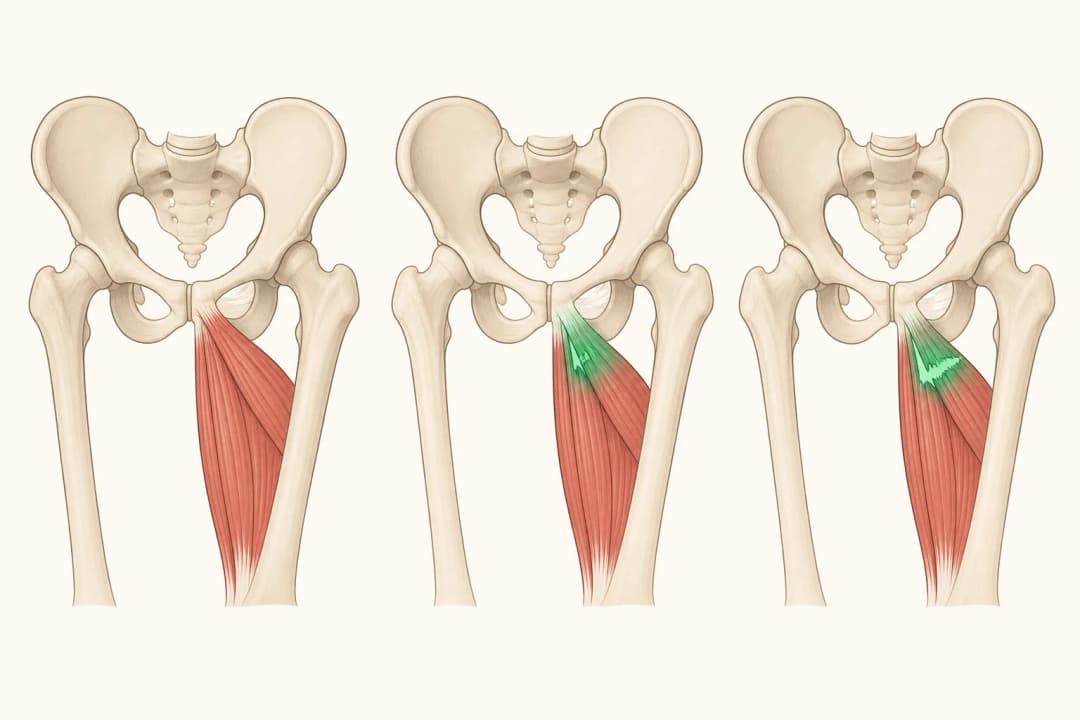
Short answer
Groin strain healing time varies with the injured tissue, strain severity, activity demands, and how recovery progresses.
This answers one question. It is not a diagnosis and does not replace an assessment by a licensed doctor.
At a glance
- Recovery marker
- Improving movement, strength, and tolerance of daily tasks
- Useful principle
- Increase activity gradually instead of making abrupt jumps
- Review trigger
- Stalled progress or repeated flare-ups with loading
Why recovery is different for each person
A mild strain may settle faster than an injury with marked weakness, bruising, or pain during ordinary walking. Recovery is not measured only by resting pain: the groin also needs to tolerate leg movements, resistance, speed, and the demands of work or sport. A sudden return to full activity can irritate healing tissue, while steady improvement in movement and strength is reassuring. Persistent symptoms may mean the original diagnosis or loading plan needs review.
Supporting steady progress
Start with activity that stays within a tolerable range, then increase one demand at a time. Gentle walking can be followed by mobility, isometric work, strengthening, and task-specific drills as symptoms allow. Do not use a pain-free day as permission for an abrupt jump in training. Exercise Therapy provides a structured progression, and a Return-to-Sport Programme can test readiness through increasingly demanding movements.
When recovery needs review
Arrange an assessment if pain is not gradually easing, strength remains reduced, or symptoms return each time activity increases. Seek urgent care after major trauma, if walking is impossible, or if severe swelling, numbness, fever, or a groin bulge develops. A clinician can check whether the injury involves the adductors, hip, abdominal wall, or another structure.
Questions about your timeline
Ask what recovery milestones apply to your activities, how much discomfort is acceptable during exercise, and which test should come before full participation. Ask what to change if symptoms are worse later that day or the next morning.
Find care
General Clinics & Polyclinics in Abu Dhabi
That answer is general. If you want it applied to your own case, these are licensed general clinics & polyclinics listed in Abu Dhabi.
27 Ar Ruwwad St - Shakhbout City - MSH4 - Abu Dhabi - United Arab Emirates
Accepts: Daman, Thiqa, Cigna, MetLife +20 more
Al Ruwais, Al Dhafrah
Accepts: Daman, Thiqa, AXA, Cigna +16 more
Al Bahyah - Al Bahyah Old - Abu Dhabi - United Arab Emirates
Accepts: Daman, Thiqa, Cigna, Allianz Care +18 more
Abu Dhabi
Accepts: Daman, Thiqa, AXA, Cigna +27 more
Ordered by verification status and how complete each clinic's public record is, then alphabetically. This is a directory listing, not a ranking — Zavis does not rate or recommend providers.
A factual listing drawn from the DHA, DOH and MOHAP licence registers. It is not a referral, an endorsement, or advice that any of these providers is right for you.
Questions people ask
Can a groin strain feel better before it is ready for sport?
Yes. Resting comfort may return before the muscles can tolerate sprinting, cutting, kicking, or repeated effort.
What if pain returns when I increase activity?
Reduce the latest increase, let symptoms settle, and seek guidance if the pattern keeps recurring or progress stops.
Related
Related reading
Keep reading
Medical disclaimer. This page is general health information, not medical advice, and it cannot diagnose you. Always consult a licensed healthcare provider about your own symptoms and treatment. In an emergency in the UAE, call 998 for an ambulance.