
Groin strain and running: returning safely
Short answer
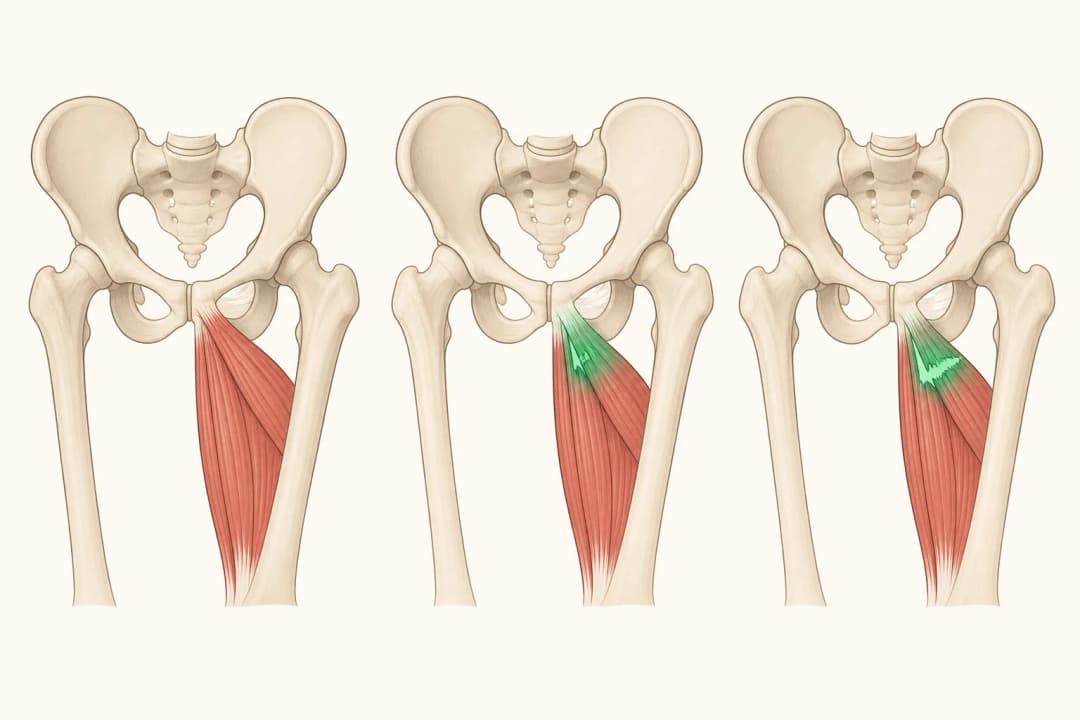
Running after a groin strain should resume gradually, only when walking and basic strengthening are comfortable and symptoms are not worsening afterwards.
This answers one question. It is not a diagnosis and does not replace an assessment by a licensed doctor.
At a glance
- Before jogging
- Comfortable walking and basic strengthening
- Change gradually
- Duration, speed, hills, or turns
- Warning sign
- Pain or limping that worsens after running
Why running can hurt
Running repeatedly loads the adductor muscles as the leg swings, accepts body weight, and stabilises the pelvis. Faster running, hills, long strides, sharp turns, and uneven ground can increase the demand. Pain during a run or a clear increase later that day suggests the current load is too high, even if the first few minutes felt manageable.
The source of groin pain is not always a muscle strain. A clinical assessment can check strength, hip movement, running mechanics, and other possible causes before training is increased.
A measured return to running
Begin with comfortable daily walking and prescribed strengthening. Then use a controlled jog on a flat surface, keeping the session short and checking how the groin feels during the activity and afterwards. Increase only one demand at a time, such as duration, speed, hills, or turns. Exercise therapy can rebuild strength and control, while a return-to-sport programme can organise running, acceleration, cutting, and sport drills. Sports physiotherapy is useful when symptoms relate to training technique or a demanding schedule.
When running should stop
Stop and arrange an assessment if running causes sharp pain, limping, sudden weakness, a pop, or symptoms that continue to worsen after the session. Seek prompt care after a collision or fall, or for severe pain at rest, rapidly increasing swelling, fever, numbness, or a cold or discoloured leg. Repeated flare-ups mean the progression needs review rather than repeated attempts at the same running load.
Questions about your running plan
What running level is appropriate for my current strength? How should I increase speed, hills, and direction changes? Which symptoms mean I should reduce the next session, and would a sports physiotherapy or return-to-sport plan improve my progression?
Find care
General Clinics & Polyclinics in Abu Dhabi
That answer is general. If you want it applied to your own case, these are licensed general clinics & polyclinics listed in Abu Dhabi.
27 Ar Ruwwad St - Shakhbout City - MSH4 - Abu Dhabi - United Arab Emirates
Accepts: Daman, Thiqa, Cigna, MetLife +20 more
Al Ruwais, Al Dhafrah
Accepts: Daman, Thiqa, AXA, Cigna +16 more
Al Bahyah - Al Bahyah Old - Abu Dhabi - United Arab Emirates
Accepts: Daman, Thiqa, Cigna, Allianz Care +18 more
Abu Dhabi
Accepts: Daman, Thiqa, AXA, Cigna +27 more
Ordered by verification status and how complete each clinic's public record is, then alphabetically. This is a directory listing, not a ranking — Zavis does not rate or recommend providers.
A factual listing drawn from the DHA, DOH and MOHAP licence registers. It is not a referral, an endorsement, or advice that any of these providers is right for you.
Questions people ask
Can I run through mild groin discomfort?
Mild symptoms may still indicate that the load is too high. Use the response during and after running to guide a reduction or clinical review.
Are hills suitable during early recovery?
Hills increase the demand on the hip and inner-thigh muscles. Add them only after flat running is comfortable and your rehabilitation plan supports progression.
Related
Related reading
Keep reading
Medical disclaimer. This page is general health information, not medical advice, and it cannot diagnose you. Always consult a licensed healthcare provider about your own symptoms and treatment. In an emergency in the UAE, call 998 for an ambulance.