
Groin strain and the adductor muscles
Short answer
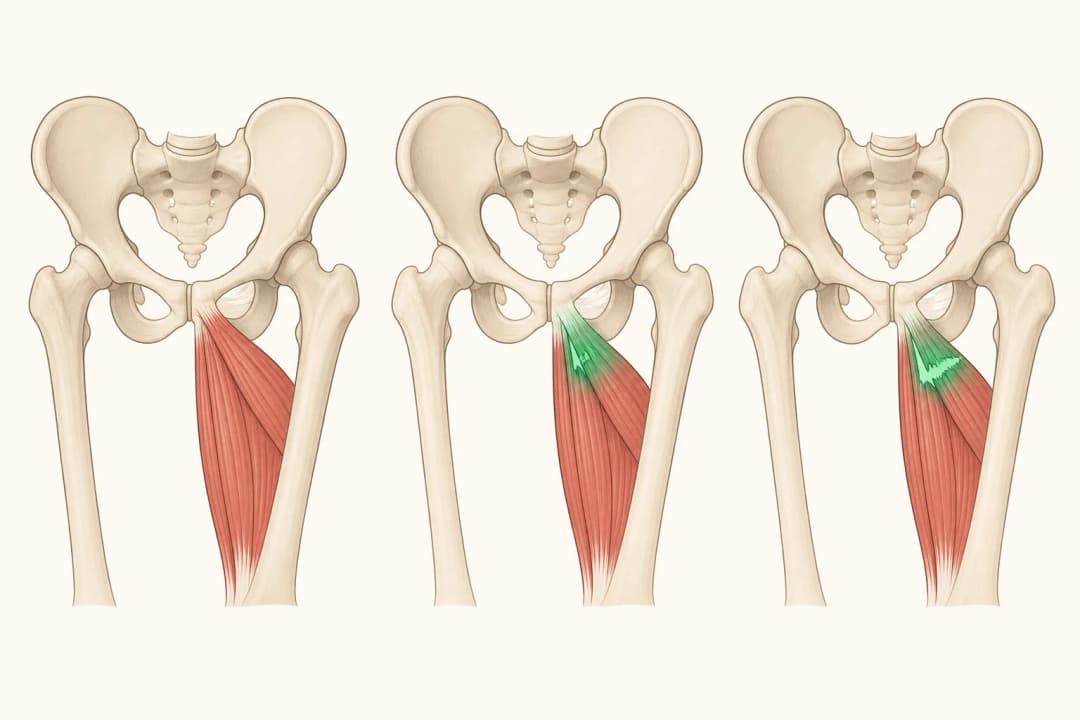
A groin strain often involves one or more adductor muscles, causing inner-thigh pain that can worsen when the legs move together or activity becomes demanding.
This answers one question. It is not a diagnosis and does not replace an assessment by a licensed doctor.
At a glance
- Main muscle group
- Adductors of the inner thigh
- Key function
- Drawing the leg towards the body
- Rehabilitation focus
- Gradual loading and hip control
The adductors and the injury
The adductor group runs along the inner thigh and helps draw the leg towards the body. It also contributes to hip control when you run, change direction, jump, or kick. A strain can affect muscle fibres or their tendon attachment and may cause local tenderness, pain with resisted leg movement, weakness, or a pulling sensation.
Groin pain has several possible causes, so the location, trigger, strength findings, and hip movement are useful clues. A clinician can distinguish an adductor strain from a hip joint problem, hernia, or another source of pain.
Building back strength
Reduce activities that reproduce pain, especially forceful side steps, kicking, and sudden direction changes. Keep comfortable walking and gentle mobility rather than staying still for long periods. Once everyday movement is easier, exercise therapy can progress from low-load adductor work to strengthening through larger ranges and sport-specific tasks. A return-to-sport programme can test running, cutting, and kicking in stages. Sports physiotherapy may help tailor loading to your sport and training schedule.
When to arrange an assessment
Arrange care if pain limits walking, weakness is marked, symptoms follow a loud pop or direct blow, or improvement stalls. Seek urgent help for severe pain at rest, rapidly increasing swelling, fever, numbness, or a leg that becomes cold or changes colour. Assessment is also useful when groin pain repeatedly returns after activity, because the loading plan may need adjustment.
Questions for your doctor
Which adductor or nearby structure is involved? What level of discomfort is acceptable during strengthening? When should I progress to running, cutting, or kicking, and would sports physiotherapy or a return-to-sport programme help?
Find care
General Clinics & Polyclinics in Abu Dhabi
That answer is general. If you want it applied to your own case, these are licensed general clinics & polyclinics listed in Abu Dhabi.
27 Ar Ruwwad St - Shakhbout City - MSH4 - Abu Dhabi - United Arab Emirates
Accepts: Daman, Thiqa, Cigna, MetLife +20 more
Al Ruwais, Al Dhafrah
Accepts: Daman, Thiqa, AXA, Cigna +16 more
Al Bahyah - Al Bahyah Old - Abu Dhabi - United Arab Emirates
Accepts: Daman, Thiqa, Cigna, Allianz Care +18 more
Abu Dhabi
Accepts: Daman, Thiqa, AXA, Cigna +27 more
Ordered by verification status and how complete each clinic's public record is, then alphabetically. This is a directory listing, not a ranking — Zavis does not rate or recommend providers.
A factual listing drawn from the DHA, DOH and MOHAP licence registers. It is not a referral, an endorsement, or advice that any of these providers is right for you.
Questions people ask
Does every groin strain involve the adductors?
No. Groin pain can arise from several tissues, so an examination is needed to identify whether an adductor muscle or another structure is involved.
When can adductor exercises begin?
Gentle loading can begin when basic movement is tolerable, but the exercise and resistance should match symptoms and examination findings.
Related
Related reading
Keep reading
Medical disclaimer. This page is general health information, not medical advice, and it cannot diagnose you. Always consult a licensed healthcare provider about your own symptoms and treatment. In an emergency in the UAE, call 998 for an ambulance.