
Groin Pull Healing: A Practical Guide
Short answer
Groin pull healing is a gradual process: settle pain, restore comfortable movement, rebuild strength and then reintroduce demanding activity.
This answers one question. It is not a diagnosis and does not replace an assessment by a licensed doctor.
At a glance
- Healing focus
- Movement, strength and controlled loading
- Avoid early
- Painful stretching and explosive activity
- Return guide
- Function matters more than a fixed date
How healing usually feels
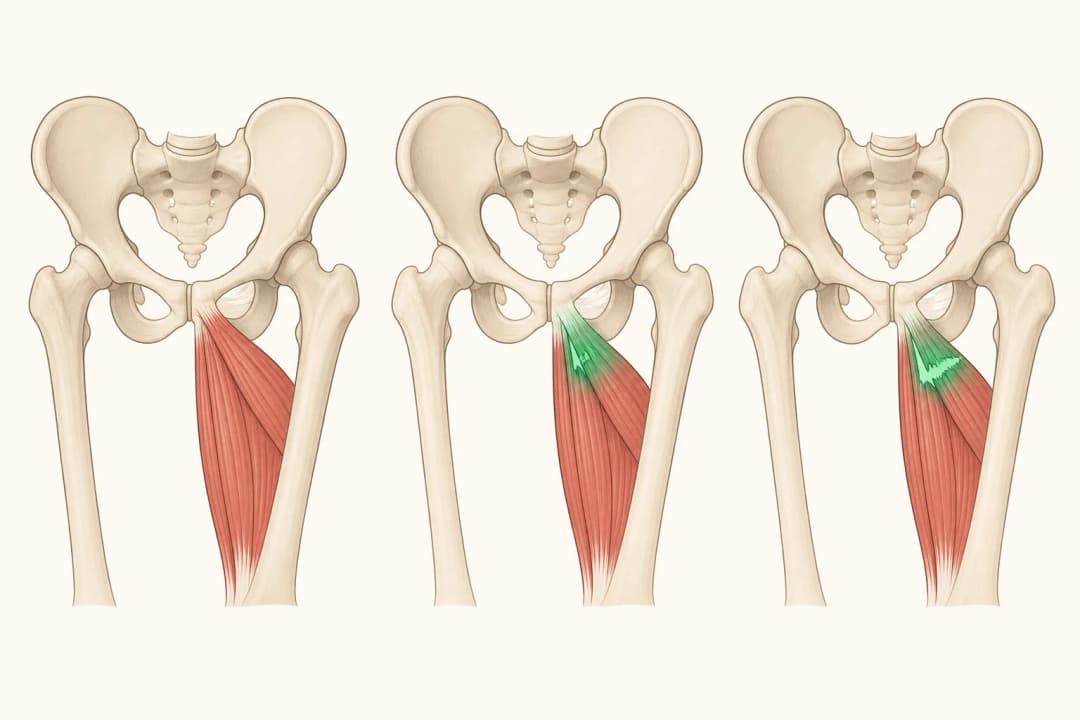
A strained adductor may hurt with walking, getting out of a car, changing direction or bringing the leg inward. Early soreness and protective tightness can ease before the muscle is ready for high force. Healing is moving in the right direction when everyday movement becomes easier, your stride normalises and strengthening causes no lasting flare. Persistent weakness, pain in several unrelated positions or symptoms outside the inner thigh deserve a broader assessment.
Steps that support recovery
For the first stage, avoid the movements that reproduce pain and use comfortable short walks to prevent stiffness. A cold pack wrapped in fabric may reduce discomfort. Later, a physiotherapist may introduce gentle isometric work, controlled leg movements and progressive resistance. Exercise Therapy should feel challenging but controlled; sharp pain is a reason to change the load.
When strength and movement improve, add easy jogging before faster running, lateral movement or kicking. Sports Physiotherapy can tailor this sequence, while a Return-to-Sport Programme can test the demands of your specific activity.
When to seek care
Have the injury assessed if you heard a pop, cannot bear weight, develop extensive bruising or have worsening swelling. Get prompt help for severe post-traumatic pain, fever, numbness, a new bulge, or groin pain with abdominal or testicular symptoms. Arrange review when self-care is not producing gradual progress or when each attempted return causes the same sharp pain.
Questions for your doctor
Ask which muscle is affected, what healing signs to monitor, which exercises are appropriate now, and what functional tests should come before full sport.
Find care
General Clinics & Polyclinics in Abu Dhabi
That answer is general. If you want it applied to your own case, these are licensed general clinics & polyclinics listed in Abu Dhabi.
27 Ar Ruwwad St - Shakhbout City - MSH4 - Abu Dhabi - United Arab Emirates
Accepts: Daman, Thiqa, Cigna, MetLife +20 more
Al Ruwais, Al Dhafrah
Accepts: Daman, Thiqa, AXA, Cigna +16 more
Al Bahyah - Al Bahyah Old - Abu Dhabi - United Arab Emirates
Accepts: Daman, Thiqa, Cigna, Allianz Care +18 more
Abu Dhabi
Accepts: Daman, Thiqa, AXA, Cigna +27 more
Ordered by verification status and how complete each clinic's public record is, then alphabetically. This is a directory listing, not a ranking — Zavis does not rate or recommend providers.
A factual listing drawn from the DHA, DOH and MOHAP licence registers. It is not a referral, an endorsement, or advice that any of these providers is right for you.
Questions people ask
Can a groin pull heal without treatment?
Some mild strains improve with activity modification, but persistent pain or weakness benefits from assessment and a structured strengthening plan.
What is a useful sign of healing?
You can walk and perform prescribed strengthening with improving control and without a delayed increase in pain.
Related
Related reading
Keep reading
Medical disclaimer. This page is general health information, not medical advice, and it cannot diagnose you. Always consult a licensed healthcare provider about your own symptoms and treatment. In an emergency in the UAE, call 998 for an ambulance.