
What should you know about giardiasis lab diagnosis?
Short answer
A clinician may diagnose giardiasis by sending a stool sample to a laboratory. The laboratory can look for Giardia or detect material from the parasite. Because the parasite may not appear in every sample, the clinician may request samples collected on separate days. Follow the collection instructions closely and ask where the sample should be returned.
This answers one question. It is not a diagnosis and does not replace an assessment by a licensed doctor.
At a glance
- Sample
- Stool
- Detects
- Giardia or its material
- Before testing
- Share travel and water exposure
What the test can show
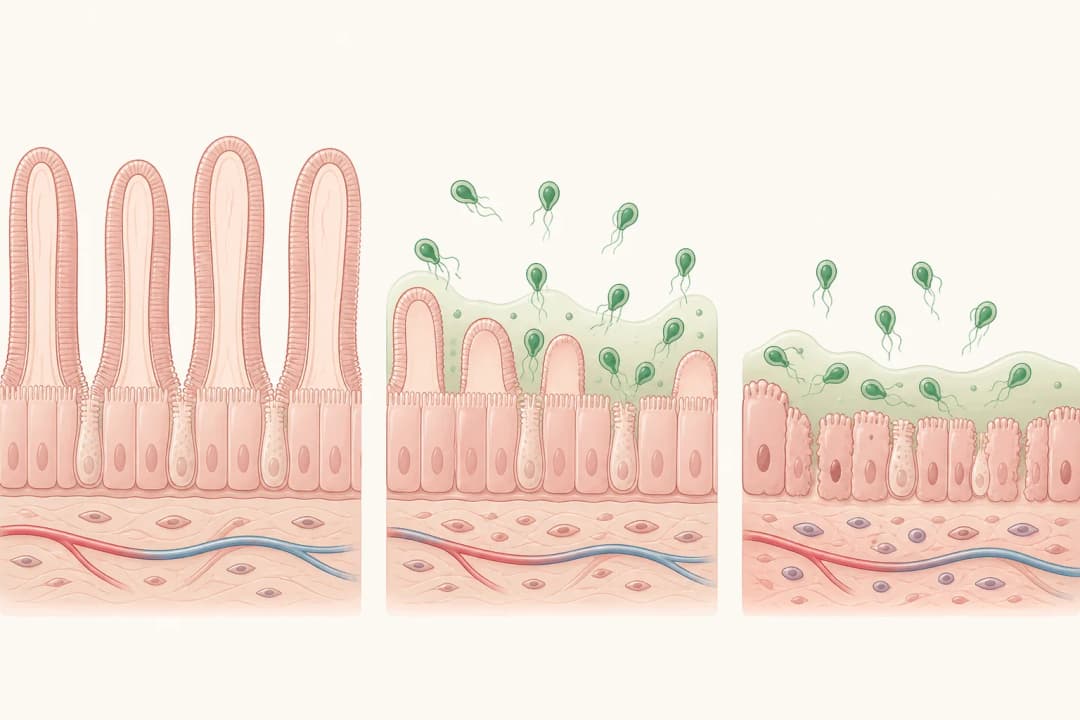
Testing is useful when diarrhoea, gas, [Bloating](/symptoms/bloating/) or cramps follow travel, untreated water or contact with an infected person. Symptoms can overlap with other infections and digestive conditions, so a positive result helps guide treatment while a negative result may need clinical interpretation. Read more about [Giardiasis](/conditions/giardiasis/) and [Diarrhoea](/symptoms/diarrhoea/).
Preparing for assessment
Arrange a [GP Consultation](/treatments/consultations-and-assessment/gp-consultation/) and record when symptoms began, stool changes, recent travel, untreated water exposure and anyone else who is unwell. Keep drinking fluids while awaiting advice. Do not add medicines or begin [Antibiotic Treatment](/treatments/medical-management/antibiotic-treatment/) without guidance, because the correct treatment depends on the assessment and test result.
Do not wait for routine testing
Seek urgent care if diarrhoea is accompanied by severe dehydration, faintness, confusion, blood in the stool, severe abdominal pain or repeated vomiting. Children, older adults, pregnant people and those with reduced immune defences may need earlier review. A clinician can decide whether testing, fluids or treatment should happen promptly.
What to ask
Ask which sample is required, whether more than one collection is needed, when results are expected, and what to do if symptoms continue after a negative result. Check how to protect household members while the diagnosis is being clarified.
Find care
General Clinics & Polyclinics in Abu Dhabi
That answer is general. If you want it applied to your own case, these are licensed general clinics & polyclinics listed in Abu Dhabi.
27 Ar Ruwwad St - Shakhbout City - MSH4 - Abu Dhabi - United Arab Emirates
Accepts: Daman, Thiqa, Cigna, MetLife +20 more
Al Ruwais, Al Dhafrah
Accepts: Daman, Thiqa, AXA, Cigna +16 more
Al Bahyah - Al Bahyah Old - Abu Dhabi - United Arab Emirates
Accepts: Daman, Thiqa, Cigna, Allianz Care +18 more
Abu Dhabi
Accepts: Daman, Thiqa, AXA, Cigna +27 more
Ordered by verification status and how complete each clinic's public record is, then alphabetically. This is a directory listing, not a ranking — Zavis does not rate or recommend providers.
A factual listing drawn from the DHA, DOH and MOHAP licence registers. It is not a referral, an endorsement, or advice that any of these providers is right for you.
Questions people ask
Can one stool sample miss giardiasis?
It can happen, so a clinician may request additional samples when symptoms and exposure still suggest infection.
Can symptoms diagnose giardiasis on their own?
No. Similar digestive symptoms occur with several conditions, making testing or clinical assessment useful.
Related
Related reading
Keep reading
Medical disclaimer. This page is general health information, not medical advice, and it cannot diagnose you. Always consult a licensed healthcare provider about your own symptoms and treatment. In an emergency in the UAE, call 998 for an ambulance.