
Giardiasis
Updated
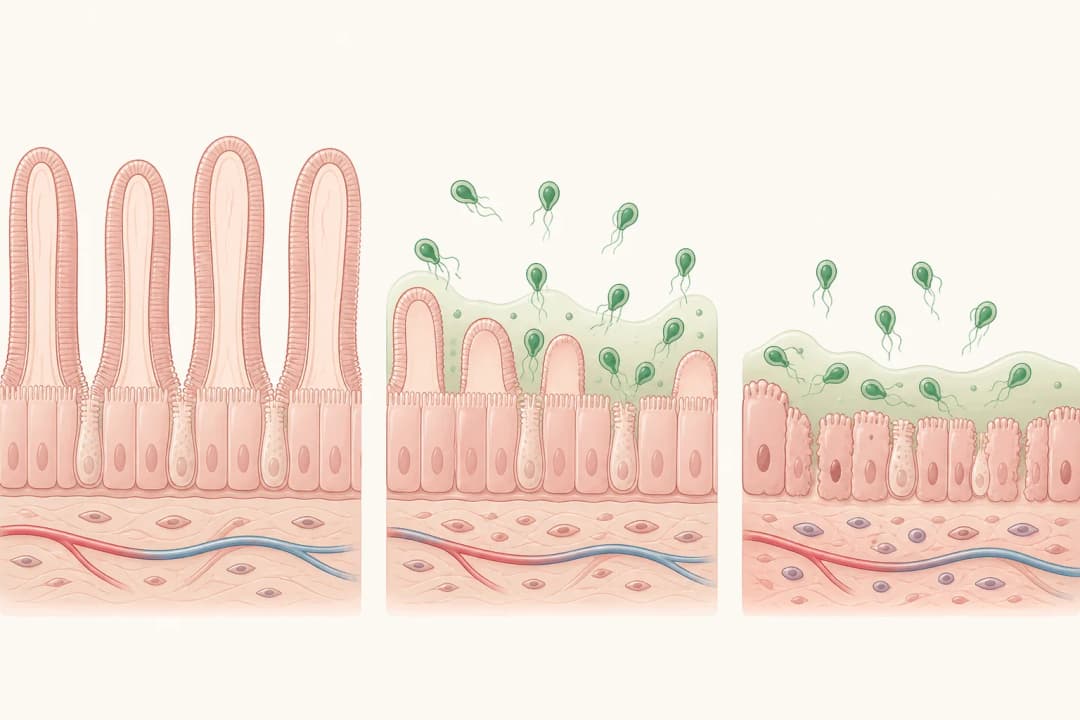
At a glance
- Cause
- Giardia parasite
- Main system affected
- Intestine
- Common presentation
- Diarrhoea
What giardiasis is
Giardiasis is an intestinal infection caused by a parasite that is usually acquired by swallowing contaminated material.
The parasite can be present in water, food, surfaces or hands that have been contaminated with stool. Infection may be mild, but it can also cause digestive symptoms that disrupt work, travel and normal eating.
Digestive symptoms
Diarrhoea is a very common presentation of giardiasis. Abdominal pain and bloating are also common, and stools may be loose, greasy or particularly unpleasant smelling. Nausea, reduced appetite, tiredness and weight loss can occur when symptoms persist.
Seek urgent care for signs of serious dehydration such as confusion, marked drowsiness, very little urine, or inability to keep fluids down. Babies, older adults and people with a weakened immune system may need earlier assessment.
How infection spreads
Giardia parasites spread when material containing stool reaches the mouth. This can happen after drinking untreated water, eating contaminated food, swallowing water during recreation, close contact with an infected person, or inadequate handwashing after using the toilet or changing nappies.
The infection can spread in homes, childcare settings and during travel when hand hygiene or safe water access is difficult.
Course and progression
Symptoms may begin after an exposure and can continue for some time if the infection is not recognised. Some people recover with supportive care, while ongoing diarrhoea, weight loss or recurrent symptoms need assessment. Gut sensitivity can persist briefly after the parasite has cleared.
When exposure is more likely
Risk may be higher when using untreated drinking water, travelling where sanitation is unreliable, caring for a person with diarrhoea, attending childcare, or having close contact that allows contamination to pass from hands to mouth.
Diagnosis
A clinician will ask about the diarrhoea pattern, travel, water exposure, food, contacts and medicines. A stool sample can be tested for Giardia. More than one sample may be requested because the parasite is not always present in every sample.
Other causes of diarrhoea may need consideration, especially when there is fever, blood in the stool, severe pain or persistent illness.
Treatment
Care focuses on replacing fluids and salts, maintaining food intake as tolerated, and treating the parasite with prescribed antimicrobial medicine when indicated. A clinician can select a medicine based on your symptoms, pregnancy status, allergies and other medicines.
Take the treatment exactly as prescribed and discuss continuing symptoms rather than taking leftover antibiotics. Avoid preparing food for others while diarrhoea is active.
Managing at home
Drink little and often if large drinks worsen nausea. Simple foods can be reintroduced as appetite returns. Wash hands before eating or preparing food, and use separate towels where practical until the diarrhoea has settled.
When to seek medical advice
Arrange a GP appointment for persistent diarrhoea, abdominal symptoms after travel or untreated water exposure, or symptoms affecting hydration and nutrition. Prompt assessment is especially helpful for young children, pregnancy, older age or reduced immunity.
Questions people ask
How is giardiasis diagnosed?
A clinician may request a stool sample and will ask about symptoms, water exposure, travel and close contacts.
Can I prevent giardiasis spreading at home?
Careful handwashing, safe food preparation and bathroom cleaning help reduce the chance of contamination passing from hands or surfaces to the mouth.
Related
Related reading
Keep reading
Find care
General Clinics & Polyclinics in Dubai
Where giardiasis is assessed depends on what is causing it. These are licensed general clinics & polyclinics listed in Dubai.
The Court Residence, 39B Street, Jumeirah 1, Dubai
Accepts: Tabby, Tamara
Elite Business Bay Residence - Shop 03 & 04, 34 Marasi Dr - Business Bay - Dubai - United Arab Emirates
Accepts: Tabby
Airport View Building, Al Garhoud, Dubai
Accepts: Daman, Thiqa, AXA, Cigna +25 more
IBIS Building, 5th Floor, Unit 5003, Deira, Dubai
Accepts: AXA, Cigna, MetLife, Allianz Care +18 more
Ordered by verification status and how complete each clinic's public record is, then alphabetically. This is a directory listing, not a ranking — Zavis does not rate or recommend providers.
A factual listing drawn from the UAE health regulators' public licence registers. It is not a referral, an endorsement, or advice that any of these providers is right for you.
Medical disclaimer. This page is general health information, not medical advice, and it cannot diagnose you. Always consult a licensed healthcare provider about your own symptoms and treatment. In an emergency in the UAE, call 998 for an ambulance.