
Getting ready for frozen embryo transfer
Updated
Short answer
Getting ready for frozen embryo transfer means following the clinic plan for uterine lining preparation, progesterone timing, embryo thawing and pregnancy testing.
This answers one question. It is not a diagnosis and does not replace an assessment by a licensed doctor.
At a glance
- Core timing
- The transfer is coordinated with progesterone exposure and embryo stage.
- Medicine
- Micronised progesterone may support the uterine lining.
- After transfer
- Use the clinic's scheduled pregnancy-test date.
What the process involves
A frozen embryo transfer uses an embryo stored from an earlier fertility cycle. The clinic prepares the womb lining either by tracking a natural cycle or by using hormones. Micronised progesterone may support the lining after ovulation or as part of a programmed cycle. The transfer date is tied to the embryo's developmental stage and the number of days of progesterone exposure.
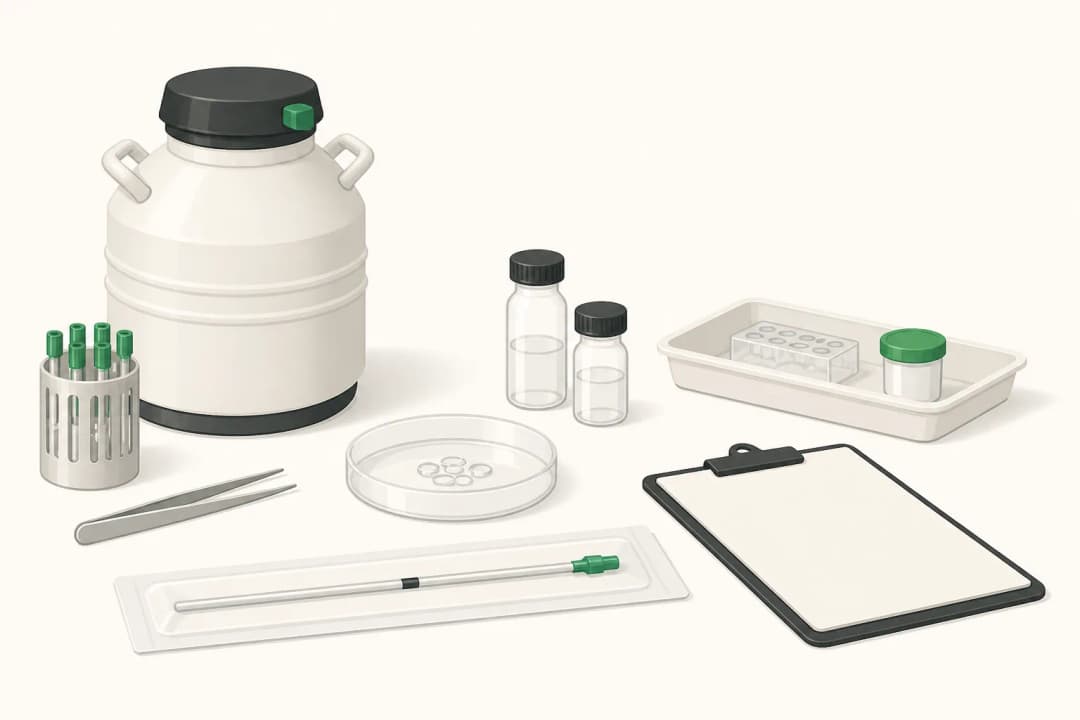
The procedure usually places a thin catheter through the cervix into the womb. The embryo is thawed according to laboratory procedures, and the clinic confirms whether it is suitable for transfer. Follow the clinic's instructions because timing changes can affect the plan.
Practical preparation
Take every medicine at the prescribed time and ask before changing, stopping or adding anything, including over-the-counter products. Keep a written record of doses, appointments and the scheduled transfer. Tell the clinic about bleeding, illness, new medicines or difficulty using progesterone.
Plan transport and a calm schedule around the appointment, wear comfortable clothing and follow the clinic's instructions about eating, drinking and bladder filling. Avoid smoking and recreational drugs, and ask about alcohol, exercise and work based on your circumstances. Arrange the pregnancy test for the date given by the clinic.
When to seek care
Contact the fertility clinic promptly for heavy bleeding, severe pelvic pain, fever, breathing difficulty, marked abdominal swelling or a medicine reaction. Seek emergency help for collapse, severe pain or trouble breathing. After transfer, do not stop prescribed support because of mild spotting; contact the clinic for personalised advice and attend the scheduled pregnancy test.
Questions for your doctor
Ask which cycle preparation you are having, when progesterone starts, what to do after a missed dose, how many embryos may be transferred, and what happens if an embryo does not thaw as expected. Confirm restrictions, warning symptoms and the exact testing date.
Find care
General Clinics & Polyclinics in Dubai
That answer is general. If you want it applied to your own case, these are licensed general clinics & polyclinics listed in Dubai.
The Court Residence, 39B Street, Jumeirah 1, Dubai
Accepts: Tabby, Tamara
Elite Business Bay Residence - Shop 03 & 04, 34 Marasi Dr - Business Bay - Dubai - United Arab Emirates
Accepts: Tabby
Airport View Building, Al Garhoud, Dubai
Accepts: Daman, Thiqa, AXA, Cigna +25 more
IBIS Building, 5th Floor, Unit 5003, Deira, Dubai
Accepts: AXA, Cigna, MetLife, Allianz Care +18 more
Ordered by verification status and how complete each clinic's public record is, then alphabetically. This is a directory listing, not a ranking — Zavis does not rate or recommend providers.
A factual listing drawn from the UAE health regulators' public licence registers. It is not a referral, an endorsement, or advice that any of these providers is right for you.
Questions people ask
Should I stop progesterone after spotting?
No. Contact the clinic for advice and continue prescribed support unless the fertility team tells you otherwise.
Can I carry on normal activities after transfer?
Most people follow ordinary gentle routines, but your clinic should advise on exercise, work and travel for your situation.
Related
Related reading
Keep reading
Medical disclaimer. This page is general health information, not medical advice, and it cannot diagnose you. Always consult a licensed healthcare provider about your own symptoms and treatment. In an emergency in the UAE, call 998 for an ambulance.