
What should you know about genetic melanoma?
Short answer
Genetic melanoma means melanoma associated with inherited susceptibility and requires careful skin assessment and follow-up.
This answers one question. It is not a diagnosis and does not replace an assessment by a licensed doctor.
At a glance
- Concern
- Inherited susceptibility can run in families
- Watch for
- Changing, unusual, or bleeding marks
- Protection
- Sun avoidance and regular skin checks
What inherited susceptibility means
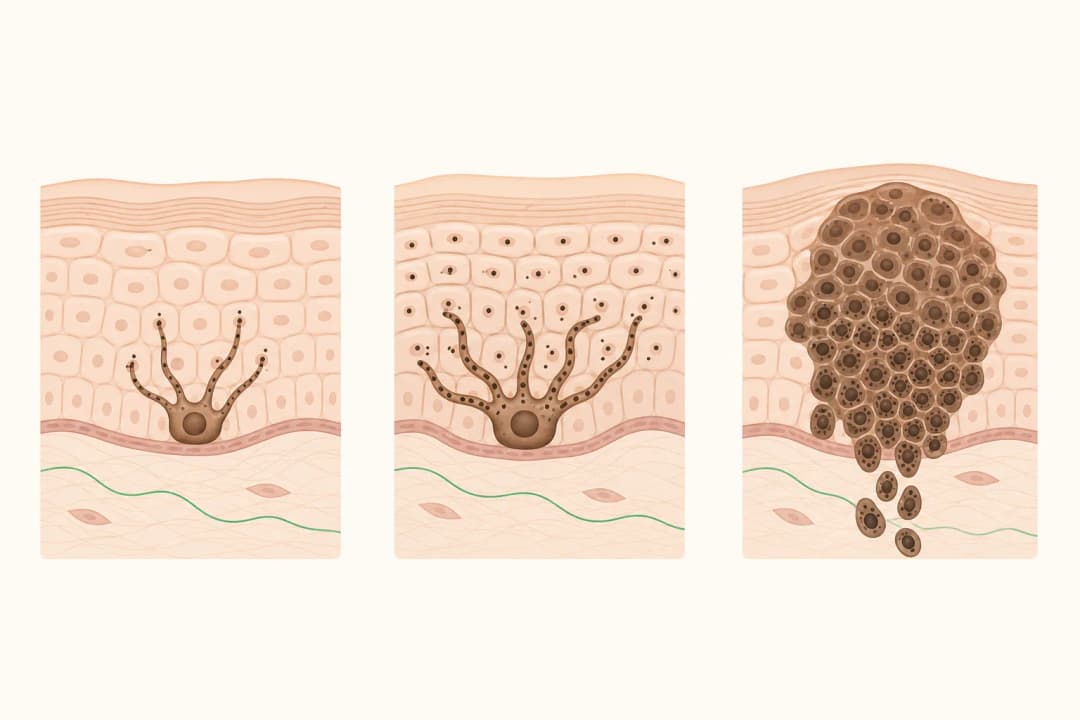
Most melanoma begins with changes in pigment-producing cells, but some families carry inherited changes that make melanoma more likely across generations. A strong pattern of melanoma in close relatives, several unusual moles, or melanoma at a younger age can prompt discussion of genetic counselling. A gene result does not replace examination, and a family history does not prove that every new mark is melanoma. A changing mole may become darker, develop several colours, grow unevenly, itch, bleed, or look different from the others. These are reasons for assessment rather than a diagnosis by appearance alone.
Assessment and prevention
Arrange a full skin examination and tell the clinician about relatives with melanoma, pancreatic cancer, or multiple atypical moles. Ask whether genetic counselling or testing is appropriate for your family. Check your skin in a consistent way, including the scalp, soles, nails, and areas covered by hair, and have someone help with difficult-to-see sites. Use shade, protective clothing, and broad-spectrum sunscreen, and avoid deliberate tanning. If melanoma is confirmed, management may include surgical excision, staging tests, sentinel lymph node biopsy, or medicines such as immunotherapy, depending on the tumour and its stage.
When to seek care
Request a prompt dermatology appointment for a new or changing pigmented mark, a sore that does not heal, or a spot that repeatedly bleeds. Seek urgent medical help for severe illness with a known melanoma, such as new confusion, weakness, breathing difficulty, or rapidly worsening pain. Anyone with a strong family pattern should keep scheduled surveillance even when the skin looks unchanged.
Questions for your doctor
Ask how often your skin should be examined, whether relatives should be assessed, what genetic counselling can clarify, and which warning changes should trigger an earlier visit. If melanoma is diagnosed, ask what staging information means and why a proposed treatment fits your case.
Find care
General Clinics & Polyclinics in Abu Dhabi
That answer is general. If you want it applied to your own case, these are licensed general clinics & polyclinics listed in Abu Dhabi.
27 Ar Ruwwad St - Shakhbout City - MSH4 - Abu Dhabi - United Arab Emirates
Accepts: Daman, Thiqa, Cigna, MetLife +20 more
Al Ruwais, Al Dhafrah
Accepts: Daman, Thiqa, AXA, Cigna +16 more
Al Bahyah - Al Bahyah Old - Abu Dhabi - United Arab Emirates
Accepts: Daman, Thiqa, Cigna, Allianz Care +18 more
Abu Dhabi
Accepts: Daman, Thiqa, AXA, Cigna +27 more
Ordered by verification status and how complete each clinic's public record is, then alphabetically. This is a directory listing, not a ranking — Zavis does not rate or recommend providers.
A factual listing drawn from the DHA, DOH and MOHAP licence registers. It is not a referral, an endorsement, or advice that any of these providers is right for you.
Questions people ask
Does a family history mean I have melanoma?
No. It can indicate inherited susceptibility and the need for assessment, but it does not diagnose melanoma.
Should I remove every unusual mole?
Not necessarily. A dermatologist can examine the mole and recommend monitoring or removal based on its features and history.
Related
Related reading
Keep reading
Medical disclaimer. This page is general health information, not medical advice, and it cannot diagnose you. Always consult a licensed healthcare provider about your own symptoms and treatment. In an emergency in the UAE, call 998 for an ambulance.