
What should you know about gene therapy for sickle cell disease?
Short answer
Gene therapy for sickle cell disease uses a specialist process to alter blood-forming stem cells and reduce sickling.
This answers one question. It is not a diagnosis and does not replace an assessment by a licensed doctor.
At a glance
- Treatment setting
- Specialist haematology centre
- Cells involved
- Blood-forming stem cells
- Follow-up
- Long-term monitoring is part of the pathway
How it works
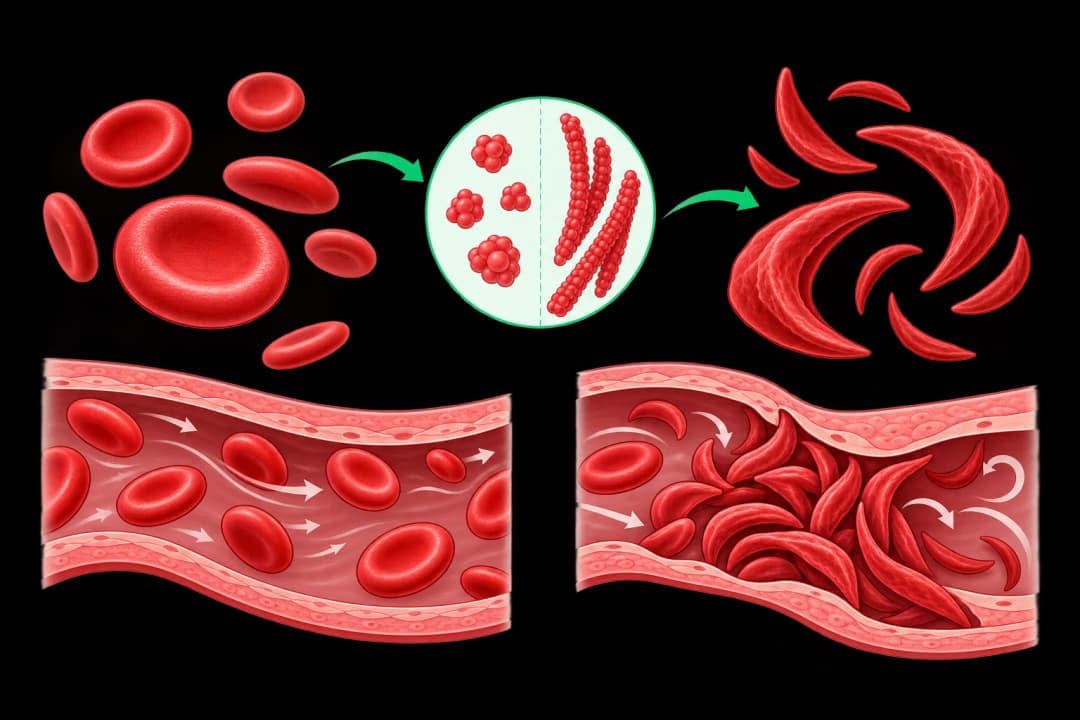
Sickle cell disease changes haemoglobin, the protein that carries oxygen in red blood cells. Some gene-therapy approaches collect a person's own blood-forming stem cells, modify them in a specialist laboratory, and return them after preparation of the bone marrow. The aim is to help the marrow make red cells that behave more normally. Eligibility depends on age, disease history, overall health, organ function and access to a specialist centre.
This is an intensive pathway involving conditioning treatment, hospital monitoring and long-term follow-up. It is different from a blood test, which helps assess blood counts and haemoglobin but does not change the underlying genes.
Preparing for a specialist discussion
Start with a review by a haematology team familiar with sickle cell disease. Bring records of pain episodes, transfusions, medicines, kidney or lung problems and previous treatments. Ask how stem cells would be collected, what conditioning involves, how fertility may be affected, and what follow-up is required. Family planning and premarital screening may also be relevant because sickle cell disease is inherited.
When to seek care
Seek urgent care for severe or unusual pain, trouble breathing, chest pain, sudden weakness, confusion, a high fever or marked exhaustion. These symptoms can signal a sickle-cell complication and need immediate assessment, whether or not gene therapy is being considered.
Useful questions
Ask whether you meet referral criteria, which treatment option is being discussed, how risks will be monitored, and what support is available during recovery. Clarify whether a blood test or other assessment is needed before referral.
Find care
General Clinics & Polyclinics in Abu Dhabi
That answer is general. If you want it applied to your own case, these are licensed general clinics & polyclinics listed in Abu Dhabi.
27 Ar Ruwwad St - Shakhbout City - MSH4 - Abu Dhabi - United Arab Emirates
Accepts: Daman, Thiqa, Cigna, MetLife +20 more
Al Ruwais, Al Dhafrah
Accepts: Daman, Thiqa, AXA, Cigna +16 more
Al Bahyah - Al Bahyah Old - Abu Dhabi - United Arab Emirates
Accepts: Daman, Thiqa, Cigna, Allianz Care +18 more
Abu Dhabi
Accepts: Daman, Thiqa, AXA, Cigna +27 more
Ordered by verification status and how complete each clinic's public record is, then alphabetically. This is a directory listing, not a ranking — Zavis does not rate or recommend providers.
A factual listing drawn from the DHA, DOH and MOHAP licence registers. It is not a referral, an endorsement, or advice that any of these providers is right for you.
Questions people ask
Is gene therapy suitable for everyone with sickle cell disease?
No. A specialist team decides suitability after reviewing disease severity, health, previous treatment and practical considerations.
Does gene therapy remove the need for medical follow-up?
No. Monitoring remains necessary to check blood counts, organ health and recovery after treatment.
Related
Related reading
Keep reading
Medical disclaimer. This page is general health information, not medical advice, and it cannot diagnose you. Always consult a licensed healthcare provider about your own symptoms and treatment. In an emergency in the UAE, call 998 for an ambulance.