
Football groin strain: symptoms and recovery
Short answer
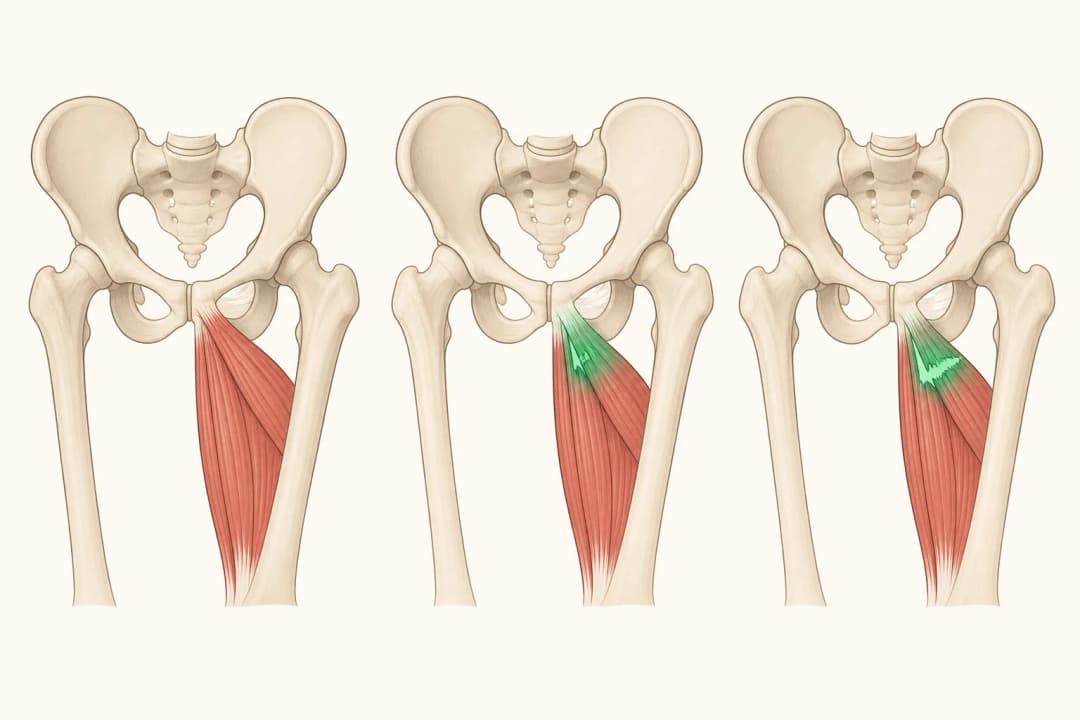
A football groin strain is an overstretch or tear in inner-thigh muscles that can hurt during sprinting, cutting, or kicking.
This answers one question. It is not a diagnosis and does not replace an assessment by a licensed doctor.
At a glance
- Typical triggers
- Acceleration, cutting, kicking, or squeezing the legs together.
- Rehabilitation focus
- Adductor strength, pelvic control, running, and football-specific drills.
How it presents
The adductor muscles draw the leg inward and help control the pelvis during changes of direction. A strain may start with a sudden pull or develop gradually as repeated kicking and acceleration load the area. Pain can be felt in the groin or upper inner thigh, with tenderness, weakness, bruising, or discomfort when squeezing the legs together. Groin pain can also have other causes, including hip, abdominal, or nerve problems, so persistent symptoms deserve an examination rather than a self-diagnosis.
Recovery steps
Stop the movement that caused the pain and use relative rest for the early period. Cold packs wrapped in cloth may ease discomfort, while comfortable walking is usually preferable to complete inactivity if it does not increase symptoms. A physiotherapist can progress gentle range-of-motion work into strengthening, especially controlled adductor exercises, balance, running, and football drills. Exercise Therapy may form part of this progression. Do not return because pain has briefly faded; first regain strength, movement, and confidence in football-specific tasks.
When to seek care
Get prompt medical assessment if you heard a pop, cannot walk normally, have marked bruising or swelling, or feel a deep hip or abdominal pain. Seek urgent care for severe pain after a collision, numbness, a cold or pale leg, or new bowel or bladder symptoms. Book an assessment when pain persists, keeps returning, or prevents normal training.
Questions for your doctor
Ask which muscle or joint is involved, whether imaging is useful, and which exercises are safe today. Ask how running should be increased, what pain response is acceptable, and which football tests should be passed before a Return-to-Sport Programme.
Find care
General Clinics & Polyclinics in Abu Dhabi
That answer is general. If you want it applied to your own case, these are licensed general clinics & polyclinics listed in Abu Dhabi.
27 Ar Ruwwad St - Shakhbout City - MSH4 - Abu Dhabi - United Arab Emirates
Accepts: Daman, Thiqa, Cigna, MetLife +20 more
Al Ruwais, Al Dhafrah
Accepts: Daman, Thiqa, AXA, Cigna +16 more
Al Bahyah - Al Bahyah Old - Abu Dhabi - United Arab Emirates
Accepts: Daman, Thiqa, Cigna, Allianz Care +18 more
Abu Dhabi
Accepts: Daman, Thiqa, AXA, Cigna +27 more
Ordered by verification status and how complete each clinic's public record is, then alphabetically. This is a directory listing, not a ranking — Zavis does not rate or recommend providers.
A factual listing drawn from the DHA, DOH and MOHAP licence registers. It is not a referral, an endorsement, or advice that any of these providers is right for you.
Questions people ask
Should I stretch a painful groin?
Gentle movement may help, but forceful stretching can aggravate an irritable strain; use a guided progression.
When can I play again?
Return when walking, sprinting, changing direction, and kicking are comfortable and strength has been rebuilt gradually.
Related
Related reading
Keep reading
Medical disclaimer. This page is general health information, not medical advice, and it cannot diagnose you. Always consult a licensed healthcare provider about your own symptoms and treatment. In an emergency in the UAE, call 998 for an ambulance.