
What should you know about foot swelling and pain?
Short answer
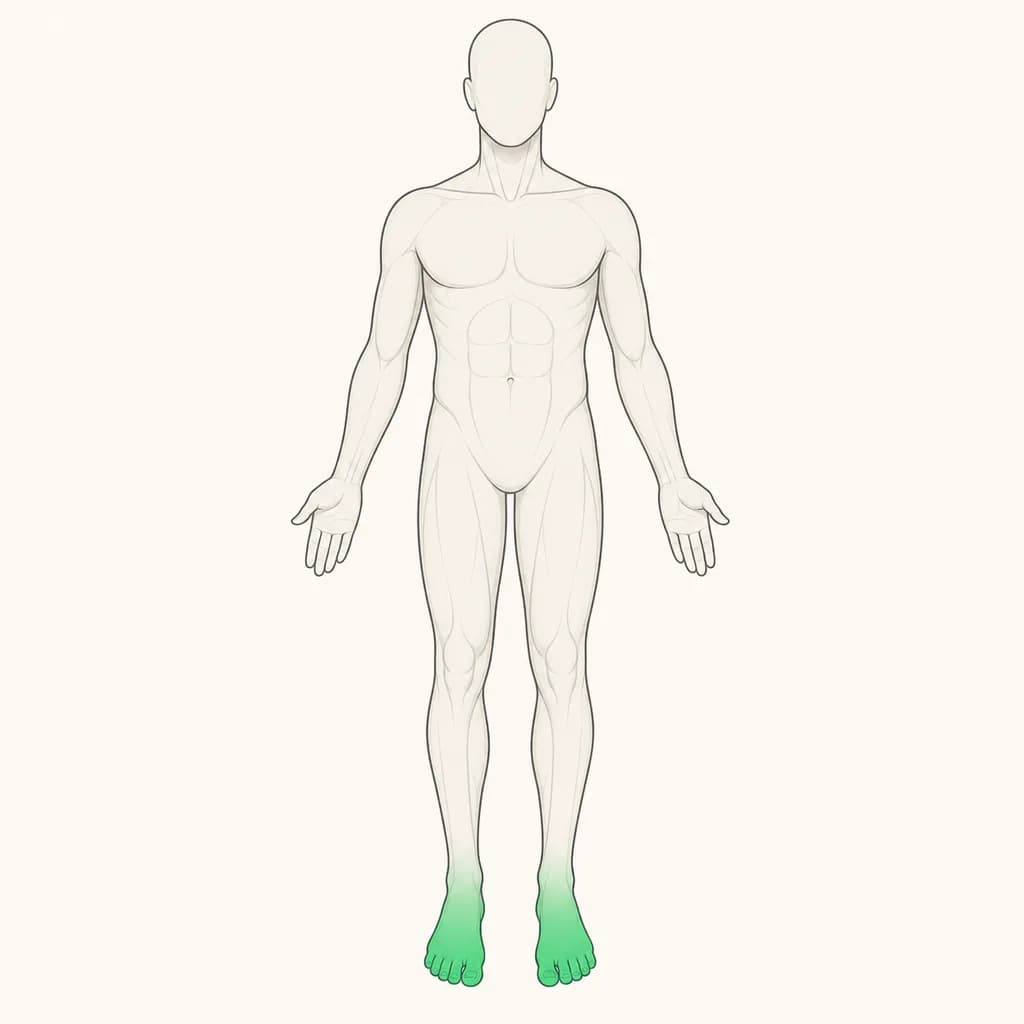
Foot swelling and pain can come from injury, inflammation, pressure, or a foot condition, so the pattern and timing guide the next step.
This answers one question. It is not a diagnosis and does not replace an assessment by a licensed doctor.
At a glance
- Track
- Onset, location, one-sided or both feet, and triggers
- Protect
- Use roomy supportive footwear and limit aggravating activity
- Escalate
- Urgent care for deformity, inability to bear weight, fever, or colour change
What it may mean
Pain that follows a twist, impact, or sudden increase in walking may reflect a sprain, bruise, or stress injury. Pain under the heel can fit plantar fasciitis, while a prominent joint, stiff big toe, or curled toe can point toward bunions, hallux rigidus, or hammer toe. Flat feet may alter how force travels through the foot and contribute to aching and swelling. A clinician may examine your gait, joints, skin, circulation, and tenderness; imaging may be considered when a fracture or joint problem is suspected.
What you can do now
Reduce activities that worsen the pain and choose supportive, roomy footwear. Elevating the foot and using a wrapped cold pack for short periods may help swelling after a recent minor injury. Avoid forceful massage over a very tender area. Keep track of when the swelling began, whether one foot or both are affected, and whether redness, warmth, bruising, numbness, or fever is present. A physiotherapist or orthopaedic clinician can discuss activity changes and whether custom orthotics may reduce pressure.
When to seek care
Seek urgent medical assessment for severe or rapidly increasing swelling, marked redness or warmth, fever, a visibly deformed foot, inability to bear weight, new numbness, or toes that look pale or blue. Prompt assessment is also sensible after significant trauma or when pain is focused on one bone and does not settle with rest. Arrange a routine appointment if symptoms keep returning, affect walking, or do not improve with simple measures.
Questions for your doctor
Could the location and timing suggest a joint, tendon, ligament, or bone problem? Do I need an examination or imaging? Which activities and footwear are suitable while it settles? Would physiotherapy or custom orthotics be appropriate?
Find care
General Clinics & Polyclinics in Abu Dhabi
That answer is general. If you want it applied to your own case, these are licensed general clinics & polyclinics listed in Abu Dhabi.
27 Ar Ruwwad St - Shakhbout City - MSH4 - Abu Dhabi - United Arab Emirates
Accepts: Daman, Thiqa, Cigna, MetLife +20 more
Al Ruwais, Al Dhafrah
Accepts: Daman, Thiqa, AXA, Cigna +16 more
Al Bahyah - Al Bahyah Old - Abu Dhabi - United Arab Emirates
Accepts: Daman, Thiqa, Cigna, Allianz Care +18 more
Abu Dhabi
Accepts: Daman, Thiqa, AXA, Cigna +27 more
Ordered by verification status and how complete each clinic's public record is, then alphabetically. This is a directory listing, not a ranking — Zavis does not rate or recommend providers.
A factual listing drawn from the DHA, DOH and MOHAP licence registers. It is not a referral, an endorsement, or advice that any of these providers is right for you.
Questions people ask
Can swelling and pain be caused by footwear?
Tight or poorly supportive footwear can increase pressure on toes, joints, and the sole, although persistent swelling deserves assessment for other causes.
Should I walk on a swollen painful foot?
Avoid activity that increases pain or limping. If weight-bearing is difficult, arrange prompt clinical assessment.
Related
Related reading
Keep reading
Medical disclaimer. This page is general health information, not medical advice, and it cannot diagnose you. Always consult a licensed healthcare provider about your own symptoms and treatment. In an emergency in the UAE, call 998 for an ambulance.