
What should you know about foot sole cracked skin?
Short answer
Cracked skin on the foot sole often reflects a weakened skin barrier under pressure, but inflammation, psoriasis, or infection can also contribute.
This answers one question. It is not a diagnosis and does not replace an assessment by a licensed doctor.
At a glance
- Common mechanical factor
- Pressure and friction on a dry, thickened barrier
- Core care
- Emollient, gentle washing, and protective footwear
- Early review
- Deep cracks, infection signs, or high-risk health conditions
Why the sole can split
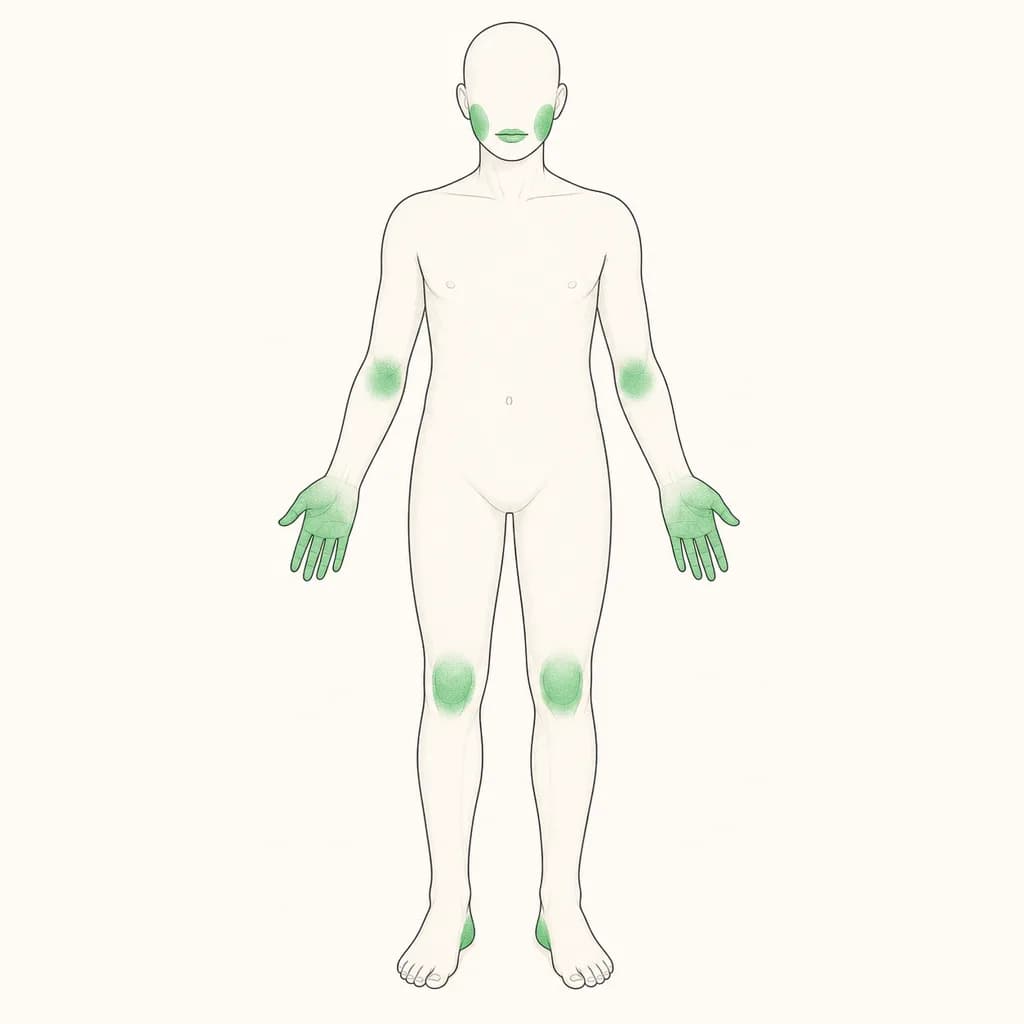
The sole carries repeated load and friction. When its outer layer becomes dry or thick, it may lose flexibility and form fissures, especially around the heel or ball of the foot. Atopic Dermatitis can cause dry, itchy, inflamed skin, while Psoriasis may produce well-defined thick scale and painful fissures on the soles. Itch and scaling between the toes can point toward Athlete's Foot, which may extend across the sole.
Note whether cracks are shallow or deep, whether both feet are affected, and whether there is itch, redness, bleeding, or drainage. That pattern helps a clinician select the right treatment.
Protect and moisturise the sole
Wash with lukewarm water and a gentle cleanser, then dry carefully. Apply an emollient to the sole soon afterward and repeat regularly, particularly at bedtime. Wear cushioned, well-fitting footwear and socks that reduce rubbing. Do not cut callus with a blade or apply harsh acids to an open crack. Keep dressings clean if a clinician recommends them, and avoid sharing towels if peeling or scaling suggests a contagious foot infection.
When to seek medical care
Seek prompt assessment for deep or bleeding fissures, spreading redness, warmth, swelling, pus, fever, or rapidly worsening pain. Arrange review when cracks keep returning, interfere with walking, or occur with thick plaques, marked itch, or nail changes. People with diabetes, poor circulation, reduced sensation, or immune suppression should seek advice early because a small break can become harder to manage.
Questions for your doctor
Ask whether the pattern fits Dry Skin, Atopic Dermatitis, Psoriasis, Athlete's Foot, or another cause; which emollient and dressing to use; whether testing is needed; and how to reduce pressure on the affected part of the sole.
Find care
General Clinics & Polyclinics in Abu Dhabi
That answer is general. If you want it applied to your own case, these are licensed general clinics & polyclinics listed in Abu Dhabi.
27 Ar Ruwwad St - Shakhbout City - MSH4 - Abu Dhabi - United Arab Emirates
Accepts: Daman, Thiqa, Cigna, MetLife +20 more
Al Ruwais, Al Dhafrah
Accepts: Daman, Thiqa, AXA, Cigna +16 more
Al Bahyah - Al Bahyah Old - Abu Dhabi - United Arab Emirates
Accepts: Daman, Thiqa, Cigna, Allianz Care +18 more
Abu Dhabi
Accepts: Daman, Thiqa, AXA, Cigna +27 more
Ordered by verification status and how complete each clinic's public record is, then alphabetically. This is a directory listing, not a ranking — Zavis does not rate or recommend providers.
A factual listing drawn from the DHA, DOH and MOHAP licence registers. It is not a referral, an endorsement, or advice that any of these providers is right for you.
Questions people ask
Can cracked sole skin heal with moisturizer?
Moisturising can help restore flexibility when dryness is the main driver, but persistent cracks may need treatment for inflammation, psoriasis, or infection as well.
Why do sole cracks keep reopening?
Repeated pressure, friction, untreated inflammation, ongoing dryness, or an unrecognised infection can prevent the skin from staying closed. An assessment can identify the contributing factors.
Related
Related reading
Keep reading
Medical disclaimer. This page is general health information, not medical advice, and it cannot diagnose you. Always consult a licensed healthcare provider about your own symptoms and treatment. In an emergency in the UAE, call 998 for an ambulance.