
How a broken hip is fixed
Short answer
A broken hip needs urgent medical assessment, followed by stabilisation, repair or replacement when indicated, and rehabilitation.
This answers one question. It is not a diagnosis and does not replace an assessment by a licensed doctor.
At a glance
- First action
- Keep the person still and arrange emergency assessment.
- Recovery focus
- Safe mobilisation, strength, walking, and fall prevention.
What a broken hip means
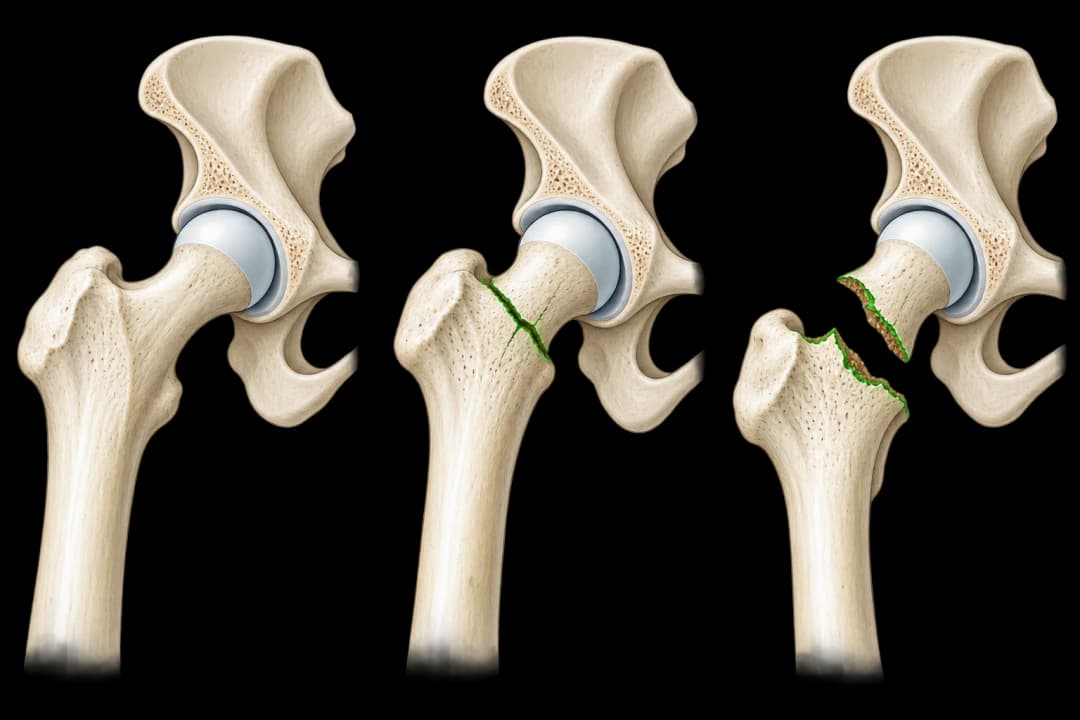
A hip fracture is a break in the upper thigh bone near the hip joint. It may cause sudden hip or groin pain, inability to stand, shortening or rotation of the leg, or new [Limping](/symptoms/limping/). Some people can still move the leg, so the ability to walk does not rule it out. [Hip Pain](/symptoms/hip-pain/) after a fall or direct impact needs prompt assessment, especially in an older adult or anyone with fragile bones.
How treatment is planned
Do not try to walk on a suspected fracture or straighten the leg. Keep the person warm and still, and arrange emergency transport. In hospital, clinicians assess the injury, pain, general health, medicines, and bone health. Depending on the fracture location and stability, treatment may involve screws, a plate, a nail, or replacement of part or all of the joint. Details of [Hip Fracture Surgery](/treatments/trauma-and-fracture-care/hip-fracture-surgery/) depend on the individual fracture. Mobilisation and [Post-Operative Rehabilitation](/treatments/physiotherapy-and-rehabilitation/post-operative-rehabilitation/) help rebuild transfers, walking, strength, and confidence. Bone-protection treatment, including [Bisphosphonate Therapy](/treatments/non-surgical-orthopedics/bisphosphonate-therapy/), may be discussed when appropriate.
When to seek urgent help
Call emergency services after a fall when there is severe hip or groin pain, inability to stand, a visibly shortened or turned-out leg, or sudden inability to bear weight. Do not drive the injured person. After treatment, urgent review is needed for worsening wound redness, fever, new calf swelling, chest pain, breathing difficulty, or sudden loss of movement.
Questions for your doctor
Ask: Where is the fracture and how stable is it? Which repair or replacement is advised, and why? What weight can I put through the leg? When does rehabilitation begin? How will falls and bone weakness be addressed?
Find care
General Clinics & Polyclinics in Abu Dhabi
That answer is general. If you want it applied to your own case, these are licensed general clinics & polyclinics listed in Abu Dhabi.
27 Ar Ruwwad St - Shakhbout City - MSH4 - Abu Dhabi - United Arab Emirates
Accepts: Daman, Thiqa, Cigna, MetLife +20 more
Al Ruwais, Al Dhafrah
Accepts: Daman, Thiqa, AXA, Cigna +16 more
Al Bahyah - Al Bahyah Old - Abu Dhabi - United Arab Emirates
Accepts: Daman, Thiqa, Cigna, Allianz Care +18 more
Abu Dhabi
Accepts: Daman, Thiqa, AXA, Cigna +27 more
Ordered by verification status and how complete each clinic's public record is, then alphabetically. This is a directory listing, not a ranking — Zavis does not rate or recommend providers.
A factual listing drawn from the DHA, DOH and MOHAP licence registers. It is not a referral, an endorsement, or advice that any of these providers is right for you.
Questions people ask
Can a broken hip heal without surgery?
Some fractures may be managed without an operation in selected situations, but the hospital team must decide after imaging and health assessment.
When does rehabilitation start?
Rehabilitation often begins in hospital once the treating team considers movement safe, then continues after discharge.
Related
Related reading
Keep reading
Medical disclaimer. This page is general health information, not medical advice, and it cannot diagnose you. Always consult a licensed healthcare provider about your own symptoms and treatment. In an emergency in the UAE, call 998 for an ambulance.