
Hip Fracture: Symptoms, Diagnosis and Treatment
Updated
At a glance
- Main area
- Upper femur near the hip joint
- Typical concern
- Sudden pain with difficulty standing or walking
- Care focus
- Prompt assessment, stabilisation and rehabilitation
What is a hip fracture?
A hip fracture is a break in the upper thigh bone near the hip joint that needs prompt medical assessment and a coordinated recovery plan.
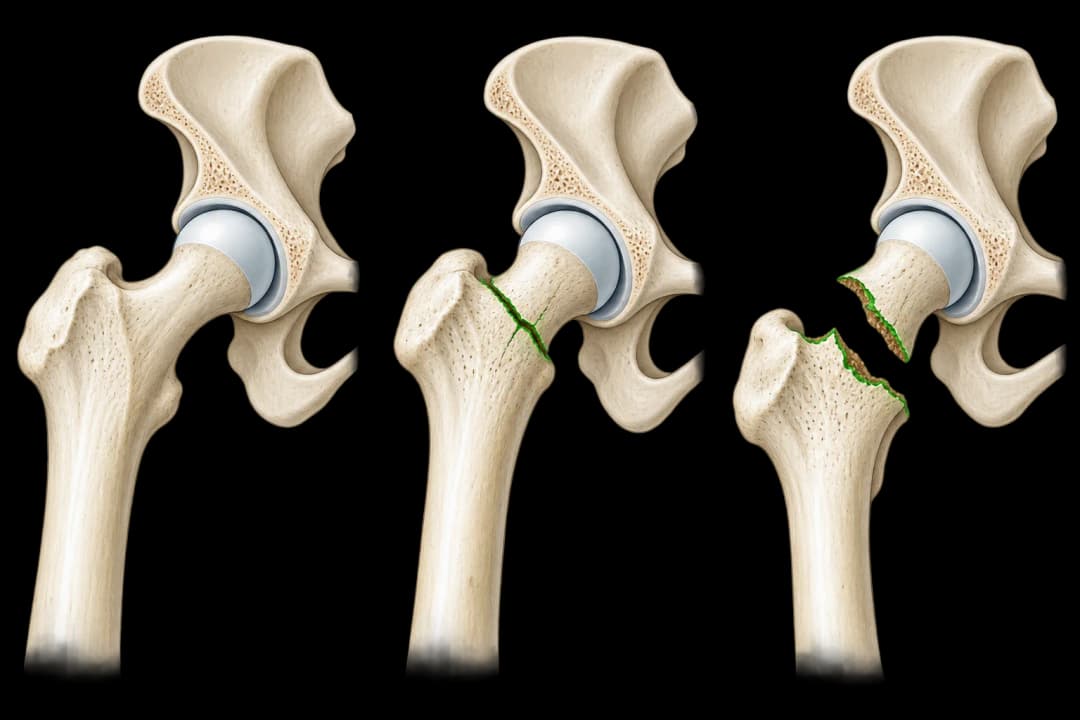
A hip fracture is a break in the upper femur, close to the ball-and-socket hip joint. It may involve the femoral neck or the area just below it. A fall is a frequent trigger, although weakened bone can break during a smaller impact. This is an urgent injury because pain, immobility and prolonged time in bed can affect strength and independence. Read about [Osteoporosis](/conditions/osteoporosis/) as a factor that can weaken bone.
Symptoms and presentation
A hip fracture commonly presents with sudden hip or groin pain after a fall or blow. Many people cannot stand or put weight through the affected leg; see [Inability to Bear Weight](/symptoms/inability-to-bear-weight/). The leg may look shorter or turned outward, and movement can be extremely difficult. [Limping](/symptoms/limping/) may occur with a stable or less displaced break, while [Hip Pain](/symptoms/hip-pain/) can spread toward the thigh or knee.
How it happens
The usual mechanism is a sideways fall or direct impact. A twisting force, traffic injury or sports collision can also break the upper femur. Bone that has lost density is less able to absorb force. Rarely, an underlying bone problem contributes to a fracture; a clinician may consider other hip conditions, including [Avascular Necrosis of the Hip](/conditions/avascular-necrosis-of-the-hip/), when the history or images are unusual.
What recovery can involve
The immediate priorities are pain control, safe movement and treatment of the break. The plan depends on the fracture's location, stability, general health and usual mobility. After the bone is repaired or stabilised, walking practice and strengthening begin as soon as the treating team considers them safe. Recovery can continue for months, with progress measured by transfers, balance, walking distance and daily activities.
Factors that raise risk
Risk is higher with reduced bone density, previous falls, poor balance, muscle weakness, vision problems and medicines that cause dizziness. Age-related changes in reaction time and gait can also make a fall more damaging. Smoking, limited physical activity and some long-term illnesses may affect bone or muscle health. A clinician can review falls, medicines and bone health together rather than focusing on one factor.
How clinicians diagnose it
Assessment includes the injury history, examination of the leg and checks of circulation, sensation and movement. Plain hip and pelvis X-rays usually show the break and its position. If pain and inability to walk continue despite normal initial images, further imaging may be considered. Blood tests and a health review help the team prepare safely for anaesthesia, surgery and rehabilitation.
Treatment options
Most displaced hip fractures need an operation to stabilise the bone or replace the damaged part of the joint; see [Hip Fracture Surgery](/treatments/trauma-and-fracture-care/hip-fracture-surgery/). Selected stable injuries may have a non-operative plan when surgery would carry particular concerns. Pain relief, clot prevention, nutrition and early mobilisation are part of hospital care. [Post-Operative Rehabilitation](/treatments/physiotherapy-and-rehabilitation/post-operative-rehabilitation/) rebuilds transfers, walking and confidence. Bone protection may include [Bisphosphonate Therapy](/treatments/non-surgical-orthopedics/bisphosphonate-therapy/) when appropriate.
Living during recovery
Use the walking aid and weight-bearing instructions provided by the team. Keep essential items within reach, remove trip hazards and arrange help with bathing, meals and stairs. A therapist can practise getting into bed, standing from a chair and using the bathroom safely. New pain, wound changes, fever, breathlessness or a sudden decline in mobility needs prompt clinical advice.
Possible complications
Complications can include chest problems from immobility, blood clots, infection, pressure injury, confusion and loss of strength. The fracture may heal slowly or the joint may remain painful or stiff. Early movement, breathing exercises, skin checks, hydration and prescribed medicines reduce avoidable problems, but symptoms should be reported rather than managed alone.
Reducing future risk
Ask for a falls and bone-health review after a hip fracture. Strength and balance exercise, suitable footwear, brighter lighting, handrails and removal of loose rugs can make movement safer. Treating low bone density, checking vision and reviewing medicines may further reduce risk. Keep exercising within the plan from your rehabilitation team.
Who can help?
Care may involve an orthopaedic surgeon, emergency clinician, physiotherapist, nurse, pharmacist and bone-health specialist. Seek urgent care after a fall that causes severe hip pain, a new inability to bear weight or an obviously shortened or turned leg. Bring your medicines and details of your usual mobility to the assessment.
Questions people ask
Can a hip fracture happen without a major fall?
Yes. Weakened bone can fracture after a minor impact or awkward twist, so new hip pain and difficulty bearing weight deserve assessment.
When should I seek emergency help?
Seek urgent help after an injury with severe hip pain, inability to bear weight, deformity, or sudden loss of normal leg movement.
Related
Related reading
Keep reading
Find care
Emergency & Urgent Care in Dubai
Where hip fracture: symptoms, diagnosis and treatment is assessed depends on what is causing it. These are licensed emergency & urgent care listed in Dubai.
A Block Centurion Star Tower - Office No: 304, 3rd Floor - Port Saeed - Deira - Dubai - United Arab Emirates
Accepts: Daman, Thiqa, AXA, Allianz Care +15 more
5F7C+MP9 Dubai Corporation For Ambulance Services - Head Office - Warsan Third - Warsan 3 - Dubai - United Arab Emirates
Accepts: Daman, Thiqa, AXA, Cigna +23 more
Palm West Beach - The Palm Jumeirah - Dubai - United Arab Emirates
Accepts: Daman, Thiqa, AXA, Cigna +17 more
Dubai Airport Freezone 7W, Block B, 4th Floor - Dubai Int'l Airport - Dubai - United Arab Emirates
Accepts: Daman, AXA, Cigna, MetLife +15 more
Ordered by verification status and how complete each clinic's public record is, then alphabetically. This is a directory listing, not a ranking — Zavis does not rate or recommend providers.
A factual listing drawn from the UAE health regulators' public licence registers. It is not a referral, an endorsement, or advice that any of these providers is right for you.
Medical disclaimer. This page is general health information, not medical advice, and it cannot diagnose you. Always consult a licensed healthcare provider about your own symptoms and treatment. In an emergency in the UAE, call 998 for an ambulance.