
What should you know about your first frozen embryo transfer?
Short answer
A first frozen embryo transfer places a previously stored embryo into the uterus after the lining and hormone timing have been prepared.
This answers one question. It is not a diagnosis and does not replace an assessment by a licensed doctor.
At a glance
- Embryo source
- Previously stored after fertility treatment
- Preparation
- Lining and hormone timing are checked
- Follow-up
- Continue the clinic's support plan and testing schedule
What happens
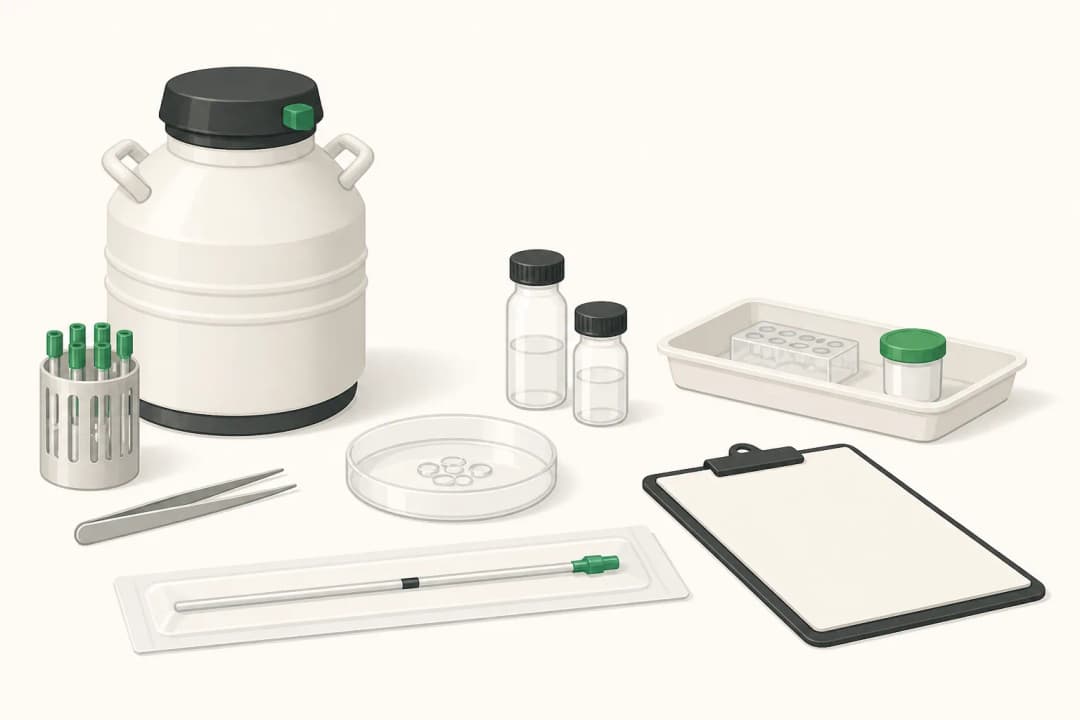
A frozen embryo transfer, or FET, uses an embryo that was preserved from an earlier fertility cycle. The clinic prepares the uterine lining in a natural cycle or with medicines, then schedules transfer around the lining and embryo development. Ultrasound and hormone checks may be used to confirm readiness.
During transfer, a clinician guides a thin catheter through the cervix into the uterus. The embryo is released, and prescribed hormone support may continue afterwards. The procedure usually involves planning and monitoring rather than ovarian stimulation in the same cycle.
How to prepare
Take medicines at the exact times instructed and tell the clinic about missed doses, bleeding, illness, or new medicines. Keep appointments for scans and blood tests, and confirm the transfer time and whether you need a full bladder. Normal gentle activity is often possible, but follow your clinic's advice about exercise and travel.
After transfer, continue prescribed support until the clinic gives a test result and next instruction. Micronised Progesterone may be part of the support plan. Avoid interpreting early sensations as a reliable sign of pregnancy, because medicines and the procedure can cause similar symptoms.
When to seek care
Contact your fertility clinic for heavy bleeding, severe pelvic pain, fever, or symptoms after a medicine that concern you. Seek urgent help for severe or one-sided pain, faintness, breathlessness, or rapidly increasing abdominal swelling. Keep the clinic informed even if symptoms begin outside appointment hours.
Questions for your fertility team
Ask which preparation cycle is planned, how the lining will be checked, when progesterone begins, and how the transfer date is set. Confirm medicine instructions, activity guidance, the pregnancy-test date, and who to contact about bleeding or pain.
Find care
General Clinics & Polyclinics in Abu Dhabi
That answer is general. If you want it applied to your own case, these are licensed general clinics & polyclinics listed in Abu Dhabi.
27 Ar Ruwwad St - Shakhbout City - MSH4 - Abu Dhabi - United Arab Emirates
Accepts: Daman, Thiqa, Cigna, MetLife +20 more
Al Ruwais, Al Dhafrah
Accepts: Daman, Thiqa, AXA, Cigna +16 more
Al Bahyah - Al Bahyah Old - Abu Dhabi - United Arab Emirates
Accepts: Daman, Thiqa, Cigna, Allianz Care +18 more
Abu Dhabi
Accepts: Daman, Thiqa, AXA, Cigna +27 more
Ordered by verification status and how complete each clinic's public record is, then alphabetically. This is a directory listing, not a ranking — Zavis does not rate or recommend providers.
A factual listing drawn from the DHA, DOH and MOHAP licence registers. It is not a referral, an endorsement, or advice that any of these providers is right for you.
Questions people ask
Is a frozen embryo transfer the same as an egg collection?
No. The transfer uses a stored embryo and does not itself involve collecting eggs.
Can symptoms confirm implantation?
No. Cramping, spotting, or breast tenderness can have several explanations, so use the clinic's testing schedule.
Related
Related reading
Keep reading
Medical disclaimer. This page is general health information, not medical advice, and it cannot diagnose you. Always consult a licensed healthcare provider about your own symptoms and treatment. In an emergency in the UAE, call 998 for an ambulance.