
What should you know about facial melanoma removal?
Short answer
Facial melanoma removal usually involves confirming the diagnosis, surgically removing the visible tumour with a planned margin, and arranging follow-up based on the pathology.
This answers one question. It is not a diagnosis and does not replace an assessment by a licensed doctor.
At a glance
- Main treatment
- Planned surgical excision
- Key guide
- The pathology report
- Aftercare
- Wound care and skin surveillance
What removal involves
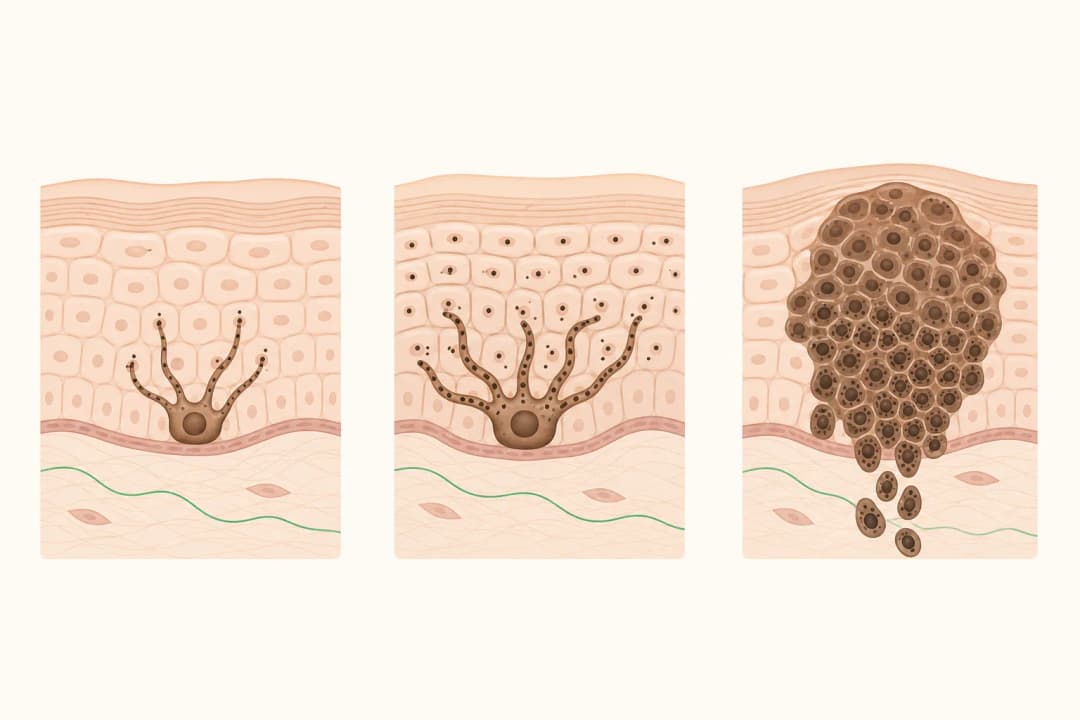
A dermatologist may first examine the spot with magnification and take a biopsy. The laboratory report helps define the melanoma and guides the next procedure. Excision removes the lesion and a surrounding area of skin; the amount depends on the tumour findings and its location on the face. A wound may be closed directly or managed with a reconstructive approach, with appearance and function considered together.
Further assessment can include checking nearby lymph nodes. A sentinel lymph node biopsy may be discussed for selected melanomas, while scans or other treatment are considered when there is concern about spread. Removal of the facial spot does not by itself determine the whole treatment plan.
Preparing and caring for the site
Bring a list of medicines, allergies and previous reactions to anaesthetic. Follow the surgical team’s instructions about washing, dressings, sun protection and activity. Keep the wound clean and avoid picking at a scab. Arrange the recommended review so the pathology can be explained and any stitches can be managed. Ask how the scar should be protected once the wound has healed.
Do not apply cosmetic products, acids or home remedies to an open wound unless the treating team approves them. Ongoing skin checks matter because a person who has had melanoma can develop another suspicious lesion.
When to contact the care team
Contact the surgical team promptly for bleeding that does not settle with firm pressure, increasing swelling, worsening pain, spreading redness, pus, fever or a wound that opens. Seek urgent help for heavy bleeding, faintness, breathing difficulty or sudden changes affecting vision or facial movement. A new or changing pigmented area, a sore that does not heal, or a lump near the scar also deserves timely assessment.
Questions to take along
Ask which biopsy or excision is planned, how the facial wound may be closed, when pathology will be available, whether lymph-node assessment is relevant, and what follow-up schedule and sun-protection routine you should use.
Find care
General Clinics & Polyclinics in Abu Dhabi
That answer is general. If you want it applied to your own case, these are licensed general clinics & polyclinics listed in Abu Dhabi.
27 Ar Ruwwad St - Shakhbout City - MSH4 - Abu Dhabi - United Arab Emirates
Accepts: Daman, Thiqa, Cigna, MetLife +20 more
Al Ruwais, Al Dhafrah
Accepts: Daman, Thiqa, AXA, Cigna +16 more
Al Bahyah - Al Bahyah Old - Abu Dhabi - United Arab Emirates
Accepts: Daman, Thiqa, Cigna, Allianz Care +18 more
Abu Dhabi
Accepts: Daman, Thiqa, AXA, Cigna +27 more
Ordered by verification status and how complete each clinic's public record is, then alphabetically. This is a directory listing, not a ranking — Zavis does not rate or recommend providers.
A factual listing drawn from the DHA, DOH and MOHAP licence registers. It is not a referral, an endorsement, or advice that any of these providers is right for you.
Questions people ask
Will facial melanoma removal leave a scar?
Any procedure that cuts the skin can leave a scar, although its final appearance depends on the site, closure and healing. Your surgeon can discuss scar care after the wound closes.
Is removing the visible spot the whole treatment?
Not always. The pathology findings may lead to lymph-node assessment, additional surgery, surveillance or other treatment.
Related
Related reading
Keep reading
Medical disclaimer. This page is general health information, not medical advice, and it cannot diagnose you. Always consult a licensed healthcare provider about your own symptoms and treatment. In an emergency in the UAE, call 998 for an ambulance.