
What should you know about eyeball melanoma?
Short answer
Eyeball melanoma is a serious cancer involving pigment-producing cells in the eye and needs prompt specialist assessment.
This answers one question. It is not a diagnosis and does not replace an assessment by a licensed doctor.
At a glance
- Specialist
- Ophthalmologist or ocular oncology team
- Key concern
- New visual change or a changing pigmented eye area
- Assessment
- Eye examination with targeted imaging
What it can mean
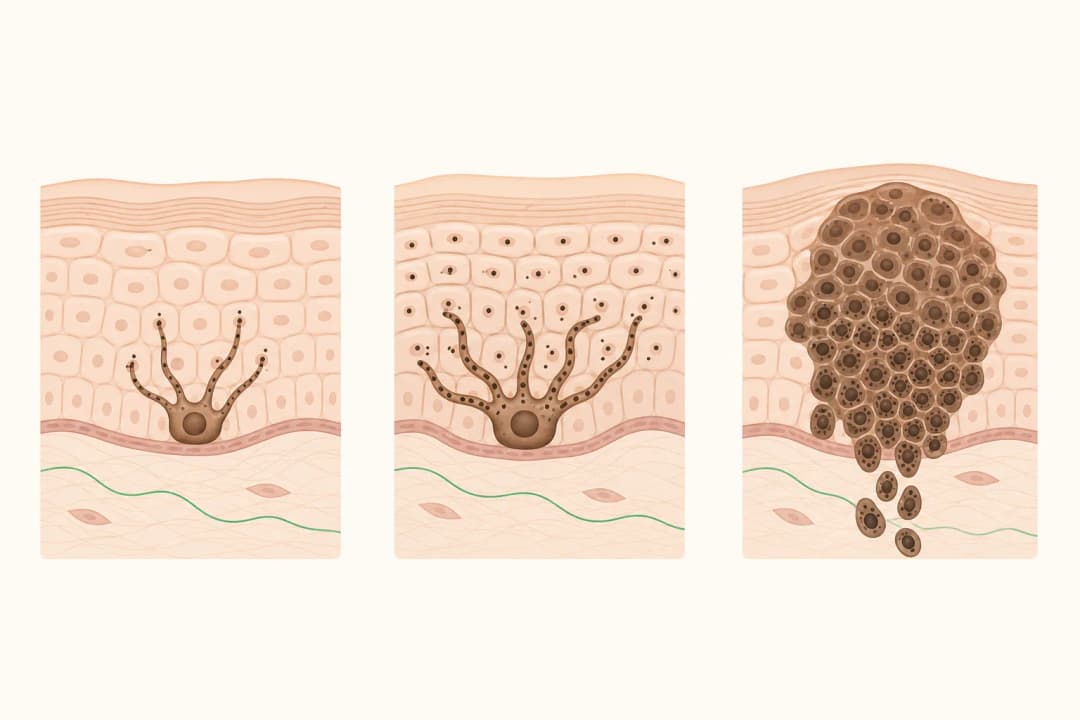
Melanoma can develop in different parts of the eye, including tissues that are not visible when you look in a mirror. A new dark spot, a change in the appearance of the iris, blurred vision, flashes, floaters or a change in the shape of the pupil can be clues, although several eye conditions can cause similar symptoms. Examination may include a detailed eye assessment and imaging to locate a lesion and understand its size and position. The specialist may also assess nearby tissues and the rest of the body when appropriate. Melanoma is different from common surface irritation or an ordinary skin mole; the diagnosis depends on examination rather than appearance alone.
What to do next
Arrange an urgent appointment with an ophthalmologist, ideally one experienced in eye tumours, if a clinician has raised this possibility or you have a persistent new visual change. Bring a list of medicines and previous eye records, and note when the symptom began and whether it affects one or both eyes. Do not try to remove or treat a pigmented area yourself. Treatment depends on the eye location, tumour features, vision, and whether disease has spread. Options may include focused eye treatment, surgery, tumour removal surgery or medicines such as immunotherapy. A care team may also discuss staging tests and, in selected situations, sentinel lymph node biopsy.
When to seek care quickly
Seek same-day emergency eye care for sudden loss of vision, a curtain or shadow across your sight, severe eye pain, marked redness with vomiting, or a new shower of flashes and floaters. These symptoms can signal an eye emergency and should not wait for a routine cancer appointment. Contact your specialist promptly for a growing visible spot, worsening blurred vision, a new pupil change or persistent one-sided symptoms. Follow-up after cancer treatment helps the team monitor the treated eye and check for changes elsewhere.
Questions for your doctor
Ask where the suspected melanoma is located, which tests will clarify the diagnosis, how treatment could affect vision, and whether body imaging is needed. Ask how quickly treatment should begin, which symptoms require an emergency call, and how follow-up will be organised.
Find care
General Clinics & Polyclinics in Abu Dhabi
That answer is general. If you want it applied to your own case, these are licensed general clinics & polyclinics listed in Abu Dhabi.
27 Ar Ruwwad St - Shakhbout City - MSH4 - Abu Dhabi - United Arab Emirates
Accepts: Daman, Thiqa, Cigna, MetLife +20 more
Al Ruwais, Al Dhafrah
Accepts: Daman, Thiqa, AXA, Cigna +16 more
Al Bahyah - Al Bahyah Old - Abu Dhabi - United Arab Emirates
Accepts: Daman, Thiqa, Cigna, Allianz Care +18 more
Abu Dhabi
Accepts: Daman, Thiqa, AXA, Cigna +27 more
Ordered by verification status and how complete each clinic's public record is, then alphabetically. This is a directory listing, not a ranking — Zavis does not rate or recommend providers.
A factual listing drawn from the DHA, DOH and MOHAP licence registers. It is not a referral, an endorsement, or advice that any of these providers is right for you.
Questions people ask
Can a visible eye spot confirm melanoma?
No. A visible spot can have several causes, so an eye specialist must examine it and interpret any imaging.
Can eyeball melanoma affect vision?
It can, depending on its location and size, but symptoms vary and some lesions are found during an examination.
Related
Related reading
Keep reading
Medical disclaimer. This page is general health information, not medical advice, and it cannot diagnose you. Always consult a licensed healthcare provider about your own symptoms and treatment. In an emergency in the UAE, call 998 for an ambulance.