
What should you know about end stage COPD?
Short answer
End stage COPD means lung damage has become advanced, so breathing support, symptom relief, and personalised care planning become central.
This answers one question. It is not a diagnosis and does not replace an assessment by a licensed doctor.
At a glance
- Main focus
- Breathing support and symptom relief
- Useful review
- Chronic disease review
What advanced COPD can involve
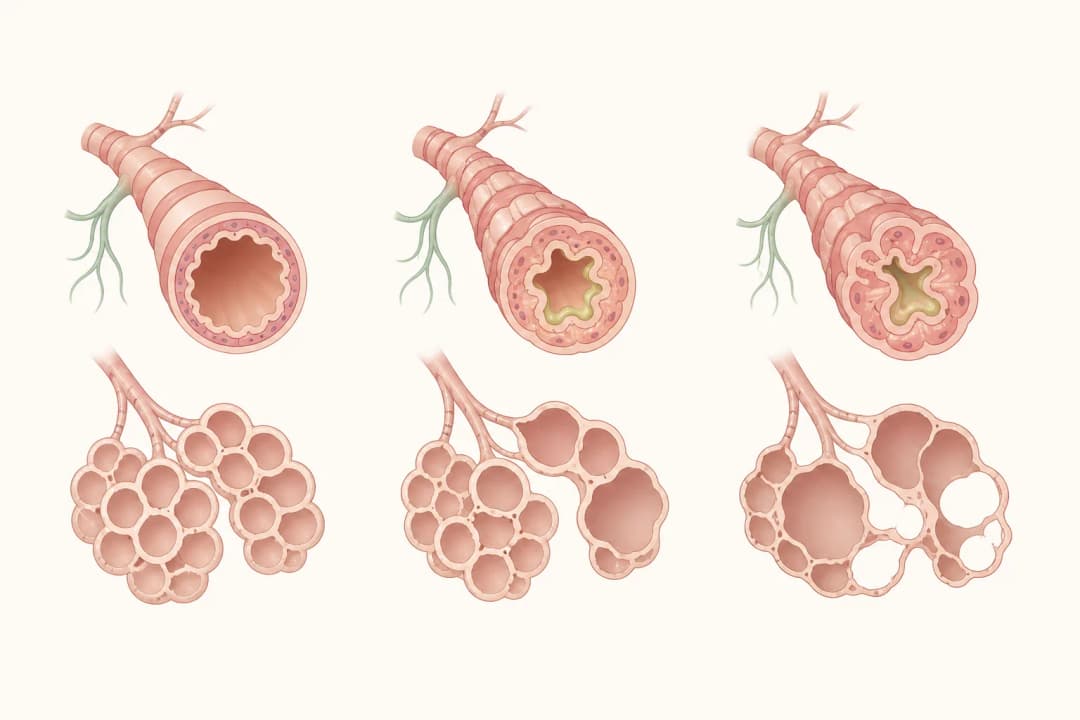
COPD can make airflow limited and increase the effort needed to breathe. Advanced disease may bring breathlessness during small activities or at rest, persistent cough, chest tightness, wheezing, and changes in the amount or colour of phlegm. Flare-ups can temporarily worsen symptoms and may need prompt treatment. The term describes severity, not a precise timetable; people can have different patterns and needs.
A clinician may review symptoms, oxygen levels, inhaler technique, previous flare-ups, nutrition, mobility, and emotional wellbeing. Spirometry can help assess airflow when it is suitable, while a chronic disease review can coordinate ongoing support.
Planning day-to-day care
Use prescribed inhalers exactly as directed and have your technique checked. Pace activities, rest between tasks, and follow the written plan for worsening breathlessness. Avoid smoke and other irritants; a smoking cessation programme can support stopping if you smoke. Ask about breathing exercises, rehabilitation, vaccinations, oxygen assessment, and advance care planning. These measures can reduce distress and help match treatment to your priorities.
When breathing needs urgent help
Seek emergency help for severe breathlessness that prevents speaking, blue or grey lips, new confusion, fainting, or marked drowsiness. Contact your clinician promptly when breathlessness, cough, wheezing, chest tightness, or phlegm changes noticeably, especially with fever or reduced ability to manage usual activities. A sudden change may be an exacerbation, infection, or another problem requiring assessment.
Questions for your doctor
Ask which symptoms should trigger your action plan, whether your inhalers and oxygen needs should be reviewed, how to prepare for flare-ups, and what support is available for breathlessness, mobility, mood, and future care decisions.
Find care
General Clinics & Polyclinics in Abu Dhabi
That answer is general. If you want it applied to your own case, these are licensed general clinics & polyclinics listed in Abu Dhabi.
27 Ar Ruwwad St - Shakhbout City - MSH4 - Abu Dhabi - United Arab Emirates
Accepts: Daman, Thiqa, Cigna, MetLife +20 more
Al Ruwais, Al Dhafrah
Accepts: Daman, Thiqa, AXA, Cigna +16 more
Al Bahyah - Al Bahyah Old - Abu Dhabi - United Arab Emirates
Accepts: Daman, Thiqa, Cigna, Allianz Care +18 more
Abu Dhabi
Accepts: Daman, Thiqa, AXA, Cigna +27 more
Ordered by verification status and how complete each clinic's public record is, then alphabetically. This is a directory listing, not a ranking — Zavis does not rate or recommend providers.
A factual listing drawn from the DHA, DOH and MOHAP licence registers. It is not a referral, an endorsement, or advice that any of these providers is right for you.
Questions people ask
Is end stage COPD the same for everyone?
No. Severity, flare-ups, daily function, and support needs vary between people, so care should be individualised.
Can symptoms suddenly worsen?
Yes. A flare-up can cause a noticeable increase in breathlessness, cough, wheezing, or phlegm and should be assessed according to your action plan.
Related
Related reading
Keep reading
Medical disclaimer. This page is general health information, not medical advice, and it cannot diagnose you. Always consult a licensed healthcare provider about your own symptoms and treatment. In an emergency in the UAE, call 998 for an ambulance.