
What should you know about an electrocardiogram machine for sale?
Short answer
An electrocardiogram machine for sale should be judged by its intended clinical use, signal quality, safety features, maintenance support, and compatibility with professional interpretation.
This answers one question. It is not a diagnosis and does not replace an assessment by a licensed doctor.
At a glance
- Main function
- Records cardiac electrical signals
- User requirement
- Trained operation and interpretation
- Before buying
- Confirm support, safety, and data handling
What the device does
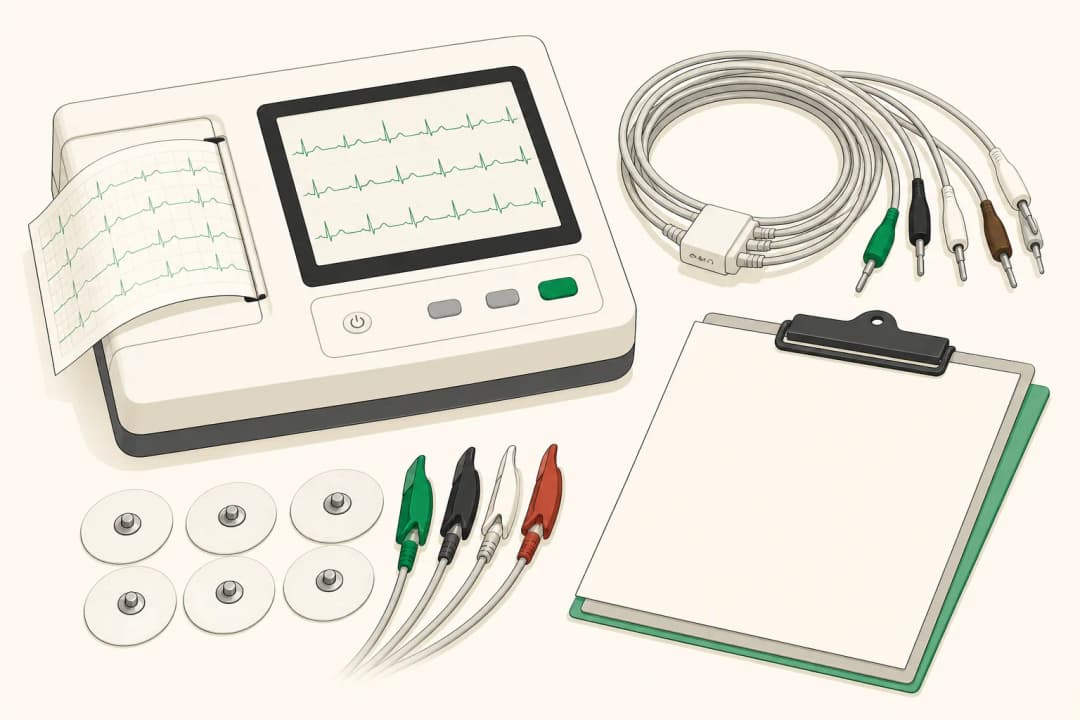
The machine receives signals from electrodes attached to the skin and displays or prints a tracing of the heart’s electrical activity. Features may include a screen, paper or digital export, rhythm recording, and connection to clinical systems. Automated interpretations can help organise a report, but they can miss context or be misleading. A machine cannot replace a trained professional who checks the tracing, the patient, and the reason for testing.
Check before purchase or use
Clarify who will operate the device, where it will be used, and how results will reach a qualified reader. Check electrode and cable availability, cleaning instructions, software updates, data security, electrical safety, calibration, warranty, and local service arrangements. Ask the supplier for training and documentation. For personal symptoms, arrange an assessment through GP Consultation rather than relying on a device at home.
Do not delay urgent care
Emergency symptoms such as crushing or persistent chest pain, severe breathlessness, collapse, or a new fast irregular heartbeat need immediate medical help. Do not spend time buying, setting up, or repeating a recording when these symptoms are present.
Questions to raise
Ask what type of recording is clinically appropriate, who will interpret it, and what follow-up is available after an abnormal result. Ask whether the proposed equipment is suitable for your setting and how it will be maintained.
Find care
General Clinics & Polyclinics in Abu Dhabi
That answer is general. If you want it applied to your own case, these are licensed general clinics & polyclinics listed in Abu Dhabi.
27 Ar Ruwwad St - Shakhbout City - MSH4 - Abu Dhabi - United Arab Emirates
Accepts: Daman, Thiqa, Cigna, MetLife +20 more
Al Ruwais, Al Dhafrah
Accepts: Daman, Thiqa, AXA, Cigna +16 more
Al Bahyah - Al Bahyah Old - Abu Dhabi - United Arab Emirates
Accepts: Daman, Thiqa, Cigna, Allianz Care +18 more
Abu Dhabi
Accepts: Daman, Thiqa, AXA, Cigna +27 more
Ordered by verification status and how complete each clinic's public record is, then alphabetically. This is a directory listing, not a ranking — Zavis does not rate or recommend providers.
A factual listing drawn from the DHA, DOH and MOHAP licence registers. It is not a referral, an endorsement, or advice that any of these providers is right for you.
Questions people ask
Can an ECG machine diagnose a condition by itself?
No. It records data and may offer an automated label, but a clinician must interpret the result in context.
Is a home machine suitable for everyone?
Not necessarily. Setup, signal quality, interpretation, and follow-up can make clinical assessment safer and more useful.
Related
Related reading
Keep reading
Medical disclaimer. This page is general health information, not medical advice, and it cannot diagnose you. Always consult a licensed healthcare provider about your own symptoms and treatment. In an emergency in the UAE, call 998 for an ambulance.