
Does exercise therapy treat scapular dyskinesis?
Short answer
Exercise therapy can help scapular dyskinesis by retraining shoulder blade control, strengthening supporting muscles, and improving coordinated arm movement.
This answers one question. It is not a diagnosis and does not replace an assessment by a licensed doctor.
At a glance
- Treatment focus
- Control, coordination, and supporting muscle strength
- Progression
- From gentle control to task-specific movement
Does exercise therapy treat scapular dyskinesis?
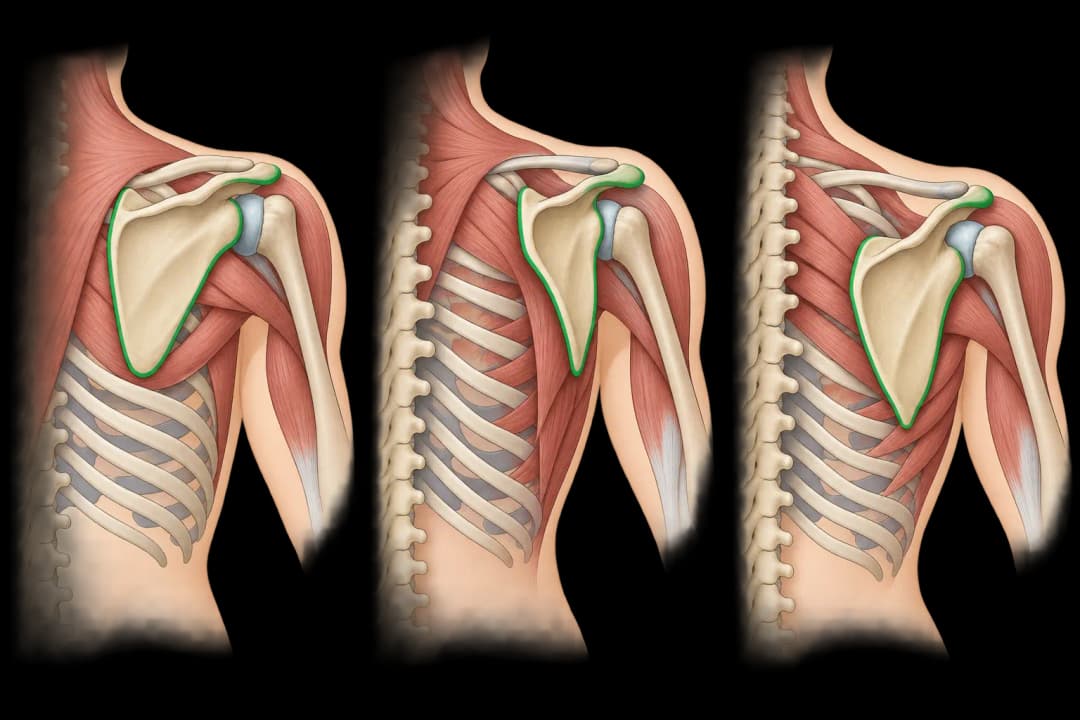
Exercise therapy can help scapular dyskinesis by retraining shoulder blade control, strengthening supporting muscles, and improving coordinated arm movement. The plan depends on pain, weakness, posture, work demands, and the reason the movement pattern developed.
What this means
Scapular dyskinesis describes altered movement or positioning of the shoulder blade during arm motion. It may be noticed as uneven movement, fatigue, discomfort, or difficulty with overhead tasks. Therapy commonly targets the muscles that guide the shoulder blade and the muscles that move the upper arm. Exercises may start with low-load control and progress toward reaching, pushing, pulling, or sport-specific actions as movement becomes steadier.
What you can do
Have the shoulder and neck assessed before choosing exercises, especially if symptoms followed an injury. Practise the prescribed movements slowly and watch for smooth shoulder blade motion rather than chasing a large range. Reduce repeated overhead work while symptoms are irritable, then rebuild activity in stages. The [Exercise Therapy](/treatments/physiotherapy-and-rehabilitation/exercise-therapy/) page explains how exercise plans are progressed and monitored.
When to seek care
Arrange assessment when shoulder blade movement is newly changed, painful, associated with weakness, or interfering with work, sleep, or dressing. Seek prompt care after major trauma, or with sudden inability to raise the arm, spreading numbness, fever, or severe swelling. These findings may require examination for a nerve, joint, or other underlying problem.
Questions for your doctor or physiotherapist
Which muscles or movement habits are contributing to my shoulder blade pattern? What should I feel during each exercise? How do I know when to increase resistance? Should my neck, shoulder joint, or nerves also be checked?
Find care
General Clinics & Polyclinics in Abu Dhabi
That answer is general. If you want it applied to your own case, these are licensed general clinics & polyclinics listed in Abu Dhabi.
27 Ar Ruwwad St - Shakhbout City - MSH4 - Abu Dhabi - United Arab Emirates
Accepts: Daman, Thiqa, Cigna, MetLife +20 more
Al Ruwais, Al Dhafrah
Accepts: Daman, Thiqa, AXA, Cigna +16 more
Al Bahyah - Al Bahyah Old - Abu Dhabi - United Arab Emirates
Accepts: Daman, Thiqa, Cigna, Allianz Care +18 more
Abu Dhabi
Accepts: Daman, Thiqa, AXA, Cigna +27 more
Ordered by verification status and how complete each clinic's public record is, then alphabetically. This is a directory listing, not a ranking — Zavis does not rate or recommend providers.
A factual listing drawn from the DHA, DOH and MOHAP licence registers. It is not a referral, an endorsement, or advice that any of these providers is right for you.
Questions people ask
Will exercise therapy change shoulder blade movement immediately?
Control often develops through repeated practice and gradual loading. Early work may feel subtle before it transfers to reaching or lifting tasks.
Should I stop all shoulder activity?
Usually, the goal is to modify aggravating activity while keeping suitable movement, then rebuild tolerance with guidance.
Keep reading
Medical disclaimer. This page is general health information, not medical advice, and it cannot diagnose you. Always consult a licensed healthcare provider about your own symptoms and treatment. In an emergency in the UAE, call 998 for an ambulance.