
What should you know about different type 1 and type 2 diabetes?
Short answer
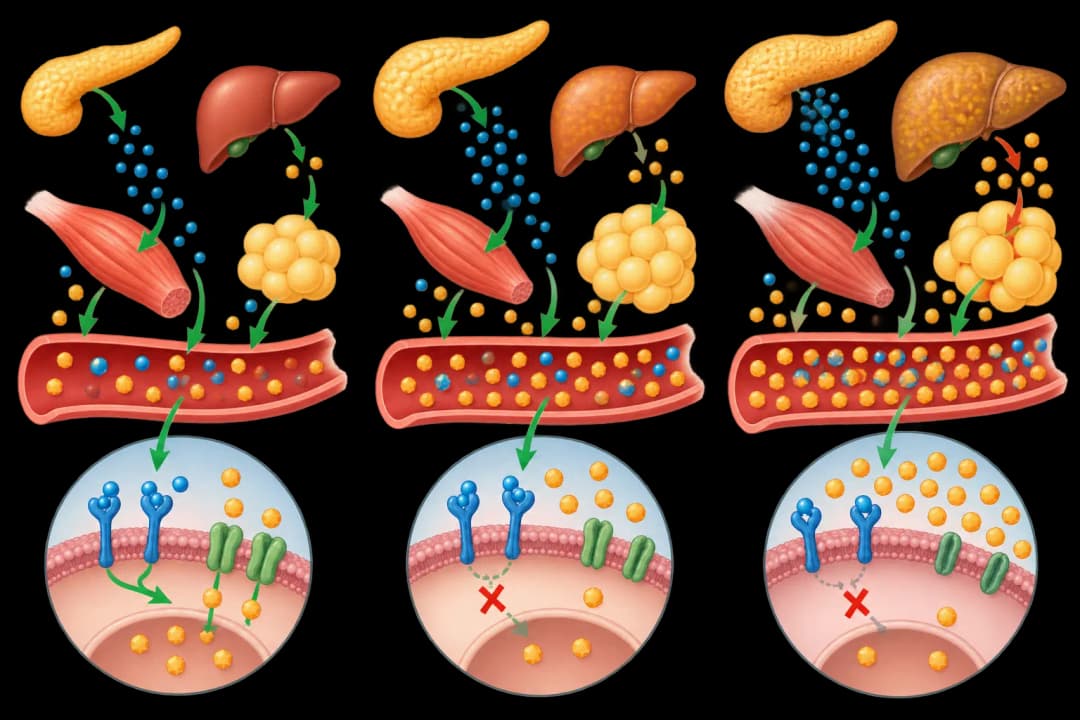
Type 1 diabetes happens when the immune system destroys insulin-making cells, while type 2 diabetes involves insulin resistance and reduced insulin production over time.
This answers one question. It is not a diagnosis and does not replace an assessment by a licensed doctor.
At a glance
- Type 1
- Autoimmune loss of insulin-making cells
- Type 2
- Insulin resistance with declining insulin production
- Monitoring
- Glucose, feet, eyes, kidneys, blood pressure, and cholesterol
The key differences
In type 1 diabetes, the body makes little or no insulin, so insulin replacement is needed to move glucose from the blood into cells. It can begin at any age and is not caused by eating a particular food. Type 2 diabetes develops when cells respond less effectively to insulin and the pancreas cannot keep up. Family history, age, body weight, activity, and other factors may contribute, but no single factor explains every diagnosis.
Both types can cause high blood glucose and may affect the eyes, kidneys, nerves, blood vessels, and skin when not well controlled. Prediabetes is different from diabetes and can be identified through blood tests.
Managing the diagnosis
A care plan may include glucose checks, food and activity guidance, medicines, or insulin. Learn how to recognise low glucose, called hypoglycaemia, and keep follow-up appointments for blood pressure, cholesterol, feet, eyes, and kidney health. Tell your team about numbness, foot wounds, repeated skin infections, or changes in walking comfort because these can need early attention.
When to seek urgent help
Get urgent medical help for severe vomiting, deep or rapid breathing, confusion, fainting, or difficulty staying awake. Treat suspected hypoglycaemia promptly using the plan given to you; seek emergency help if the person cannot swallow, has a seizure, or does not recover. A new foot wound with spreading redness or fever also needs prompt assessment.
Questions for your doctor
Which type of diabetes do I have, and how was it confirmed? What glucose targets and medicines apply to me? How should I handle illness, exercise, missed doses, or low glucose?
Find care
General Clinics & Polyclinics in Abu Dhabi
That answer is general. If you want it applied to your own case, these are licensed general clinics & polyclinics listed in Abu Dhabi.
27 Ar Ruwwad St - Shakhbout City - MSH4 - Abu Dhabi - United Arab Emirates
Accepts: Daman, Thiqa, Cigna, MetLife +20 more
Al Ruwais, Al Dhafrah
Accepts: Daman, Thiqa, AXA, Cigna +16 more
Al Bahyah - Al Bahyah Old - Abu Dhabi - United Arab Emirates
Accepts: Daman, Thiqa, Cigna, Allianz Care +18 more
Abu Dhabi
Accepts: Daman, Thiqa, AXA, Cigna +27 more
Ordered by verification status and how complete each clinic's public record is, then alphabetically. This is a directory listing, not a ranking — Zavis does not rate or recommend providers.
A factual listing drawn from the DHA, DOH and MOHAP licence registers. It is not a referral, an endorsement, or advice that any of these providers is right for you.
Questions people ask
Can type 2 diabetes become type 1 diabetes?
No. They are different conditions with different underlying processes. A person with type 2 may later need insulin, but that does not change the diagnosis to type 1.
Can lifestyle changes cure type 1 diabetes?
Lifestyle habits support health but cannot replace the insulin that type 1 diabetes requires. Treatment should be planned with the diabetes team.
Related
Related reading
Keep reading
Medical disclaimer. This page is general health information, not medical advice, and it cannot diagnose you. Always consult a licensed healthcare provider about your own symptoms and treatment. In an emergency in the UAE, call 998 for an ambulance.