
Diaphragmatic breathing and COPD: what to know
Short answer
Diaphragmatic breathing may reduce the effort of breathing with COPD, but it does not replace prescribed treatment or urgent care.
This answers one question. It is not a diagnosis and does not replace an assessment by a licensed doctor.
At a glance
- Main aim
- Make breathing slower and less effortful
- Practise
- When comfortable, with relaxed shoulders
- Stop if
- Dizziness or worsening breathlessness develops
What diaphragmatic breathing means
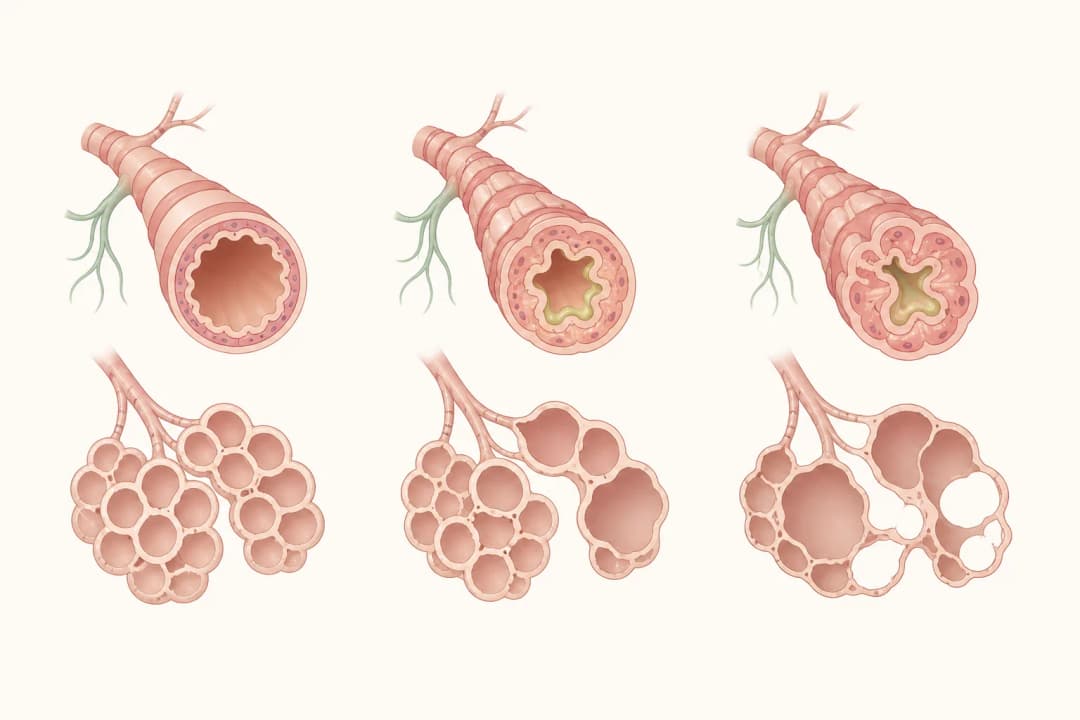
The diaphragm is a broad muscle beneath the lungs. When it moves down during a gentle inhale, the lower ribs and abdomen can expand. COPD can make breathing feel effortful, especially when air becomes trapped and the chest and neck muscles work harder. A slower pattern that allows the abdomen to rise may help you avoid shallow, hurried breaths.
This technique is a breathing exercise, not a way to reverse COPD. Breathlessness, chest tightness, cough, phlegm, or wheezing can have several causes. A clinician may use a chronic disease review and spirometry to assess your breathing and treatment plan.
How to practise safely
Sit supported or lie with your knees bent. Relax your shoulders, place one hand on your upper chest and one on your abdomen, then breathe in gently through your nose so the lower hand rises more than the upper hand. Breathe out slowly through relaxed, narrowed lips. Practise when settled, for a few comfortable breaths, and stop if you feel light-headed, more breathless, or distressed.
Use your prescribed inhalers exactly as directed. Avoid smoke and ask about a smoking cessation programme if smoking is part of your situation. A respiratory clinician can adapt breathing practice to your exercise and daily activities.
When to seek care
Seek urgent medical help if breathlessness is severe or rapidly worsening, you cannot speak comfortably, your lips look blue or grey, you feel faint or confused, or your usual reliever is not helping. New or worsening chest tightness also needs prompt assessment. Contact your care team when cough, phlegm, or wheezing changes from your usual pattern.
Questions for your doctor
Ask whether your technique is suitable, how to combine it with inhalers or pulmonary rehabilitation, and which changes in breathlessness should trigger an urgent call. You can also ask whether spirometry or a chronic disease review is due.
Find care
General Clinics & Polyclinics in Abu Dhabi
That answer is general. If you want it applied to your own case, these are licensed general clinics & polyclinics listed in Abu Dhabi.
27 Ar Ruwwad St - Shakhbout City - MSH4 - Abu Dhabi - United Arab Emirates
Accepts: Daman, Thiqa, Cigna, MetLife +20 more
Al Ruwais, Al Dhafrah
Accepts: Daman, Thiqa, AXA, Cigna +16 more
Al Bahyah - Al Bahyah Old - Abu Dhabi - United Arab Emirates
Accepts: Daman, Thiqa, Cigna, Allianz Care +18 more
Abu Dhabi
Accepts: Daman, Thiqa, AXA, Cigna +27 more
Ordered by verification status and how complete each clinic's public record is, then alphabetically. This is a directory listing, not a ranking — Zavis does not rate or recommend providers.
A factual listing drawn from the DHA, DOH and MOHAP licence registers. It is not a referral, an endorsement, or advice that any of these providers is right for you.
Questions people ask
Can diaphragmatic breathing cure COPD?
No. It may help you manage breathing effort, while COPD treatment addresses the underlying lung condition.
Should I use it during a flare-up?
Use only the breathing plan given by your clinician during worsening symptoms, and seek urgent help for severe or rapidly worsening breathlessness.
Related
Related reading
Keep reading
Medical disclaimer. This page is general health information, not medical advice, and it cannot diagnose you. Always consult a licensed healthcare provider about your own symptoms and treatment. In an emergency in the UAE, call 998 for an ambulance.