
How is a groin strain diagnosed?
Short answer
A groin strain is diagnosed from your injury history, an examination of the inner thigh, and selected imaging when the findings are unclear.
This answers one question. It is not a diagnosis and does not replace an assessment by a licensed doctor.
At a glance
- Commonly assessed area
- Inner thigh and groin muscles
- Key examination clue
- Pain when the legs are brought together against resistance
What the assessment looks for
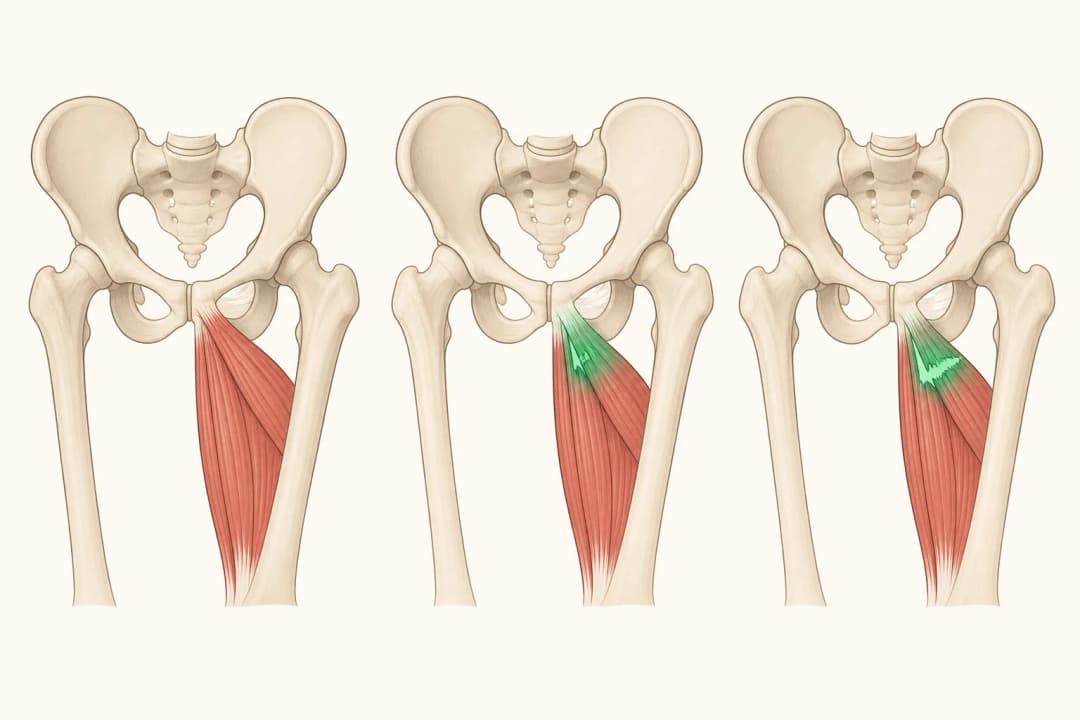
The clinician asks whether pain began during sprinting, kicking, a sudden change of direction, or a stretch. They locate tenderness, compare hip movement on both sides, and check whether bringing the legs together against resistance reproduces pain. A strain commonly involves an adductor muscle or its tendon, but hip joint problems, a hernia, and other causes can feel similar. Ultrasound or magnetic resonance imaging may be considered when the injury is severe, recovery is not following the expected pattern, or the examination cannot distinguish tissues.
What you can do while arranging care
Reduce sprinting, kicking, and wide-leg movements that trigger pain. Gentle walking is reasonable if it does not increase symptoms or make you limp. A clinician or physiotherapist can guide a gradual programme that restores hip movement, adductor strength, balance, and sport-specific loading. Exercise Therapy and Sports Physiotherapy may be useful parts of that plan; a Return-to-Sport Programme can help decide when high-demand activity is appropriate.
When to seek care promptly
Arrange an assessment if pain is severe, followed by marked bruising or swelling, or makes normal walking difficult. Seek urgent care after a major impact, if the hip or leg looks deformed, or if you cannot bear weight. New groin pain with abdominal symptoms, a tender bulge, fever, or testicular pain needs prompt medical attention because it may not be a muscle strain.
Questions to take with you
Ask which structure appears injured, whether imaging is needed, which movements to avoid, and how progress will be measured. Ask when strengthening should begin and what signs mean you are ready to resume running, cutting, or kicking.
Find care
General Clinics & Polyclinics in Abu Dhabi
That answer is general. If you want it applied to your own case, these are licensed general clinics & polyclinics listed in Abu Dhabi.
27 Ar Ruwwad St - Shakhbout City - MSH4 - Abu Dhabi - United Arab Emirates
Accepts: Daman, Thiqa, Cigna, MetLife +20 more
Al Ruwais, Al Dhafrah
Accepts: Daman, Thiqa, AXA, Cigna +16 more
Al Bahyah - Al Bahyah Old - Abu Dhabi - United Arab Emirates
Accepts: Daman, Thiqa, Cigna, Allianz Care +18 more
Abu Dhabi
Accepts: Daman, Thiqa, AXA, Cigna +27 more
Ordered by verification status and how complete each clinic's public record is, then alphabetically. This is a directory listing, not a ranking — Zavis does not rate or recommend providers.
A factual listing drawn from the DHA, DOH and MOHAP licence registers. It is not a referral, an endorsement, or advice that any of these providers is right for you.
Questions people ask
Can a groin strain be diagnosed without a scan?
Often, yes. The history and physical examination may provide enough information; imaging is considered when findings are uncertain or recovery is atypical.
Should I keep exercising before assessment?
Avoid activities that reproduce pain, especially sprinting and kicking. Gentle movement is acceptable if it does not worsen symptoms or alter your walking.
Related
Related reading
Keep reading
Medical disclaimer. This page is general health information, not medical advice, and it cannot diagnose you. Always consult a licensed healthcare provider about your own symptoms and treatment. In an emergency in the UAE, call 998 for an ambulance.