
What should you know about a DEXA scan for osteopenia?
Short answer
A DEXA scan measures bone mineral density and helps place osteopenia in context so prevention can be planned.
This answers one question. It is not a diagnosis and does not replace an assessment by a licensed doctor.
At a glance
- Test
- DEXA measures bone mineral density.
- Focus
- Interpret the result alongside fracture risk.
- Preparation
- Mention pregnancy and recent contrast imaging.
What the result means
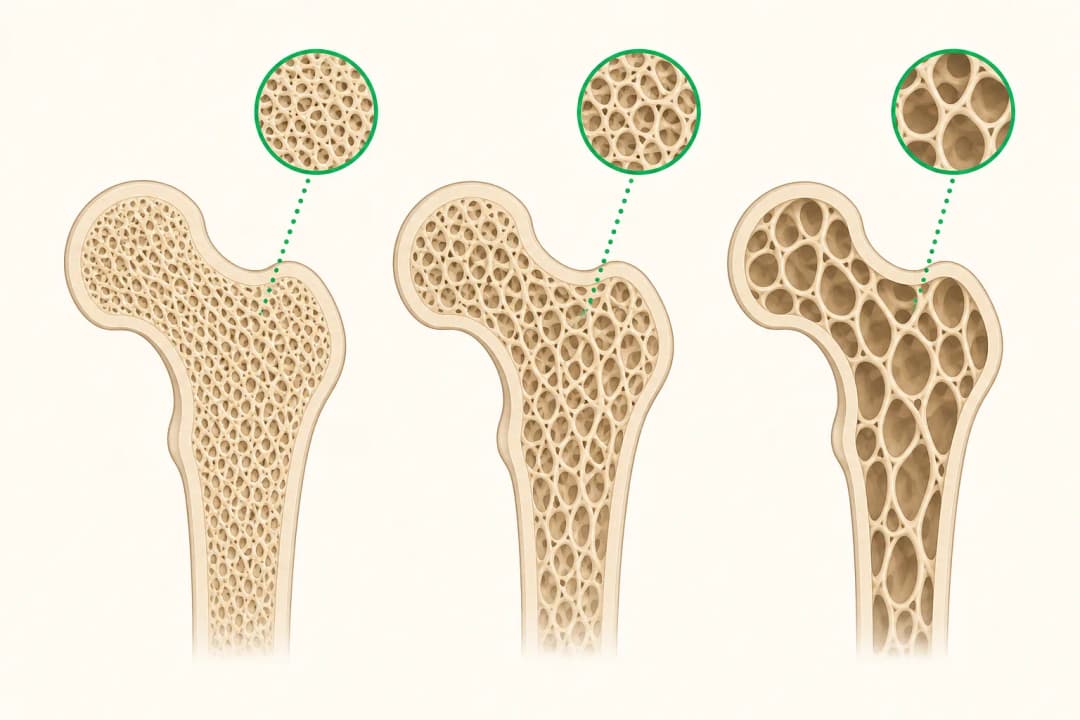
Osteopenia means bone density is lower than the expected healthy range but does not by itself confirm osteoporosis. The report may compare your bone density with a reference range and identify the hip or lower spine as the measured site. Your clinician combines that result with age, previous fractures, medicines, family history and health conditions. Bone density is one part of fracture risk, not a prediction of what must happen.
A DEXA examination is generally quick and uses low-dose X-rays. Wear clothing without bulky metal and tell the imaging team if pregnancy is possible or if you recently had a contrast examination.
Practical next steps
Take the report to the clinician who requested it and ask whether repeat testing, exercise, nutrition review or medicine is appropriate. Strength and balance work can support safer movement; a tailored plan is described in Strength Training Rehabilitation. Ask whether vitamin D testing is needed, particularly if deficiency is a concern; see Vitamin D Deficiency and Vitamin D Supplementation for related information. Calcium from food is often discussed before a supplement, and Calcium Supplementation may be considered when intake is inadequate or a clinician advises it.
When to seek care promptly
Arrange medical assessment promptly after a fall that causes significant pain, inability to bear weight, new difficulty using an arm or leg, or sudden back pain. Seek urgent care for severe pain with weakness, numbness, loss of bladder or bowel control, or a visible deformity. Osteopenia itself may cause no symptoms, so do not wait for pain before discussing the result and prevention plan.
Questions for your doctor
Which bones were measured, and how should I understand the report? Does my fracture history change the plan? Should I review vitamin D, calcium, medicines, vision, footwear or fall hazards? What exercise is suitable for my joints and current fitness? When should my bone density be checked again?
Find care
General Clinics & Polyclinics in Abu Dhabi
That answer is general. If you want it applied to your own case, these are licensed general clinics & polyclinics listed in Abu Dhabi.
27 Ar Ruwwad St - Shakhbout City - MSH4 - Abu Dhabi - United Arab Emirates
Accepts: Daman, Thiqa, Cigna, MetLife +20 more
Al Ruwais, Al Dhafrah
Accepts: Daman, Thiqa, AXA, Cigna +16 more
Al Bahyah - Al Bahyah Old - Abu Dhabi - United Arab Emirates
Accepts: Daman, Thiqa, Cigna, Allianz Care +18 more
Abu Dhabi
Accepts: Daman, Thiqa, AXA, Cigna +27 more
Ordered by verification status and how complete each clinic's public record is, then alphabetically. This is a directory listing, not a ranking — Zavis does not rate or recommend providers.
A factual listing drawn from the DHA, DOH and MOHAP licence registers. It is not a referral, an endorsement, or advice that any of these providers is right for you.
Questions people ask
Can osteopenia be reversed?
Bone health can sometimes improve or remain stable when contributing factors and habits are addressed, but the plan depends on your result and overall fracture risk.
Does osteopenia cause pain?
Osteopenia commonly has no symptoms; pain after a fall or sudden back pain needs assessment for a possible injury.
Related
Related reading
Keep reading
Medical disclaimer. This page is general health information, not medical advice, and it cannot diagnose you. Always consult a licensed healthcare provider about your own symptoms and treatment. In an emergency in the UAE, call 998 for an ambulance.