
Cystoscopy with urethral dilation
Short answer
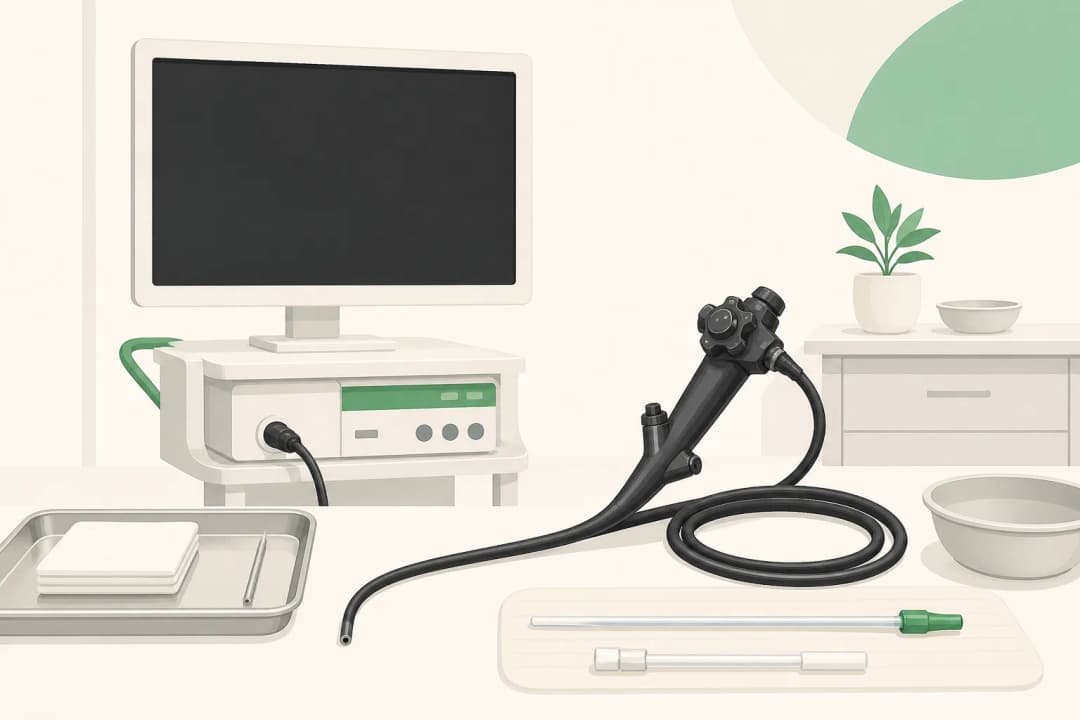
Cystoscopy with urethral dilation examines the urinary passage and gently widens a narrowed area to improve access or urine flow.
This answers one question. It is not a diagnosis and does not replace an assessment by a licensed doctor.
At a glance
- Main action
- Gradual widening of a narrowed urethral segment
- Role of cystoscopy
- Inspection of the urethra and bladder
- Follow-up focus
- Urine flow and possible return of narrowing
The short answer
The clinician gradually stretches the narrowing with dilators or another device, then may pass a cystoscope to inspect the urethra and bladder. The anesthesia used depends on the narrowing and the planned setting.
Why dilation may be recommended
Scar tissue can reduce the width of the urethra, causing a weak stream, straining, incomplete emptying or difficulty placing an instrument. Dilation opens the narrowed segment but does not remove the tendency of scar tissue to tighten again.
A catheter may remain after the procedure to support drainage and healing. Your clinician should explain the cause and location of the narrowing, the intended benefit, whether recurrence is a concern, and what alternatives could be considered if symptoms return.
Planning for treatment and recovery
Before treatment, report fever, burning urine, previous urethral procedures, medicine allergies and every medicine or supplement you take. Use the service's instructions for fasting and blood-thinning medicines, since preparation changes with the anesthesia plan.
If you leave with a catheter, keep the bag below bladder level, avoid pulling the tubing and follow the demonstrated hygiene routine. Take prescribed medicines as directed, observe the urine flow, and clarify limits on driving, lifting, sexual activity and work during healing.
Problems that require medical review
Promptly report fever, chills, worsening urethral or pelvic pain, foul-smelling urine, increasing bleeding or a stream that becomes progressively weaker. Seek urgent help if you cannot pass urine or, with a catheter, urine stops collecting despite the tubing being unkinked; severe pain or heavy bleeding with clots also needs urgent assessment.
Decisions to discuss
Request a clear explanation of where the narrowing lies, how it was identified and how the team will judge whether dilation helped. Ask how catheter removal will be managed, what follow-up checks urine flow, and which options remain if the narrowing returns.
Questions people ask
Can urethral narrowing come back after dilation?
Yes, scar tissue may tighten again after the channel has been widened. A weaker stream, straining or difficulty emptying the bladder should be reported so the clinician can reassess the urethra.
Why might I need a catheter after dilation?
A catheter keeps urine draining and may support the newly widened passage during early healing. The team should explain its care and the plan for removal before discharge.
Related
Related reading
Keep reading
Cancer care in the UAE
Hospitals & Medical Centers in Abu Dhabi
Most UAE cancer care is delivered inside hospital services rather than by standalone oncology clinics, so these are licensed hospitals & medical centers listed in Abu Dhabi. Confirm the specific cancer service exists before you travel, and know that asking for a second opinion is routine.
Ahalia Hospital Musaffah Building - Musaffah - Musaffah Industrial - Abu Dhabi - United Arab Emirates
Accepts: Daman, Thiqa, AXA, Cigna +26 more
Al Ruwais Industrial City - Abu Dhabi - United Arab Emirates
Accepts: Daman, Thiqa, AXA, Cigna +30 more
Abu Dhabi, Abu Dhabi
Accepts: Daman, Thiqa, AXA, Cigna +30 more
Second opinions are routine in cancer care and asking for one does not affect your treatment. How to arrange a second opinion in the UAE.
Ordered by verification status and how complete each clinic's public record is, then alphabetically. This is a directory listing, not a ranking — Zavis does not rate or recommend providers.
A factual listing drawn from the DHA, DOH and MOHAP licence registers. It is not a referral, an endorsement, or advice that any of these providers is right for you.
Medical disclaimer. This page is general health information, not medical advice, and it cannot diagnose you. Always consult a licensed healthcare provider about your own symptoms and treatment. In an emergency in the UAE, call 998 for an ambulance.