
Is cystoscopy a surgical procedure?
Short answer
Cystoscopy is an internal procedure that may be diagnostic alone or may include surgical sampling or treatment through the cystoscope.
This answers one question. It is not a diagnosis and does not replace an assessment by a licensed doctor.
At a glance
- Skin incision
- Usually none; the instrument passes through the urethra
- Possible purposes
- Inspection, biopsy, or treatment
- Recovery factors
- Anaesthesia and any additional intervention
Diagnostic test or surgery
A flexible cystoscopy commonly inspects the urethra and bladder using local anaesthetic gel. A rigid cystoscopy may be performed with spinal or general anaesthesia and provides access for biopsy, removal of abnormal tissue or stones, control of bleeding, or placement and removal of urinary devices. Your booking and consent should specify the intended work.
How the procedure is performed
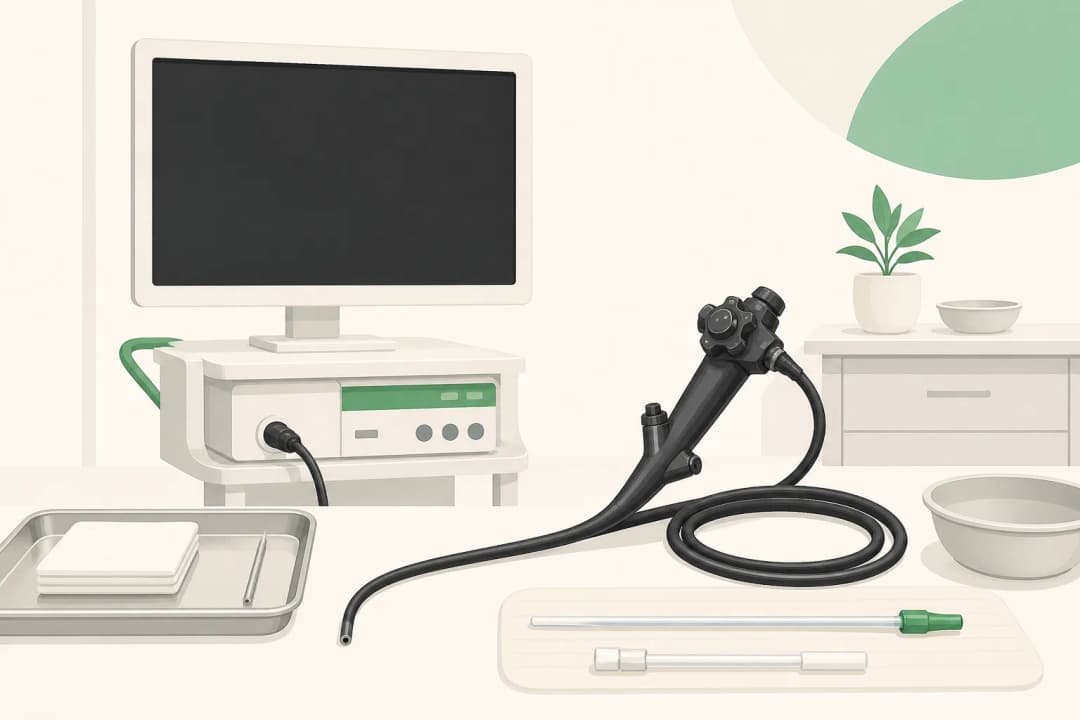
The clinician introduces a sterile cystoscope through the urethra without making a skin incision. Fluid gently fills the bladder so the lining can be examined. The instrument has channels that can carry irrigation and, when needed, small tools for sampling or treatment.
The extent of the procedure cannot always be inferred from the word cystoscopy. Inspection alone, biopsy, removal of a lesion, treatment of a narrowing, and ureteric stent work have different anaesthetic and recovery considerations. Tissue taken during the procedure is sent for examination, and that result may arrive after the visual findings have been discussed.
Before admission and after discharge
Confirm whether you must fast, whether someone needs to take you home, and how prescribed medicines should be handled. Tell the surgical team about possible urinary infection, allergies, implanted devices, pregnancy, previous anaesthetic reactions, and drugs that alter clotting. Changes to those medicines should come from the clinician managing the procedure.
Before leaving, obtain written instructions covering urination, fluids, bathing, activity, work, driving, and pain relief. Ask whether a catheter or stent remains and when it will be removed. Light blood staining, urinary urgency, and mild burning can follow instrumentation, especially when a biopsy or treatment was done.
Problems that should not wait
Seek emergency help if you are unable to pass urine and develop painful lower abdominal swelling. Promptly report fever, chills, severe or increasing pain, heavy bleeding, clots, or a catheter that is not draining. Those changes need assessment for infection, retention, or bleeding.
Use the contact details supplied by the treating unit when mild symptoms worsen or last longer than your individual discharge plan predicts. Mention exactly what was performed, including biopsy, cautery, dilation, or device placement, because this helps the clinician judge the recovery pattern.
Clarify the planned extent
Ask whether the procedure is inspection only, what additional intervention may become necessary, and whether you would consent to that intervention in advance. Other useful points include the anaesthetic, expected same-day milestones, possible catheter or stent, how results will be communicated, and whom to call overnight.
Questions people ask
Is every cystoscopy done under general anaesthesia?
No. Many flexible examinations use local anaesthetic gel while the patient is awake. Rigid procedures and treatments may use spinal or general anaesthesia, depending on the plan and individual circumstances.
Can the urologist take a biopsy during cystoscopy?
Yes, if biopsy is clinically indicated and included in the consented plan. The visual finding and the later tissue report provide different information.
Will I stay in hospital after the procedure?
Many cystoscopies are completed as outpatient or day procedures. Discharge depends on the anaesthetic, what was done, whether you can urinate, and whether any recovery concern needs observation.
Related
Related reading
Keep reading
Cancer care in the UAE
Hospitals & Medical Centers in Abu Dhabi
Most UAE cancer care is delivered inside hospital services rather than by standalone oncology clinics, so these are licensed hospitals & medical centers listed in Abu Dhabi. Confirm the specific cancer service exists before you travel, and know that asking for a second opinion is routine.
Ahalia Hospital Musaffah Building - Musaffah - Musaffah Industrial - Abu Dhabi - United Arab Emirates
Accepts: Daman, Thiqa, AXA, Cigna +26 more
Al Ruwais Industrial City - Abu Dhabi - United Arab Emirates
Accepts: Daman, Thiqa, AXA, Cigna +30 more
Abu Dhabi, Abu Dhabi
Accepts: Daman, Thiqa, AXA, Cigna +30 more
Second opinions are routine in cancer care and asking for one does not affect your treatment. How to arrange a second opinion in the UAE.
Ordered by verification status and how complete each clinic's public record is, then alphabetically. This is a directory listing, not a ranking — Zavis does not rate or recommend providers.
A factual listing drawn from the DHA, DOH and MOHAP licence registers. It is not a referral, an endorsement, or advice that any of these providers is right for you.
Medical disclaimer. This page is general health information, not medical advice, and it cannot diagnose you. Always consult a licensed healthcare provider about your own symptoms and treatment. In an emergency in the UAE, call 998 for an ambulance.