
Cystoscopy for a urethral stricture
Short answer
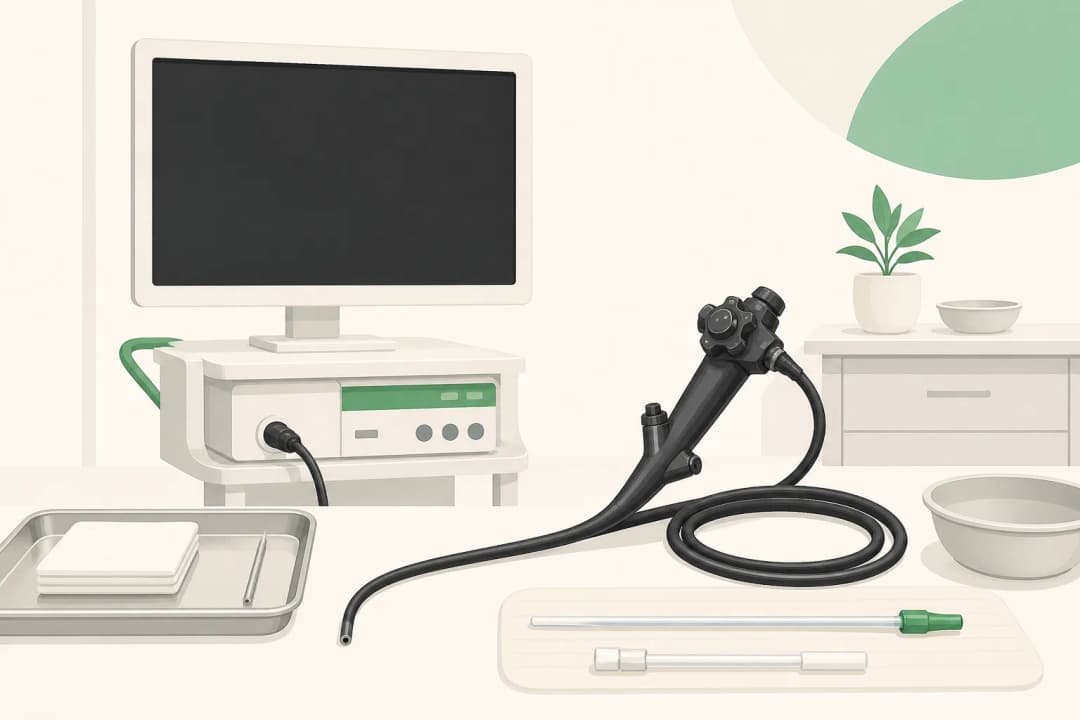
Cystoscopy can show a urethral stricture, but a tight narrowing may prevent the instrument from safely passing into the bladder.
This answers one question. It is not a diagnosis and does not replace an assessment by a licensed doctor.
At a glance
- Stricture
- A narrowed section of the urethra
- Cystoscopy role
- Directly shows the urethral channel and may inspect the bladder
- Emergency sign
- Unable to urinate with a painful, swelling lower abdomen
How cystoscopy relates to a stricture
A stricture is a narrowed segment of the urethra, often caused by scar tissue. The scope can help the urologist see its location and appearance. If passage is unsafe, the clinician may stop and use other tests or arrange treatment rather than forcing the instrument through.
What the finding may explain
Urethral narrowing can restrict urine flow. People with a stricture may notice a weaker or spraying stream, straining, prolonged urination, incomplete emptying, repeated urinary infections, or inability to pass urine. These symptoms have several possible causes, so cystoscopy is used as part of an assessment rather than as a conclusion based on symptoms alone.
The examination may show where the channel becomes narrow and whether the bladder can be reached. Other measurements or imaging may be needed to define the length and severity before treatment is chosen. A cystoscopy can also inspect the bladder when the scope passes the narrowed area.
Planning the next step
Before cystoscopy, describe changes in your stream, infections, previous catheters or urinary procedures, pelvic injury, and any earlier stricture treatment. Ask whether the appointment is for diagnosis only or whether dilation or an internal incision could be performed. Treatment requires its own discussion of benefits, risks, anaesthesia, and the possibility that narrowing may return.
After an examination or treatment, follow the instructions for fluids, activity, pain relief, catheter care, and follow-up. If a catheter is present, make sure urine is draining into the bag without a kink in the tubing. Do not attempt to remove or reposition it unless you have been specifically trained and instructed.
Urinary blockage and other warning signs
Inability to urinate with increasing lower abdominal pain or swelling needs emergency assessment because the bladder may be retaining urine. If a catheter stops draining and discomfort builds, check for an obvious tubing kink and seek immediate clinical advice if flow does not resume.
Contact the care team promptly for fever, chills, escalating pain, heavy bleeding, clots, cloudy or foul-smelling urine with illness, or a marked deterioration in urine flow. Mild burning after instrumentation can occur, but symptoms that intensify or fail to settle deserve review.
Questions that shape treatment decisions
Ask where the stricture is, how its length will be assessed, and whether it blocked completion of the bladder examination. Discuss the available treatment approaches, expected catheter plan, follow-up method, and which new changes in urine flow should trigger an earlier appointment.
Questions people ask
Can cystoscopy pass through every stricture?
No. A very narrow segment may not admit the scope safely. The urologist can stop the examination and choose imaging, a smaller instrument, or a separately planned treatment.
Does finding a stricture mean it will be treated immediately?
Not necessarily. Diagnostic cystoscopy may only establish the finding. Treatment depends on the narrowing's features, previous procedures, symptoms, and the consent agreed before the appointment.
Can a stricture affect bladder emptying?
Yes. Urethral narrowing can obstruct the outlet and leave urine behind in the bladder. The care team may assess flow and residual urine alongside the visual examination.
Related
Related reading
Keep reading
Cancer care in the UAE
Hospitals & Medical Centers in Abu Dhabi
Most UAE cancer care is delivered inside hospital services rather than by standalone oncology clinics, so these are licensed hospitals & medical centers listed in Abu Dhabi. Confirm the specific cancer service exists before you travel, and know that asking for a second opinion is routine.
Ahalia Hospital Musaffah Building - Musaffah - Musaffah Industrial - Abu Dhabi - United Arab Emirates
Accepts: Daman, Thiqa, AXA, Cigna +26 more
Al Ruwais Industrial City - Abu Dhabi - United Arab Emirates
Accepts: Daman, Thiqa, AXA, Cigna +30 more
Abu Dhabi, Abu Dhabi
Accepts: Daman, Thiqa, AXA, Cigna +30 more
Second opinions are routine in cancer care and asking for one does not affect your treatment. How to arrange a second opinion in the UAE.
Ordered by verification status and how complete each clinic's public record is, then alphabetically. This is a directory listing, not a ranking — Zavis does not rate or recommend providers.
A factual listing drawn from the DHA, DOH and MOHAP licence registers. It is not a referral, an endorsement, or advice that any of these providers is right for you.
Medical disclaimer. This page is general health information, not medical advice, and it cannot diagnose you. Always consult a licensed healthcare provider about your own symptoms and treatment. In an emergency in the UAE, call 998 for an ambulance.