
What should you know about cystoscopy retrograde pyelogram stent placement?
Short answer
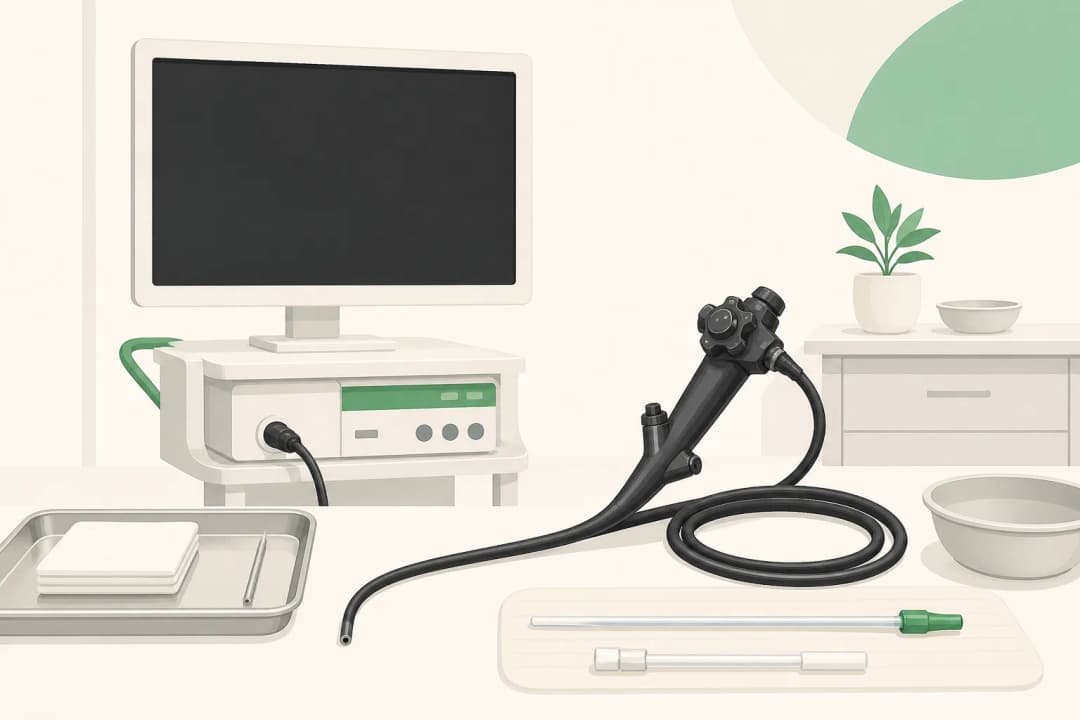
This combined procedure views the bladder, outlines a ureter with contrast, and may place an internal stent to support urine drainage.
This answers one question. It is not a diagnosis and does not replace an assessment by a licensed doctor.
At a glance
- Access
- The instruments pass through the urethra and bladder to reach the ureteric opening.
- Imaging
- Contrast and X-rays outline the ureter and kidney drainage system.
- Stent follow-up
- Every ureteric stent needs a documented removal, exchange, or review plan.
What the combined procedure does
During cystoscopy, the clinician reaches the bladder through the urethra. A small tube is guided into the opening of the ureter, contrast is introduced, and X-ray images show the drainage channel toward the kidney. If drainage is narrowed or obstructed, a soft ureteric stent can be positioned between the kidney and bladder.
The role of imaging and the stent
A retrograde pyelogram maps the ureter from below, helping the clinician identify the level and shape of a blockage or check the urinary tract when other imaging is insufficient. The contrast travels within the urinary collecting system rather than being injected into a vein.
The stent is an internal drainage tube, not an external urine bag. Its curled ends help keep it in position. It may be used while swelling settles, while a stone or narrowing is treated, or while another cause of obstruction is assessed. It usually requires a specific plan for removal or exchange.
Preparation and care afterward
Follow instructions on fasting, medicines, and transport because anaesthesia is commonly involved. Tell the team about allergies, particularly previous contrast reactions, as well as pregnancy, kidney problems, urinary infection symptoms, blood thinners, and implanted devices. Do not stop prescribed treatment without procedure-specific advice.
A stent can cause urinary frequency, urgency, bladder discomfort, flank ache during urination, or some blood-staining. Use the recommended pain relief, fluids, and activity guidance. Before discharge, obtain the stent removal or exchange date and the service to contact; do not assume the stent can remain indefinitely.
When to get urgent help
Seek prompt medical advice for fever, chills, worsening urinary burning, foul-smelling urine, increasing flank pain, persistent vomiting, or bleeding that is becoming heavier. Urgent assessment is needed if you cannot pass urine, develop severe pain that is not controlled by the advised medicine, pass large clots, feel faint, or become acutely unwell. Report a dislodged visible stent string without pulling it.
Questions before discharge
Ask what the images showed, why the stent was placed, and whether any biopsy or urine sample was collected. Confirm how long the stent is intended to stay, how removal will happen, what symptoms are expected, and which symptoms require immediate contact. Also ask whether work, exercise, travel, or sexual activity needs temporary adjustment.
Questions people ask
Can I feel a ureteric stent?
Some people notice urgency, frequent urination, bladder pressure, flank discomfort, or blood-stained urine. Contact the care team if symptoms are severe, worsening, or accompanied by fever or difficulty urinating.
How is the stent removed?
Removal may use a short cystoscopy or an attached retrieval string, depending on the stent and clinical plan. Follow the specific instructions you receive and never pull a string unless your treating team has explicitly told you to do so.
Why is a retrograde pyelogram performed during cystoscopy?
It allows contrast to outline the ureter and kidney drainage pathway from the bladder side, helping define an obstruction or guide safe stent placement.
Related
Related reading
Keep reading
Cancer care in the UAE
Hospitals & Medical Centers in Abu Dhabi
Most UAE cancer care is delivered inside hospital services rather than by standalone oncology clinics, so these are licensed hospitals & medical centers listed in Abu Dhabi. Confirm the specific cancer service exists before you travel, and know that asking for a second opinion is routine.
Ahalia Hospital Musaffah Building - Musaffah - Musaffah Industrial - Abu Dhabi - United Arab Emirates
Accepts: Daman, Thiqa, AXA, Cigna +26 more
Al Ruwais Industrial City - Abu Dhabi - United Arab Emirates
Accepts: Daman, Thiqa, AXA, Cigna +30 more
Abu Dhabi, Abu Dhabi
Accepts: Daman, Thiqa, AXA, Cigna +30 more
Second opinions are routine in cancer care and asking for one does not affect your treatment. How to arrange a second opinion in the UAE.
Ordered by verification status and how complete each clinic's public record is, then alphabetically. This is a directory listing, not a ranking — Zavis does not rate or recommend providers.
A factual listing drawn from the DHA, DOH and MOHAP licence registers. It is not a referral, an endorsement, or advice that any of these providers is right for you.
Medical disclaimer. This page is general health information, not medical advice, and it cannot diagnose you. Always consult a licensed healthcare provider about your own symptoms and treatment. In an emergency in the UAE, call 998 for an ambulance.